 German
  English
  Russian
  Japanese
  Korean
  Spanish
  French
  Italian
  Portuguese
 Kurze Antwort:
Sheet metal forming is a manufacturing process that shapes flat metal sheets into desired parts through bending, stretching, or compressing without removing material. It is widely used in industries requiring precise, lightweight components such as enclosures, brackets, and structural panels. For buyers, the key considerations include material selection, bend radius limits, tolerance requirements, and surface finish specifications. Working with an experienced manufacturer like YPMFG can help ensure your parts meet functional and quality standards efficiently.
Many engineers and procurement teams struggle with choosing the right forming method for their application. A mismatch between design intent and manufacturing capability often leads to costly rework, delayed timelines, or compromised part performance. This guide explains the core processes, material behavior, design rules, and selection criteria so you can make informed decisions before placing a production order.
Common Sheet Metal Forming Processes
Different forming operations suit different part geometries and production volumes. Understanding each process helps you communicate clearly with your supplier and avoid design flaws that increase cost or reduce reliability.
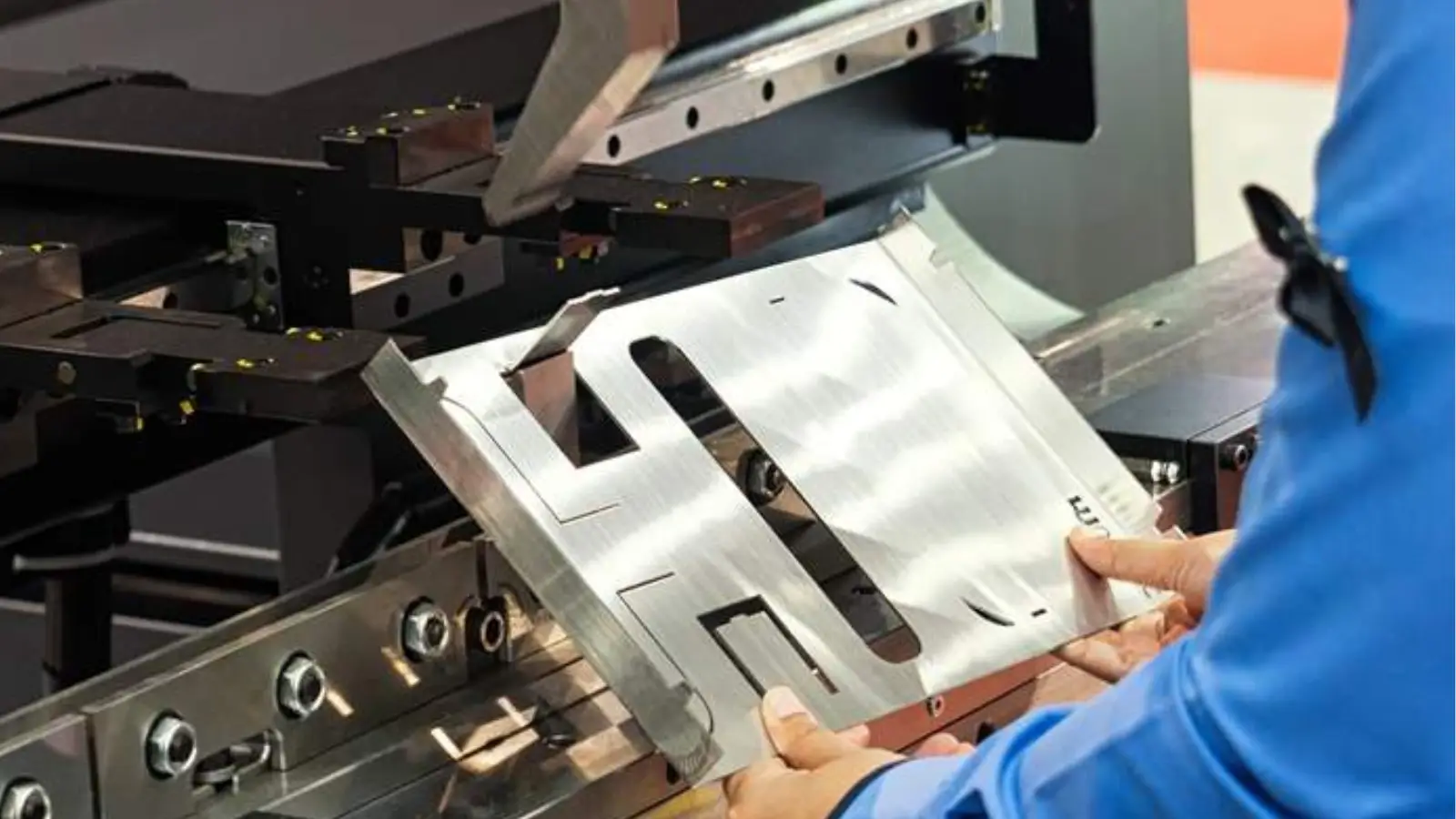
Biegen is the most basic forming operation. It creates angles, channels, or flanges by applying force along a straight axis. V-bending, air bending, and bottom bending are common variants. Bend radius must match material thickness and type to prevent cracking.
Stretch forming pulls and stretches the sheet over a form block. It is suitable for large, curved panels such as aerospace skins or architectural cladding. The process improves material strength through work hardening but requires careful tension control.
Deep drawing pushes a flat blank into a die cavity to create hollow shapes like cups, boxes, or housings. It is ideal for high-volume production of consistent, complex parts. Material flow must be managed to avoid wrinkles or thinning.
Roll forming continuously bends a metal strip through a series of rolling stands. It produces long, uniform profiles such as tracks, frames, or edge trims. This method offers high speed and excellent dimensional repeatability for straight or gently curved parts.
Choosing the wrong process for your part shape can lead to excessive scrap, longer lead times, or unexpected cost increases. Review your design with a manufacturing engineer before finalizing tolerances and quantities.
Material Selection and Behavior
The choice of sheet metal material directly affects formability, strength, corrosion resistance, and finishing options. Yield strength, elongation, and grain direction are critical properties to evaluate before locking in a specification.
Mild steel offers good formability and low cost. It is widely used for structural brackets, mounting plates, and enclosures. Surface treatments such as powder coating or galvanizing are commonly applied. Be aware that springback may require over-bending to achieve target angles.
Stainless steel provides excellent corrosion resistance and moderate formability. Grades 304 and 316 are standard choices for medical, food, and outdoor applications. Higher alloy content increases forming force and tool wear. Always verify that your supplier has experience working with stainless on CNC press brakes.
Aluminium is lightweight and naturally corrosion resistant. Alloys 5052 and 6061 are preferred for forming due to their balance of strength and ductility. Aluminum exhibits significant springback, so compensation strategies must be built into the tooling or program. Anodizing or painting can enhance appearance and protection.
Copper and brass are chosen for conductivity, aesthetics, or antimicrobial properties. They are softer and easier to form than steel but may require annealing between operations for complex shapes. These materials are common in electrical contacts, decorative panels, and plumbing components.
Material thickness tolerance also matters. A sheet labeled 1.0 mm may actually range from 0.95 to 1.05 mm depending on the mill standard. Tighter tolerances increase cost but are necessary for assemblies with precise fit requirements.
Design Rules for Manufacturability
Designing sheet metal parts for successful forming requires attention to geometric constraints and process limitations. Violating basic manufacturability rules often results in cracks, warping, or inconsistent dimensions.
Minimum bend radius depends on material type, thickness, and grain direction. As a general rule, the inside bend radius should be at least equal to the material thickness for mild steel and aluminum. Going below this limit risks cracking, especially on harder alloys.
Flange length must be sufficient to accommodate the bend tooling. A flange shorter than twice the material thickness may not form properly or may require special tooling. Clear spacing between bends and nearby features prevents interference and distortion during the pressing cycle.
Hole placement near bend lines requires special attention. Holes should be positioned at least two times the material thickness away from the bend zone. If a hole falls within the deformation area, it may distort or elongate during forming.
Punch marks, embosses, and counterbores can strengthen thin sections but must be placed away from high-stress bend areas. Coordinates and depths should be clearly specified in your drawing to avoid ambiguity during quoting and production.
Tolerance and Surface Finish Standards
Tolerance expectations must align with what the forming process can reliably achieve. Over-specifying dimensions increases cost without delivering proportional value to the final assembly.
Standard bending tolerances typically range from ±0.1 mm to ±0.5 mm depending on part size and machine capability. Angle tolerances of ±1 degree are common for general applications. Tighter angles require secondary operations or precision tooling, which raise unit costs.
Surface finish on formed parts is influenced by the original sheet texture and the tooling contact points. Mill finish is standard unless a specific roughness value is required. If downstream painting or welding is planned, confirm that the surface condition meets prep requirements.
Geometric features such as coplanarity, parallelism, and flatness are often more critical than individual dimension tolerances. Warping after forming can cause assembly issues even when all measured dimensions fall within spec. Discuss warpage control strategies with your manufacturer before finalizing the design.
Quality Checks and Inspection Methods
Inspecting formed parts ensures they meet functional and assembly requirements. A structured quality process reduces downstream rejection and protects your production schedule.

First article inspection should verify all critical dimensions, bend angles, and surface conditions against the engineering drawing. Coordinate measuring machines and optical comparators provide accurate verification for complex geometries. Sample reports should include actual measurements, not just pass or fail labels.
Visual inspection covers surface defects such as scratches, dents, tool marks, and discoloration. These may indicate handling damage, improper lubrication, or worn tooling. Define acceptable visual limits in your quality agreement to avoid disputes during receipt inspection.
Dimensional stability checks are important for parts that will undergo further processing or welding. Residual stress from forming can cause slow deformation over time, especially in thin sections or high-strength alloys. Request stress relief recommendations from your fabricator if long-term stability is a concern.
YPMFG supports production runs with documented inspection reports and clear communication on nonconformities. You can send your drawings and tolerance requirements for an engineering review before committing to tooling or full production.
Cost Factors and Pricing Drivers
Several variables influence the unit price of formed sheet metal parts. Understanding these factors helps you evaluate quotes accurately and identify opportunities for cost optimization.
Material cost is the largest component for low-volume parts. Price fluctuates with alloy type, thickness, and market conditions. Bulk purchasing or standard thickness choices can reduce material waste and improve unit pricing.
Tooling cost applies primarily to dedicated dies, punches, and fixtures. High-volume programs spread tooling expense across more units, making custom tooling economically viable. For low volumes, standard tooling or adaptive setups may be more cost-effective.
Setup time and machine hours affect pricing for prototype and small-batch orders. Complex parts with multiple bends, secondary operations, or tight tolerances require longer machine time and more skilled operator involvement. Simplifying bend sequences where possible can lower per-unit cost.
Finishing and post-processing steps such as deburring, tapping, welding, or coating add separate line items to the quote. Clarify which operations are included in the base price and which are optional additions before approving the order.
Common Mistakes to Avoid
Design errors and unclear specifications are frequent causes of production delays and rejected parts. Recognizing these pitfalls early saves time and money.
Assuming all materials form identically is a common error. Different alloys respond uniquely to bending, stretching, and drawing. Always confirm formability data with your supplier before finalizing material selection.
Ignoring springback compensation leads to inaccurate bend angles. Materials relax after the press brake cycle, so the tooling must over-bend slightly to reach the target angle. Expect the manufacturer to factor this into the program.
Over-specifying tolerances on non-critical features inflates cost without improving function. Focus tight tolerances on mating surfaces, fastener holes, and alignment features. Looser specs on cosmetic or non-contact areas reduce complexity and price.
Providing incomplete or ambiguous drawings causes quoting errors and production rework. Include material grade, thickness tolerance, bend direction, surface finish requirement,and any secondary operations in your documentation.
Practical Questions Before Choosing a Forming Method
Buyers often have specific concerns when evaluating sheet metal forming options. Addressing these questions early helps narrow the supplier list and streamline the ordering process.
What thickness range can your facility handle?
Capacity varies by press brake size and tooling. Most general-purpose shops handle 0.5 mm to 6 mm mild steel effectively. Thicker or thinner gauges may require specialized equipment and longer lead times.
Can you provide material certifications and traceability?
Certified materials are essential for regulated industries. Ask whether your supplier maintains mill test reports and lot tracking for stainless, aluminum, or specialty alloys. This documentation is usually available upon request.
What is your typical lead time for prototype and production runs?
Prototypes often ship within 5 to 10 business days depending on complexity. Production lead time scales with volume and whether custom tooling is required. Request a timeline estimate for your specific part count before ordering.
Do you offer design for manufacturability feedback?
A responsive supplier will review your drawings and suggest modifications that reduce cost or improve yield. This service is valuable during the engineering phase and can prevent expensive mistakes before production begins.
You can send your preliminary drawings to YPMFG for an engineering assessment. Early feedback helps refine the design before tooling is committed and keeps the project on schedule.
Need Help Selecting the Right Forming Process?
Selecting the appropriate sheet metal forming method requires balancing design intent, material behavior, production volume, and cost targets. The right choice depends on your part geometry, tolerance needs, and end-use environment. A manufacturer with broad process capability can guide you toward the most efficient solution.
YPMFG provides engineering support for CNC machining and sheet metal fabrication projects. You can share your specifications for a technical review, request a detailed quote, or obtain guidance on material and process selection. Sending your drawings early allows the engineering team to flag potential issues before production starts, helping you avoid delays and unnecessary expense.