 German
  English
  Russian
  Japanese
  Korean
  Spanish
  French
  Italian
  Portuguese
 Kurze Antwort:
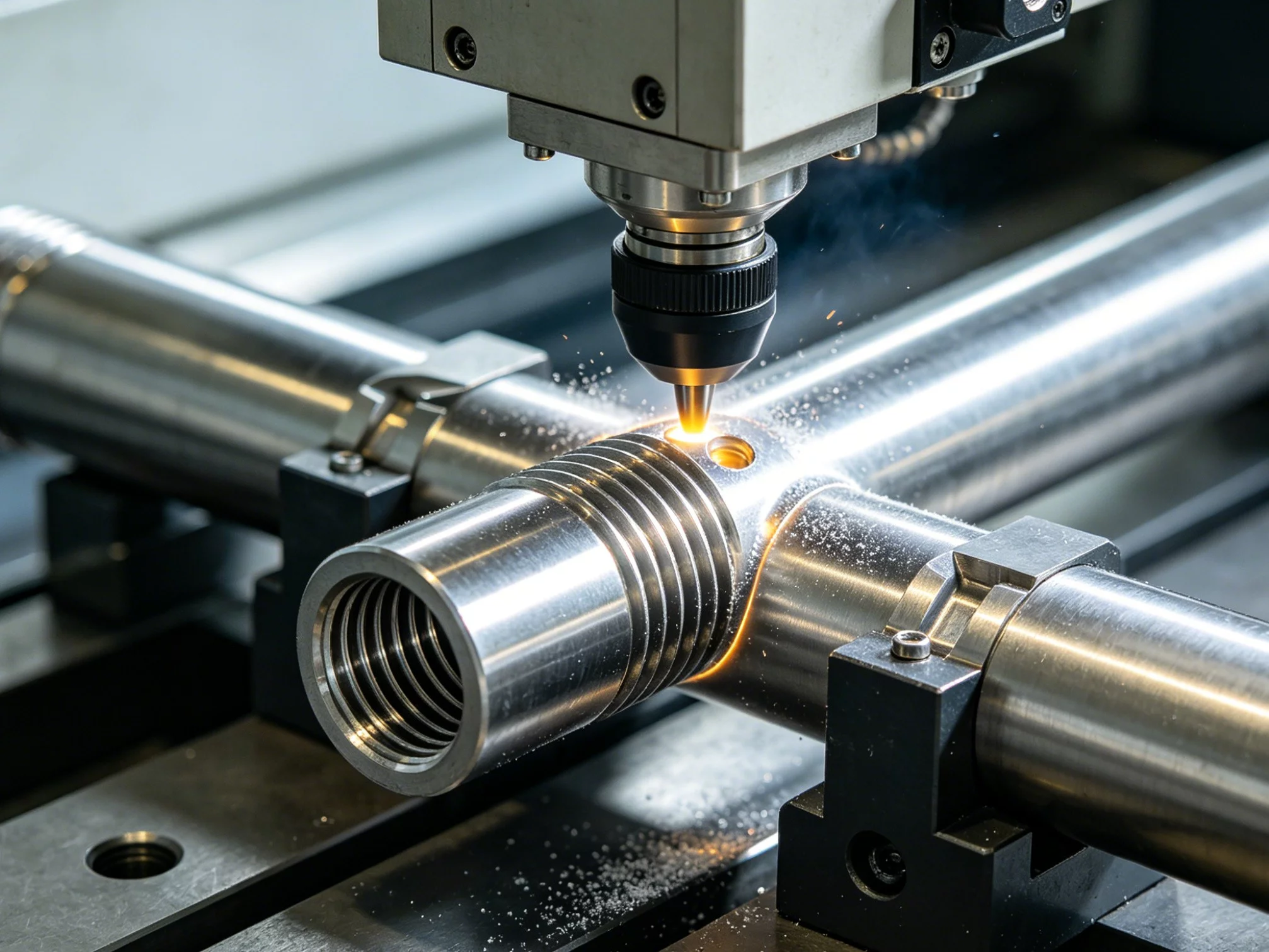
CNC speeds and feeds are the two parameters that control how a cutting tool removes material. Speed (RPM) sets the spindle rotation rate. Feed rate (mm/min or in/min) sets how fast the tool advances. Getting both right determines cutting speed, surface finish, tool life, and part accuracy. Too high risks breakage; too low inflates cycle time. Correct values depend on material, tool diameter, and CNC machining parameters specific to your operation.
Most machinists and buyers face the same question: what settings will produce a clean part without snapping the tool? YPMFG supports manufacturers who need these values locked in before the first job, not after expensive rework.
What CNC Speeds and Feeds Actually Mean
Spindle speed (S) and feed rate (F) are not interchangeable. S is rotational velocity in RPM. F is the linear travel distance per minute.
Together they define the material removal rate for each pass. You select S from the recommended cutting speed for your material-tool pair. F is then calculated from S, feed per tooth,and flute count.
In practice, both values interact with machine rigidity, tool geometry, and coolant strategy. Changing one without adjusting the other shifts the entire cutting condition.
Key Factors That Affect Speed and Feed Selection
Start with the material datasheet. Manufacturers publish recommended cutting speeds (Vc) for each alloy. Convert Vc to RPM with S = (Vc × 1000) / (π × D), where D is tool diameter in mm.
From there, feed per tooth (fz) and flute count (Z) give you F = S × fz × Z.
Always verify parameters against your specific machine. A high-speed spindle does not mean you should run at maximum RPM for every operation.
After selecting values, check your feed rate calculation against the controller’s maximum feed override. Exceeding it forces the spindle to slow down and ruins the intended cutting condition.
Common Mistakes That Cost Time and Money
The most frequent error is copying chart values without adjusting for actual tool geometry. A 10 mm carbide end mill and a 10 mm HSS mill need very different settings.
Another risk is running too slow. Low spindle speed raises chip load per tooth, causing built-up edge and poor finish. The part may look acceptable but develops micro-scale stress risers.
Tool wear accelerates quickly when parameters drift outside the optimal window. A 5% feed increase beyond recommendation can halve tool life on hardened steels.
If you are ordering Maßgefertigte CNC-Teile or a Fertigung von CNC-Teilen run, sending your intended speed and feed values to your supplier helps them flag issues early. YPMFG can review your parameters during Technische Überprüfung and suggest adjustments matched to your material and setup.
Fragen, die Käufer häufig stellen
What is the typical spindle speed range for aluminum?
Most aluminum milling and turning operations run between 8,000 and 15,000 RPM, depending on tool diameter and depth of cut. Harder alloys like 7075 may need slightly lower speeds.
How do I know if my feed rate is too high?
Watch for excessive tool deflection, chip clogging, and surface degradation. If chips become long and continuous instead of short curls, the feed is likely too aggressive for the material.
Do speeds and feeds change between dry and wet cutting?
Yes. Dry or MQL cutting often requires 10–20% lower spindle speed and reduced feed to compensate for less lubrication. Full flood coolant allows slightly more aggressive parameters.
Can I use the same settings for a prototype and a 500-piece run?
Not always. Prototypes typically run conservative values to verify geometry. Production setups optimize for material removal rate, which may push parameters toward the upper end of the recommended range for cycle-time savings.
Need Help Dialing In Your Parameters?
Die Rechte CNC speeds and feeds for your job depend on material, tool, machine rigidity, and tolerance requirements. Getting them wrong on the first pass costs hours of rework or scrapped parts.
Send your part drawings, material spec, and intended tool list to YPMFG. Our team reviews your speed and feed selections, flags risks, and recommends adjustments before you cut steel. You will receive a practical recommendation within one business day.