 Spanish
  English
  German
  Russian
  Japanese
  Korean
  French
  Italian
  Portuguese
 Respuesta rápida:
Turning brass is one of the most straightforward Mecanizado CNC operations, but success depends on choosing the right alloy grade and adjusting cutting parameters for each type. Free-cutting brass such as C360 delivers the best machinability, while lead-free brasses like C377 require different tool strategies. The main challenges include chip control, work hardening in cold-worked material, and acabado superficialing consistency. YPMFG regularly produces brass components using precision Torneado CNC, and we see these variables firsthand across many project specifications.
Understanding Brass Grades for Torneado CNC
Brass is a copper-zinc alloy, and its machinability varies significantly depending on the zinc content and whether free-cutting elements are added.
The most commonly turned brass grade is C360 free-cutting brass, which contains lead or other machining aids that produce short, brittle chips. This grade machines at high speeds with excellent surface finish. It is widely used for fittings, valves, connectors, and small precision parts.
Lead-free brass grades such as C377, C385, and UNS C95800 are increasingly required for medical, food-grade, and export applications. These materials are harder to machine and generate longer, stringier chips. Tool geometry and feed rates must be adjusted accordingly.
Other brass types like phosphor bronze and aluminum bronze fall outside standard free-cutting behavior and require slower speeds, higher torque, and specialized tool coatings.
YPMFG evaluates the brass grade specified in each drawing before selecting cutting tools and programming parameters. Material certifications are reviewed to confirm compliance with RoHS, REACH, or other regulatory requirements when applicable.
Common Challenges When Turning Brass
Even though brass is considered a free-cutting material, several issues can cause defects or delays if not properly managed.
Chip control is the most frequent concern. Long continuous chips can wrap around the workpiece or tool holder, causing surface scratches or machine stops. The solution is adjusting feed rate and using chip breakers on the tool insert.
Work hardening occurs when brass is turned from cold-worked or hardened stock. The outer layer becomes harder after deformation, causing rapid tool wear if the cutting speed is too low. Pre-machining stress relief or using hardened stock with appropriate cutting speeds prevents this issue.
Galling and built-up edge are less common with brass than with aluminum or acero inoxidable, but they can still happen with certain alloy compositions or dull tooling. Proper Torneado CNC tool geometry and regular inspection reduce this risk.
Burr formation on exit edges is normal in Brass parts requiring threading or tight tolerances. Secondary deburring, tumbling, or hand finishing may be needed depending on the tolerance class specified.
Cutting Parameters and Tool Selection
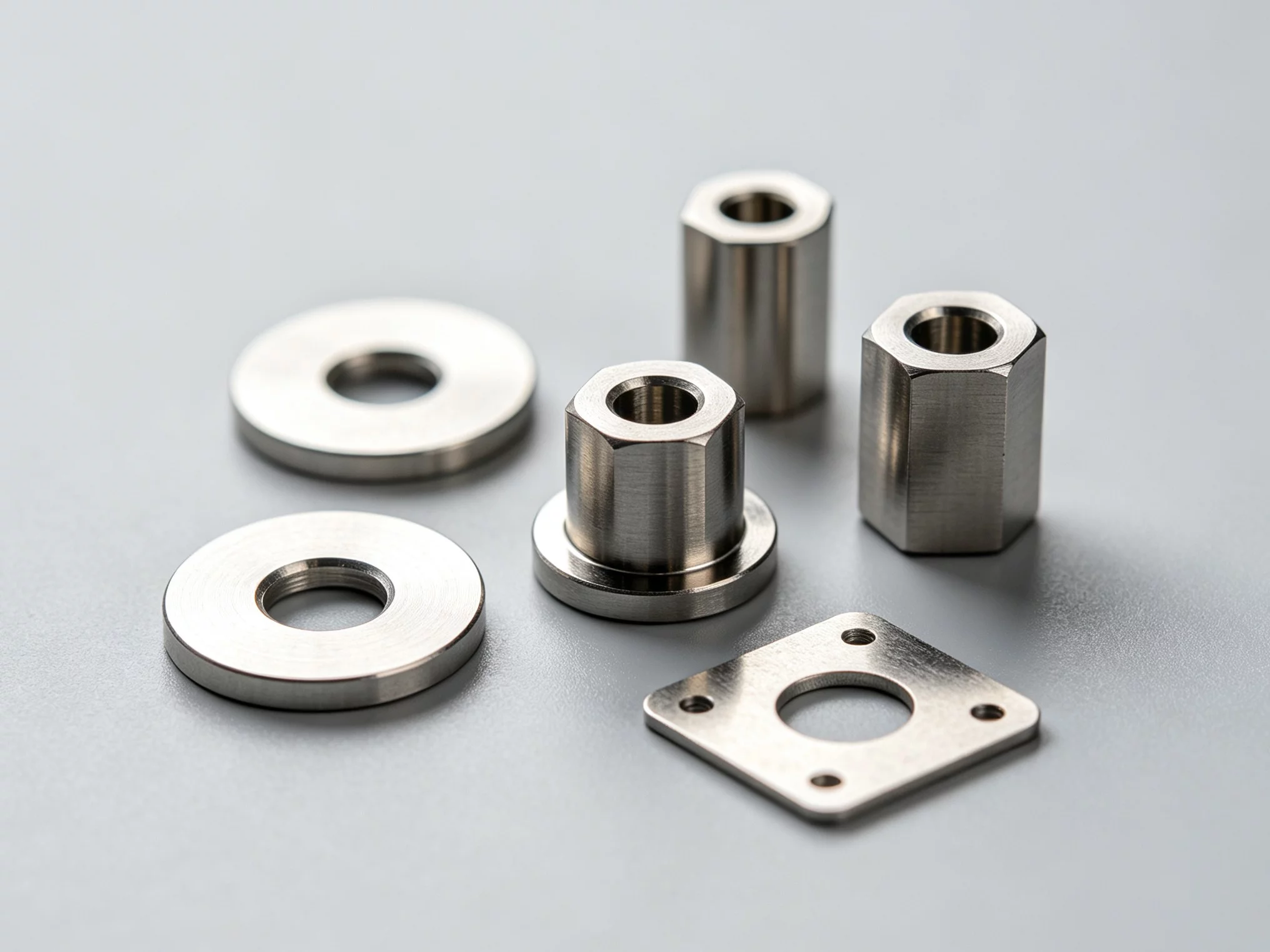
Proper tool selection and parameter settings directly affect surface finish,tool life, and dimensional accuracy.
For C360 brass, typical cutting speeds range from 150 to 300 meters per minute with positive-rake carbide or coated inserts. Feed rates between 0.1 and 0.3 mm per revolution produce good surface finishes without excessive tool load.
When machining lead-free brass, cutting speeds should be reduced by approximately 20 to 30 percent. Insert geometry with a larger nose radius and stronger edge preparation helps maintain consistency.
Tool coating selection matters more than many buyers realize. TiAlN and AlTiN coatings provide good heat resistance for higher-speed operations. For sticky or stringy chip materials, DLC (diamond-like carbon) coatings can reduce friction and improve chip flow.
Coolant strategy also plays a role. Flood coolant is standard for most brass turning operations. Some free-cutting grades machine well with minimal coolant or even dry, depending on the desired surface finish and chip evacuation requirements.
YPMFG engineers review your specification and recommend the optimal tooling path before production begins. This pre-production engineering assessment helps avoid unexpected tool breaks or out-of-tolerance parts.
Material Properties and Application Match
Different brass grades offer different mechanical and physical properties, and the right choice depends on your application requirements.
Choosing the wrong grade for your application can lead to premature failure, poor surface finish, or compliance issues. Brass parts used in potable water systems must meet NSF/ANSI 61 standards, for example. Components exposed to corrosive environments may require aluminum bronze instead of standard brass.
Electrical conductivity is another consideration. If your part requires electrical contact performance, C110 copper or specific brass grades with higher copper content should be evaluated rather than high-zinc free-cutting grades.
Design Recommendations for Turned Brass Parts
Good design practices make a significant difference in part quality and production cost.
Minimum wall thickness for turned brass parts should be at least 0.8 mm for small diameters and 1.5 mm for larger diameters. Thinner walls increase the risk of deflection, vibration, and dimensional variation during machining.
Thread engagement in brass should not exceed two diameters for standard threading operations. Over-threading can cause stress concentration and thread stripping, especially in softer free-cutting grades.
Tolerance recommendations for CNC turned brass parts are typically ±0.025 mm for general dimensions and ±0.01 mm for critical diameters. Tighter tolerances require additional operations and increase cost significantly.

Surface finish specifications should be realistic. Ra 1.6 micrometers is easily achievable on standard turning operations. Ra 0.8 requires additional finishing or fine-boring processes.
Cost Factors in Brass Turning
Understanding what drives cost helps buyers evaluate quotes and make better purchasing decisions.
Material cost for brass rod or bar stock varies by grade and diameter. C360 is generally the most cost-effective option due to its widespread availability and superior machinability. Lead-free alternatives often carry a premium.
Cycle time is the primary production cost driver. Complex geometries with multiple operations, tight tolerances, and secondary finishing steps increase machining time proportionally.
Batch size impact is significant in brass turning. High-volume runs benefit from optimized tool paths and automated loading, which reduce per-unit cost substantially. Low-volume prototypes may have higher per-part costs due to setup time and machine hour allocation.
Post-processing such as plating, anodizing, or additional surface treatments adds cost but may be necessary for the intended application environment.
YPMFG provides detailed quotes that break down material, machining, and any additional processing costs. This transparency helps you understand where your investment goes and identify areas for cost optimization without sacrificing quality.
Quality Control and Inspection
Quality control procedures ensure that turned brass parts meet specification consistently.
First article inspection using calibrated CMM or optical comparison is standard practice. All critical dimensions, tolerances, and surface finishes are verified against the drawing before full production begins.
Material traceability is essential for regulated industries. Mill certificates confirming composition and mechanical properties should accompany each production lot.
Dimensional inspection includes diameter checks, thread gauge verification, concentricity measurements, and surface roughness testing where specified. YPMFG documents inspection results and makes them available upon request for every production run.
Practical Questions Before Choosing Brass for Your Project
Which brass grade should I select for my application?
Choose C360 for general-purpose precision parts where machinability and cost are priorities. Select lead-free C377 or C385 for medical, food, or export markets requiring regulatory compliance. Consult with a machining engineer if your application has specific mechanical or environmental requirements.
Can brass be machined to very tight tolerances?
Yes, CNC turning can achieve tolerances down to ±0.005 mm on brass. However, achieving this consistently requires proper machine condition, stable tooling, and controlled environmental conditions. Discuss your tolerance requirements early in the quoting process.
Is brass suitable for high-frequency or electrical applications?
Brass has moderate electrical conductivity compared to pure copper. For high-frequency applications, consider whether brass meets your signal loss and impedance requirements, or whether copper or silver-plated components would be more suitable.
How do I prevent dezincification in brass parts?
Dezincification occurs in certain brass alloys when exposed to acidic or standing water environments over time. Using low-leaded or lead-free brass grades and selecting alloys withAdded inhibitors reduces this risk. Specify your operating environment when requesting engineering advice.
What surface finishes are possible on turned brass?
Standard turning produces Ra 1.6 to 3.2 micrometers. Additional operations like burnishing, grinding, or polishing can achieve smoother finishes. YPMFG can guide you toward the most cost-effective finishing route for your specification.
Can brass parts be plated after machining?
Yes, brass accepts electroplating well, including nickel, chrome, gold, and zinc plating. Machining should account for plating thickness when tight tolerances are required. Coordinate plating and machining sequences with your supplier before production starts.
Tomar una mejor decisión a largo plazo
Turning brass successfully requires the right combination of material knowledge, tool selection, and process control. The grade you choose affects everything from cycle time to final surface quality to long-term part performance in service.
A precise brass turning project benefits from early engineering input. When you share your specifications with YPMFG, our team reviews material grade suitability, tolerance feasibility, tooling strategy, and inspection requirements before any metal is cut. You receive clear recommendations and a realistic production timeline based on actual manufacturing experience rather than theoretical calculations.
Send your drawings or specifications to YPMFG for a free engineering review and competitive quote.