 Spanish
  English
  German
  Russian
  Japanese
  Korean
  French
  Italian
  Portuguese
 Respuesta rápida:
Customized stainless steel sheet metal fabrication requires you to define your grade, thickness, tolerance, bend count, surface finish,and post-fabrication treatment before requesting a quote. The most common reason projects stall or exceed budget is vague initial specifications. Buyers who lock in their material grade and dimensional tolerances upfront reduce engineering iterations and avoid costly rework. If your part involves multiple bends, welds, or a specific corrosion environment, confirm those details with your fabricator before production begins.
For most procurement and engineering teams, the challenge is not finding a shop that can cut and bend metal. It is communicating exactly what you need so the first iteration matches your functional and dimensional requirements.
YPMFG supports buyers in the Mecanizado CNC and metal fabrication space by reviewing your drawings, material selections, and tolerances before committing to production.
Key Specifications to Define Before Ordering
The single most useful step before sending any drawing is to lock down six parameters. Each one directly affects cost, lead time, and whether the part passes inspection on arrival.
Material grade – 304, 316, 2205, or another alloy
Sheet thickness – measured in gauge or millimeters
Flat pattern dimensions – unfolded length, width, and bend allowance
Bend count and bend angles – more bends mean more setup time
Tolerance on critical dimensions – typically ±0.1 mm for general parts
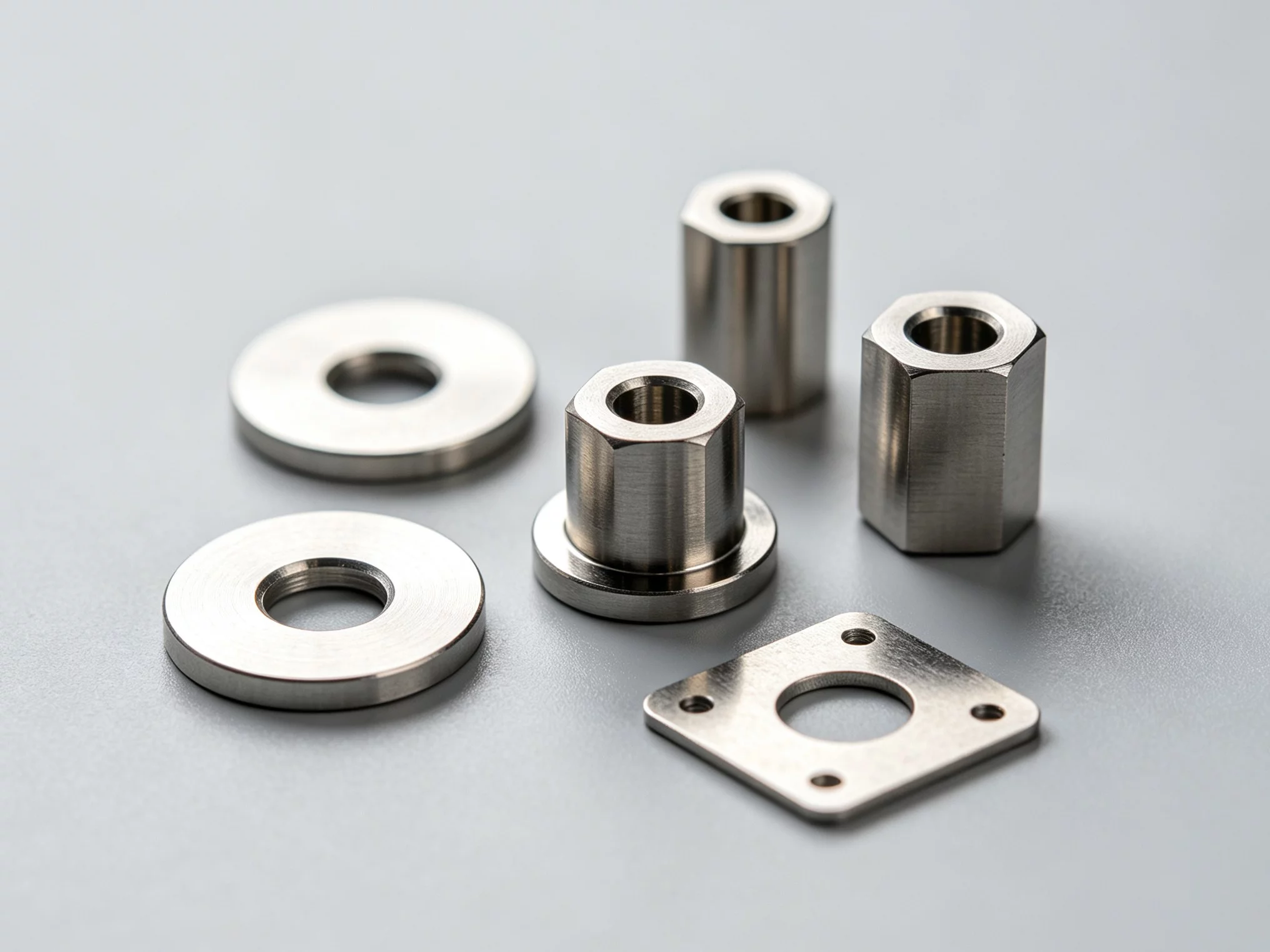
Acabado superficial – mill finish, brushed, polished, or painted
If your application involves a corrosive environment, specify the operating temperature and medium. That detail can shift the grade from 304 to 316 or a duplex alloy.
Choosing the Right Stainless Steel Grade
The wrong grade is the most expensive mistake in stainless steel fabrication. It is not always about “higher grade equals better.” Matching the alloy to your service environment keeps cost in check while protecting longevity.
304 is the default for general indoor use and food contact. 316 adds molybdenum for resistance to chlorides, making it the standard for coastal, chemical, and pharmaceutical applications. 2205 duplex offers roughly double the yield strength of 304 at a price between 304 and 316.
If you are unsure which grade fits your environment, send your operating conditions to YPMFG for a material selection review. The engineering team can confirm whether pitting, stress-corrosion, or intergranular attack are realistic risks.
1:4:3:4:8:d:2:d:c:6:f:8:9:6:3:1:3:5:8:e:8:e:2:1:2:c:e:e:5:3:0:9
Grade selection also affects weldability. 316L and 304L are low-carbon variants preferred when post-weld heat treatment is not feasible.
Tolerance, Surface Finish, and Welding
Tolerance drives cost more than most buyers expect. A ±0.5 mm tolerance on a non-critical edge costs almost nothing to achieve. The same ±0.5 mm on a mating surface or a sealed joint can require additional fixturing and post-processing.
Surface finish choices interact with the fabrication method. Sheet metal bending can introduce slight texture changes on the inside of a bend. If your part will be powder-coated or passivated, confirm whether the fabricator can apply the finish after all mechanical operations are complete.
Welding stainless steel introduces its own constraints. Heat input too high can cause sensitization in 304/316, leading to intergranular corrosion. Ask whether the fabricator uses TIG (GTAW) for thinner sheets and MIG for heavier gauges, and whether a weld procedure specification is available on request.
Common Mistakes That Drive Up Cost
Vague drawings with no datum scheme or critical-feature callouts
Specifying a tolerance tighter than the function requires
Not flagging inside vs. outside radius on bends
Omitting the post-fabrication finish sequence (deburr → weld → passivate → coat)
Assuming the fabricator will “know” the grade from a generic “stainless” label
Each of these forces a clarification round that adds days or weeks. A one-page specification sheet sent with the initial RFQ eliminates most of the back-and-forth.
Practical Questions Before Placing an Order
What minimum sheet thickness can you fabricate?
Most CNC and press-brake operations work reliably from 0.5 mm up. Below that, springback becomes harder to control. Above 6 mm, laser or waterjet cutting capacity may limit you to fewer shops.
Do I need a material test report (MTR)?
For structural or safety-critical parts, request a mill test certificate traceable to the heat number. YPMFG can include MTR documentation with the shipment on request.
How do you handle complex multi-bend flat patterns?
Confirm whether the shop uses a 5-axis CNC bend center or sequential press-brake passes. The method changes achievable inside radii and cumulative tolerance stack-up.
What is the lead time for a first-article prototype?
Typically 2–4 weeks depending on material availability and complexity. Rush slots may be available; ask YPMFG for a prototype timeline when you send your drawing.
Do you offer passivation or electropolishing in-house?
If the finish step is outsourced to a third party, add transit and scheduling time. Confirm who performs each post-weld step and whether it is documented.
Getting Started With Your Sheet Metal Project
The right stainless steel sheet metal part starts with a clear specification, not a generic RFQ. List your grade, thickness, critical tolerances, bend geometry, finish sequence, and operating environment. Send that package along with your flat-pattern or 3D model.
You can send your drawings and a short note on application conditions to YPMFG for an engineering review. The team will flag any unclear tolerances, suggest a grade if you are undecided, and return a custom fabrication quotation with a proposed process route. That single exchange usually cuts the final production lead time by a full cycle.