 Portuguese
  English
  German
  Russian
  Japanese
  Korean
  Spanish
  French
  Italian
 Resposta rápida:
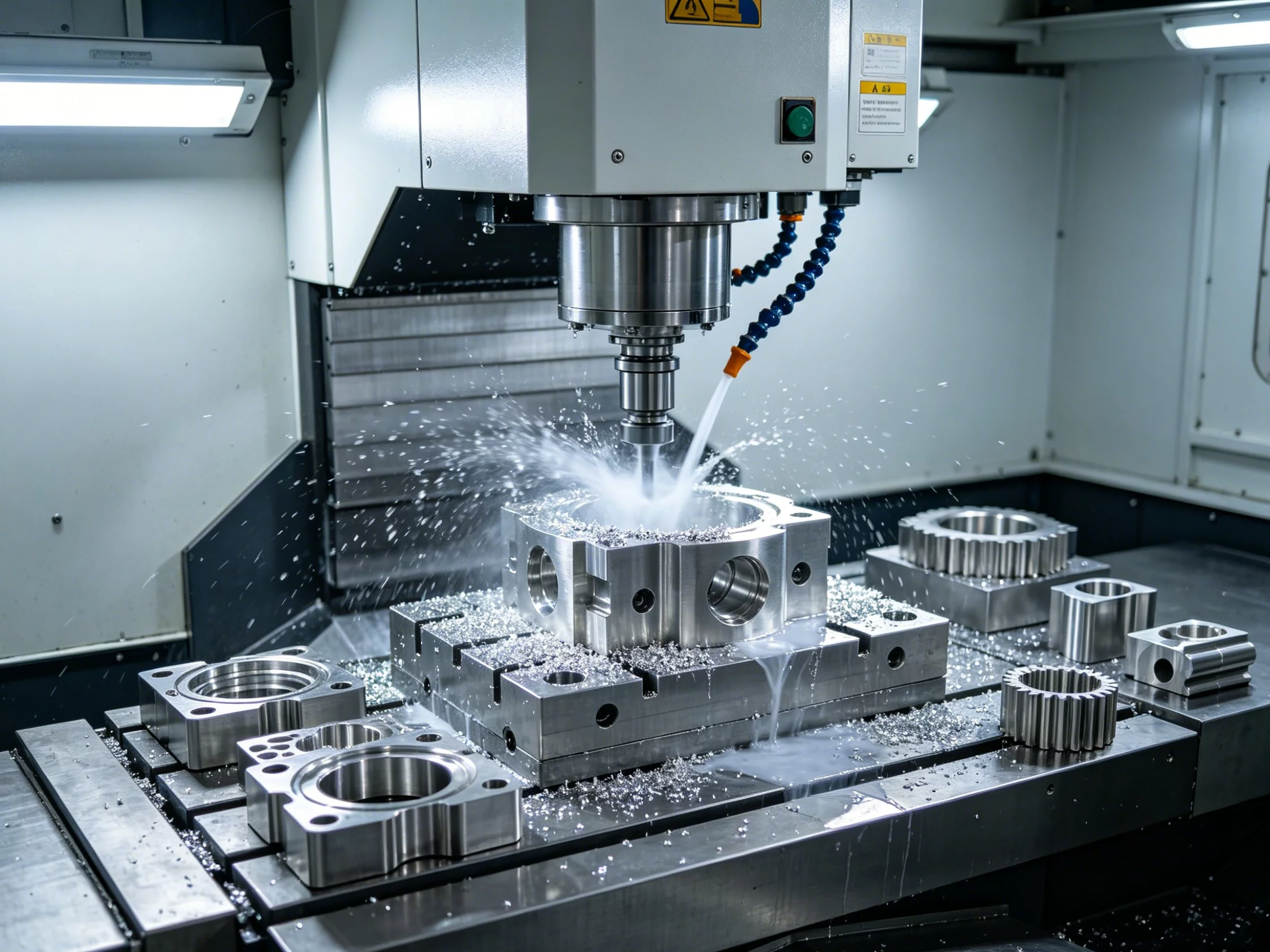
Keyboard CNC machining refers to using computer-controlled milling, turning, or 5-axis operations to produce precision metal or polymer components for mechanical and electronic keyboards. Common parts include CNC machined keyboard housings, switch plates, PCB mounts, and sometimes keycap bodies. The process suits applications where tolerances under 0.01 mm, surface finishes below 32 µm, or complex internal geometries are required—conditions that injection molding or die-casting cannot always meet at low volumes. For prototyping or short runs, keyboard CNC machining is often the fastest and most accurate option.
Most keyboard design teams face the same core problem: they need a small batch of machined structural parts that fit tightly around switches, PCBs, and rubber O-rings—without spending on a full tooling line. This guide breaks down what CNC actually handles in a keyboard build, which materials and tolerances matter, and how to evaluate a supplier before committing to a production run.
Índice
What Parts of a Keyboard Are CNC Machined
Materials and Tolerance Specs That Matter
Cost Drivers and Budget Planning
Perguntas frequentes antes de fazer um pedido
Choosing the Right Machining Partner
What Parts of a Keyboard Are CNC Machined
Not every keyboard component benefits from CNC. Screws, springs, and most rubber feet are molded or stamped. The parts that typically go through a CNC mill or lathe are:
6:e:5:c:6:5:3:d:b:8:0:0:a:f:7:d:6:6:a:4:2:d:7:c:8:0:3:e:d:5:b:1
After you identify which of these your project needs, confirm whether keycap CNC machining or housing milling is the dominant cost driver. That single decision shapes your material choice and machine-time allocation.
Materials and Tolerance Specs That Matter
Seleção de materiais drives both the feel of the finished keyboard and the machining strategy. Aluminum 6061 is the default for housings because it machines fast, anodizes well, and resists warp. Brass suits switch plates that must maintain flatness over years of thermal cycling. POM (Delrin) is a low-friction option for keycap CNC machining when a lighter weight is desired.
For tolerances, most keyboard structural parts call for ±0.02 mm on overall dimensions and ±0.005 mm on mating surfaces (PCB holes, switch slots). If your design has a switch plate that must not lift under force, specify flatness rather than just linear tolerance. Surface finish is another hidden variable: a Ra of 6.3 µm or better prevents visible scratching on anodized housings and reduces friction on POM keycaps.
Before sending drawings to a shop, double-check that every internal channel, undercut, and screw boss has a defined tool path. Ambiguous geometry is the number-one cause of rework on custom keyboard components.
Cost Drivers and Budget Planning
Three factors dominate the price of a CNC-machined keyboard part:
Material grade and volume. A 1 kg brass plate costs significantly more than a 500 g aluminum housing of similar size.
Machine time and complexity. A 5-axis milled housing with hidden cavities can run 2–3× the cycle of a simple 3-axis switch plate.
Batch size. Prototyping a single housing is expensive per unit. At 100–500 units, the per-part cost drops sharply because setup and programming are amortized.
A realistic budgeting approach: request a machining tolerance and surface-finish schedule from your supplier, then ask for a quote at 1, 50, and 500 units. This three-point comparison reveals where your break-even between prototyping and production run volume sits.
YPMFG can review your part drawings and flag which features are driving cycle time before you lock in a quote. That early engineering check often saves a redesign cycle later.
Perguntas frequentes antes de fazer um pedido
Do I need a 5-axis machine for a standard keyboard case?
For most open-top or two-piece cases, a 3-axis mill with fixture workholding is sufficient. Five-axis becomes necessary when your housing has angled side faces, internal undercut channels,or integrated antenna cavities that cannot be reached from a single setup.
What is the minimum order quantity for CNC keyboard parts?
CNC has no tooling minimum, so a single prototype is viable. However, most shops apply a minimum machine-setup fee. For under 20 units, expect the setup to represent a large share of the total cost. At 100+ units, the per-part price stabilizes.
Can I switch materials mid-project without reprogramming?
Changing from aluminum to POM or brass means the tooling path, feeds, and speeds all shift. The CAD model stays the same, but the CAM program and fixture design must be redone. Plan material selection early to avoid this rework.
How do I verify a machined housing fits my PCB before mass production?
Request a prototyping sample at your final tolerance class. Perform a full press-fit and screw-mount test with your actual PCB and switch stack. Only after sign-off should the production run begin.
What finishing options are available beyond raw machining?
Anodizing (Type II or III), PVD coating, bead blasting, and passivation are the most common post-machining steps for metal housings. For POM keycaps, a light tumble polish is typical. Confirm the finish spec in your drawing callouts so the shop does not guess.
Choosing the Right Machining Partner
A reliable CNC machined keyboard housing or switch-plate supplier should be able to show you: material certificates, a documented tolerance-verification process (CMM or structured-light scanning), and a clear revision-control workflow for drawing changes. If your project involves tight switch-plate flatness or a mixed-material assembly, ask the supplier to walk you through their inspection plan before you release the PO.
YPMFG supports keyboard and small-electronics projects that need engineering review, material selection advice, and batch-from-prototype-to-production flexibility. Send your drawings or a short specification sheet and the team will flag any features that may affect cycle time, surface finish, or assembly fit—before you commit to a custom keyboard components build.