 English
  German
  Russian
  Japanese
  Korean
  Spanish
  French
  Italian
  Portuguese
 Quick answer:
Using a CNC milling service online means you upload design files, specify materials and tolerances, and receive quotes within hours instead of weeks. The core question is whether the digital process gives you the same engineering control as a traditional supplier. In most cases, it does—provided you send complete specifications upfront and verify the shop’s tolerance capabilities and material certifications before committing. The risk sits in incomplete data, not in the channel itself. A buyer who treats the online form as a shortcut for a phone call will get vague quotes and surprises at final inspection.
You are likely comparing several quotes for CNC machined parts and wondering whether the one that arrived through a web form will actually meet your tolerance specifications. Or you need a small prototype machining run and want to skip the back-and-forth email chain. Either way, the decision comes down to a handful of concrete checks before you send your files. YPMFG handles both ends of that spectrum, from a quick quote request to a full engineering review when the geometry carries unusual loads.
What “Online” Changes and What It Does Not
The online layer changes speed and transparency. You can see standard material options, lead-time ranges, and rough pricing tiers before a sales rep ever picks up the phone. Every revision and file version is logged, creating a paper trail that a phone order rarely produces.
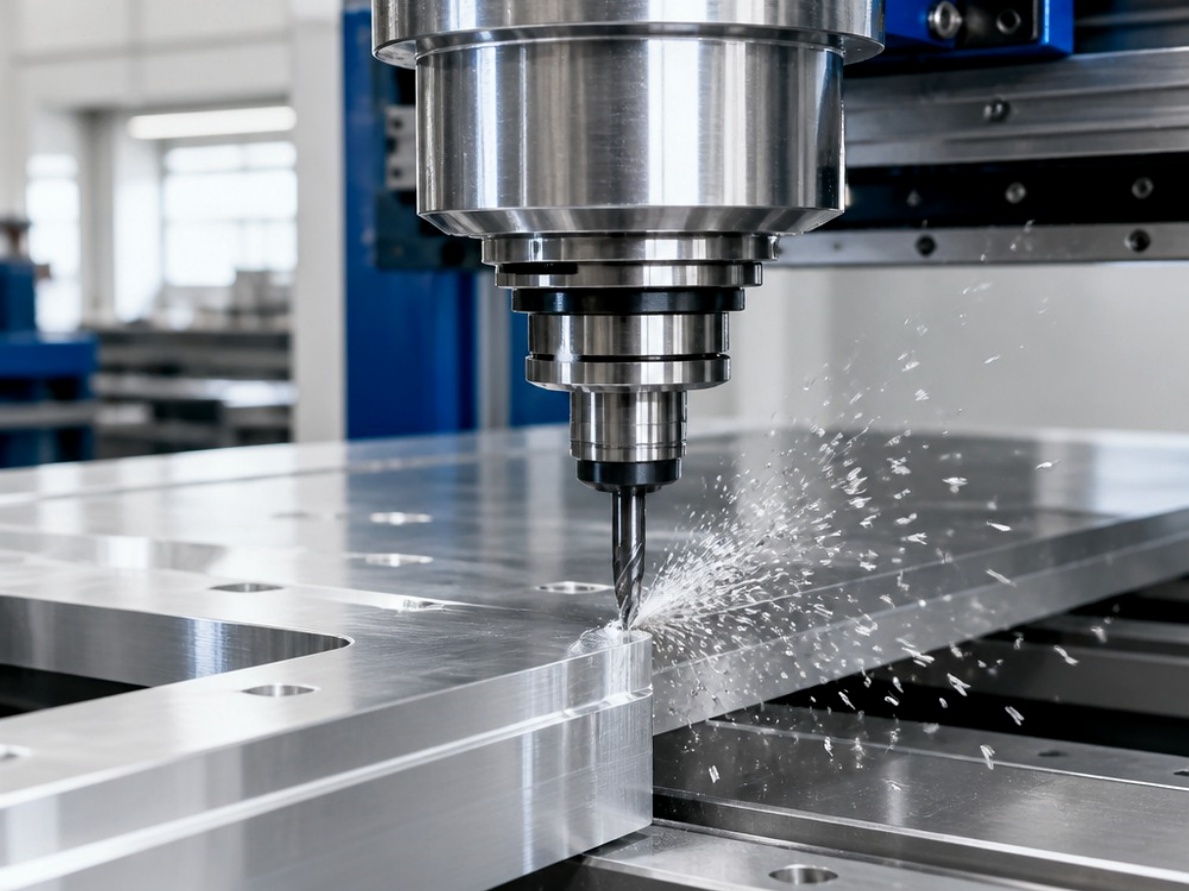
What it does not change is the engineering backbone. A CNC milling part is still defined by its geometry, material grade, heat-treatment requirements, and surface finish. An online form cannot replace a conversation about load paths, mating surfaces, or assembly clearance.
When a part carries critical fits or unusual loads, an engineer should review the geometry before machining begins. That step is what separates a clean production run from a rework cycle.
## The Specifications That Actually Matter Before You Order
Three data points separate a smooth delivery from a months-long rework loop:
Material selection — full grade and condition. “Aluminum 6061” is not the same as “Aluminum 6061-T6,” and the difference changes both cost and machinability.
Tolerance and finish — critical dimensions, GD&T callouts, and the surface-finish level each face requires. A ±0.001 in. tolerance on one face changes cycle time and tooling costs more than the part geometry itself.
CAD file format and revision — STEP or IGES preferred; native SolidWorks or CATIA files if the shop supports them. Confirm which revision is final before the file leaves your drive.
If you are unsure which of these to prioritize, send your drawings to YPMFG for an engineering review. The team flags dimensional risks and suggests fixture-friendly changes before you lock the part into a quote.
Pre-Request Checklist
Each missing line typically adds one round-trip of clarification, which in practice pushes your schedule back three to seven business days.
Questions Buyers Often Ask Before Placing an Order
Does an online quote include machining time and setup?
Most standard quotes cover machine time, setup, and material. Complex parts with five-axis moves or tight bore tolerance may carry a separate setup surcharge. Ask for an itemized breakdown before comparing two shops side by side.
Can I get a first-article inspection report?
Reputable shops provide a FAIR at no extra charge for prototype machining runs. For batch production, confirm whether the FAIR is one-time or repeated per lot, and which template the shop follows.
What happens if my part fails tolerance after delivery?
A clear NCR process should exist. Check whether the supplier’s quality policy covers rework,credit, or full replacement, and whether dimensional data traces back to the specific machine and tool path.
Do I need to ship material to the shop?
For standard alloys, the shop sources material in-house and lists it in the quote. Custom heat-treated or aerospace-lot material typically requires buyer-furnished stock, so confirm this early to avoid a material-hold delay.
Making a Smarter Sourcing Decision
The channel is not the risk. The risk is sending an incomplete specification set and expecting the shop to fill in the blanks. If you walk away with a tighter spec sheet, a confirmed material callout, and a clear inspection plan, the quotes you receive will actually be comparable.
Send your files and notes to YPMFG for a no-obligation engineering review and an itemized CNC milling quote. The team will flag anything that could cause a rework loop before you commit to a lead time.