 German
  English
  Russian
  Japanese
  Korean
  Spanish
  French
  Italian
  Portuguese
 Kurze Antwort:
Aluminum 3D printing is viable for prototypes, low-volume complex parts, and tooling, but it is rarely the most cost-effective choice for mass production. The process typically carries higher per-part costs and lower mechanical strength compared to CNC machining or casting. Engineers should evaluate aluminum metal additive manufacturing only when part geometry, weight reduction, or rapid iteration justifies the trade-off.
For many industrial applications, a hybrid approach delivers better results — using 3D printing for complex internal features and CNC finishing for critical surfaces. At YPMFG, we regularly help buyers determine whether additive manufacturing or subtractive machining better fits their volume, tolerance, and performance targets.
Understanding How Aluminum 3D Printing Works
Aluminum 3D printing primarily relies on two metal additive processes: Directed Energy Deposition (DED) und Powder Bed Fusion (PBF), also known as selective laser melting (SLM) or electron beam melting (EBM). DED feeds metal powder or wire into a molten pool created by a laser or electron beam, building parts layer by layer. PBF spreads a thin powder layer and selectively melts it with a high-power laser to form solid cross-sections.
Each method has distinct strengths. DED excels at repairing existing components and depositing material onto large substrates, making it useful for custom tooling solutions. PBF produces denser, more dimensionally accurate parts suitable for functional end-use components. However, both processes face inherent challenges when working with aluminum alloys.
Key Challenges With Aluminum in Metal Additive Manufacturing
Aluminum poses unique difficulties for metal 3D printing that engineers must account for before committing to the process. These challenges directly affect part quality, dimensional accuracy, and overall production cost.
High Reflectivity and Thermal Conductivity. Aluminum reflects up to 95% of laser energy at room temperature. This makes consistent melting difficult and requires specialized laser settings, often at significantly higher power levels than steel or titanium printing.
Hydrogen Porosity. Molten aluminum absorbs hydrogen from the surrounding atmosphere. As the part cools and solidifies, the hydrogen escapes and forms pores inside the component. These pores reduce mechanical strength and can cause premature failure under load.
Cracking and Residual Stress. Aluminum alloys contract significantly during rapid solidification. This creates high residual stresses that can lead to hot cracking, especially in alloys like the 6xxx and 7xxx series. Proper build orientation and support structures are essential to mitigate this risk.
Surface Finish Limitations. As-printed aluminum parts typically require extensive post-processing. Support removal, heat treatment, and CNC-Bearbeitung of critical features are almost always necessary to achieve usable tolerances and surface quality.
Advantages of Aluminum 3D Printing
Despite these challenges, aluminum additive manufacturing offers several compelling benefits that make it the right choice for specific applications.
Complex Geometry Without Tooling. Internal channels, lattice structures, and organic shapes that are impossible to machine can be printed in a single build. This eliminates the need for custom fixtures, molds, or multiple assembly steps.
Rapid Prototyping and Iteration. Design changes can be implemented in hours rather than weeks. Engineering teams can test and validate form, fit, and function without waiting for tooling fabrication.
Weight Reduction Through Lattice Structures. Aluminum’s low density combined with topological optimization allows engineers to create lightweight yet stiff components. This is particularly valuable in aerospace and automotive applications where mass savings directly impact performance.
Part Consolidation. Multiple assembled components can be redesigned as a single printed part, reducing assembly time, fastener points, and potential failure locations.
When Aluminum 3D Printing Makes Sense

Not every application benefits from additive manufacturing. The following scenarios represent cases where aluminum 3D printing delivers genuine value.
One-off or low-volume production runs. When demand is under 500 parts, the high per-unit cost of 3D printing is acceptable because traditional methods require expensive tooling and setup.
Design validation before tooling investment. Printing a functional prototype in aluminum allows engineers to test real material properties before committing to CNC production parts or casting tooling.
Custom jigs, fixtures, and tooling. Shop-floor tooling often requires unique geometries that are impractical to machine. Metal 3D printing produces durable aluminum tooling in days rather than weeks.
Components with internal cooling channels. Heat exchangers, mold inserts, and battery cooling plates benefit from the complex internal passages that only additive manufacturing can produce.
Aerospace and defense spare parts. Obsolete or discontinued components can be reproduced on demand without maintaining expensive inventory or reactivating dormant tooling lines.
Cost Comparison: Aluminum 3D Printing Versus CNC Machining
Understanding the cost structure helps buyers make informed sourcing decisions. The table below outlines how typical cost factors differ between the two processes.
YPMFG routinely evaluates cost scenarios for customers comparing metal additive manufacturing against subtractive processes. The break-even point between the two methods typically falls between 50 and 200 parts, depending on part complexity and required tolerances.
Material Selection: Which Aluminum Alloy Should You Choose?
Not all aluminum alloys print equally well. Alloy selection directly influences printability, mechanical properties, and post-processing requirements.
AlSi10Mg. This is the most widely used alloy for powder bed fusion. It offers good strength, decent ductility, and reasonable printability. It is the standard choice for functional prototypes and low-volume end-use parts.
AlSi7Mg0.3. A casting-equivalent alloy that prints with lower cracking susceptibility. It is a practical option when weldability and corrosion resistance are priorities.
AC4CH. A die-casting grade alloy adapted for additive manufacturing. It is increasingly used in automotive applications where casting-like properties are desired.
A356. Traditionally a casting alloy, A356 has been adapted for DED processes. It is commonly used for repair and coating applications on existing components.
7xxx series alloys such as 7075 are generally avoided in additive manufacturing due to extreme cracking sensitivity. If high strength is required, CNC machined 7075 aluminum remains the more reliable choice.
Post-Processing Requirements You Must Plan For
As-printed aluminum parts rarely meet final specification requirements. Budget time and cost for the following post-processing steps.
Heat treatment. Stress relief annealing and solution heat treatment are often necessary to achieve specified mechanical properties and reduce residual stress.
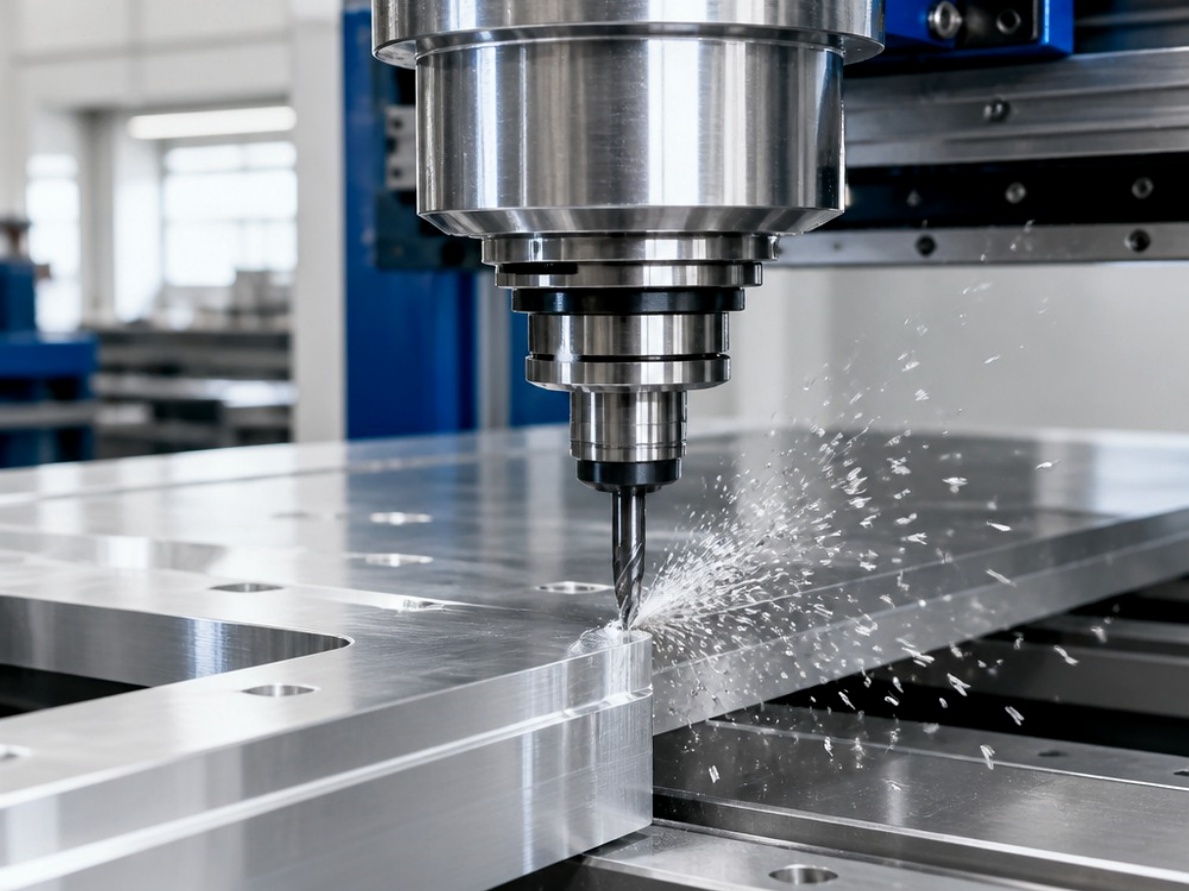
Support removal. Built-in support structures must be mechanically removed, typically through cutting, grinding, or wire EDM. This adds labor and can affect nearby surface quality.
Surface machining. Critical dimensions and sealing surfaces almost always require CNC milling or turning to achieve specified tolerances and surface finish.
Hot isostatic pressing (HIP). For structural or safety-critical applications, HIP can close internal porosity and improve fatigue life. This is an optional but increasingly common step for aerospace components.
Quality and Certification Considerations
Industrial buyers should verify that their additive manufacturing provider follows established quality management practices. Request documentation that covers material traceability, process parameter validation, and inspectable defect acceptance criteria.
Relevant standards include AMS 7042 for additive manufactured aluminum parts and ISO/ASTM 52900 for metal additive terminology and process categories. Certifications such as AS9100 or ISO 9001 from the printer indicate a commitment to documented quality systems, though these do not guarantee part performance for your specific application.
You should always request a first article inspection report and material test certificates before approving a production run. These documents provide verifiable evidence of part quality and material composition.
Häufige Fehler, die es zu vermeiden gilt
Many engineering teams make preventable errors when evaluating aluminum 3D printing as a manufacturing route. Being aware of these pitfalls helps you avoid costly surprises.
Assuming as-printed tolerances are sufficient. Most aluminum 3D printed parts require secondary machining to meet functional specifications. Design your part with CNC finishing allowances built into critical features from the start.
Underestimating total landed cost. The printed part is often only 40 to 60 percent of the final cost. Post-processing, inspection, and shipping can significantly increase the total expense.
Choosing the wrong alloy for the application. Printing an alloy that cracks during the build process wastes time and material. Consult with an engineer familiar with aluminum alloy selection before finalizing your material choice.
Expecting performance equal to cast or forged aluminum. Additive manufactured aluminum typically exhibits lower fatigue strength and higher variability in mechanical properties compared to traditional manufacturing routes. Validate performance through testing for your specific loading conditions.
When to Choose CNC Machining Instead
While aluminum 3D printing serves important roles in the manufacturing toolkit, many applications are better served by conventional subtractive methods. The following indicators suggest CNC machining is the superior choice.
High-volume production above 500 units. Per-part costs drop dramatically with CNC manufacturing at volume, making 3D printing economically unviable.
Tight tolerances below ±0.05 mm. CNC machining consistently achieves tighter dimensional control than most metal additive processes.
Maximum mechanical strength and fatigue resistance. Forged or cast aluminum parts typically outperform additively manufactured equivalents in structural applications.
Simple geometries without internal features. If the part does not benefit from design freedom, machining is faster,cheaper, and more predictable.
How to Evaluate a 3D Printing Service Provider
Selecting the right manufacturing partner requires more than comparing per-part prices. A thorough evaluation protects your project from quality and delivery risks.
Request a detailed technische Begutachtung of your CAD model. A capable provider will identify potential print failures, suggest design improvements, and recommend optimal build orientation before quoting.
Ask about in-process monitoring and inspection capabilities. Providers that monitor melt pool dynamics, measure layer thickness, and perform CMM or CT scanning offer significantly higher quality assurance than those relying solely on visual inspection.
Verify material documentation practices. Every batch of metal powder should come with a certificate of analysis specifying chemical composition, particle size distribution, and oxygen content. These parameters directly affect print quality and part performance.
Confirm post-processing capacity. A provider that offers integrated heat treatment, support removal, and CNC finishing in-house reduces supply chain risk and simplifies communication throughout the production process.
Common Questions About Aluminum 3D Printing
Is aluminum 3D printing stronger than cast aluminum?
Generally no. Additive manufactured aluminum typically has lower fatigue strength and greater property variability than conventionally cast or forged equivalents. Post-processing such as HIP can narrow this gap, but CNC machined aluminum remains the strongest option for structural applications.
How long does it take to 3D print an aluminum part?
Build times vary significantly by part size and printer type. A small prototype may print in under 12 hours, while a large complex component can require 48 to 72 hours or more. Total lead time including post-processing often extends the timeline to one to two weeks for standard orders.
What is the minimum order quantity for aluminum 3D printing?
Most providers accept single-part orders since the process does not require tooling. However, minimum charge thresholds often apply to cover machine setup, material handling, and quality documentation. Expect a per-part floor price even for one-off components.
Can aluminum 3D printed parts be anodized?
Most aluminum alloys suitable for 3D printing can接受 anodizing, but the surface quality of as-printed parts may show visible layer lines after the process. Machining the surface flat before anodizing produces the cleanest visual result.
What file format do you need for a quote?
STEP or STL files are standard. STEP files are preferred because they preserve precise geometric data and allow engineers to evaluate wall thicknesses, undercuts, and feature accessibility during the quotation review process.
Need Help Deciding Between 3D Printing and CNC Machining?
Choosing between aluminum 3D printing and traditional manufacturing is not a simple yes-or-no decision. The right process depends on your production volume, geometric complexity, mechanical requirements, and budget constraints. Many projects benefit from a combination of both methods rather than a single approach.
YPMFG provides free engineering evaluations for customers who are unsure which manufacturing route fits their application. You can send your CAD files and specification requirements for a detailed assessment that covers process recommendation, estimated lead time, and competitive quoting. Our team specializes in CNC precision parts manufacturing and can advise whether additive manufacturing or subtractive processes better serve your project goals.