 Spanish
  English
  German
  Russian
  Japanese
  Korean
  French
  Italian
  Portuguese
 Respuesta rápida:
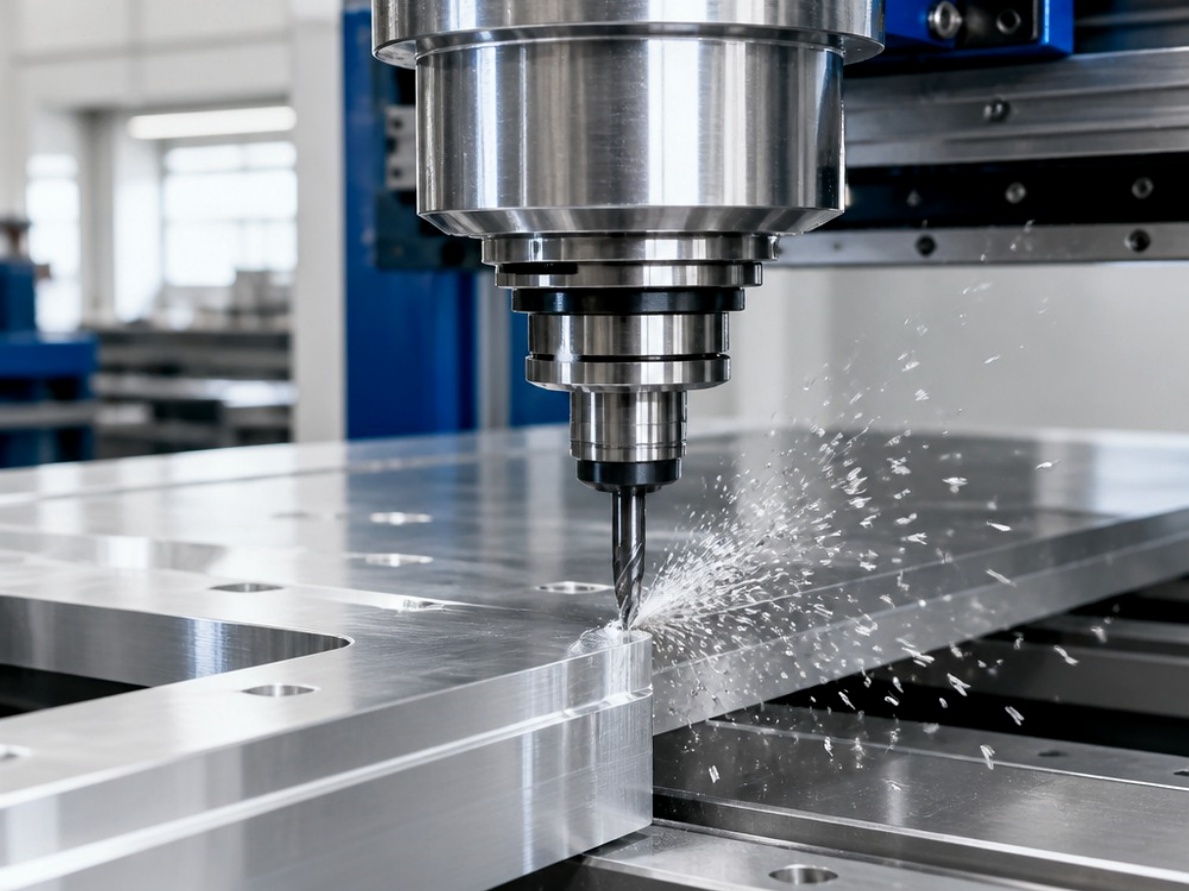
5 ejes Fresado CNC adds two rotational axes (A and C) to the standard three linear axes, allowing the cutting tool to approach a part from multiple angles in a single setup. This reduces clamping operations, improves surface finish on complex geometries, and tightens tolerances that would otherwise require repositioning on a 3-axis machine. If your component has undercuts, tilted holes, or multi-directional surfaces, 5-axis machining is typically the most efficient path. The key trade-off is a higher machine-hour rate versus lower total cycle time for complex parts.
Most buyers first encounter 5-axis milling when a part drawing shows features that no 3-axis machine can reach in one pass. The practical question then becomes whether the added axis justifies the per-unit cost, or whether a simpler setup will do. YPMFG supports engineering reviews for exactly this decision, helping buyers confirm which features truly require the fifth axis before committing to a quote.
¿Qué es el fresado CNC de 5 ejes?
Standard 3-axis machines move the tool along X, Y, and Z. A 5-axis controller adds two indexed or continuous-rotation axes, commonly called A (tilt) and C (table rotation). This keeps the tool perpendicular to the surface being cut, even on angled faces.
In practice, the two rotary axes can run in continuous mode (simultaneous 5-axis) or indexed mode (position-and-hold). Continuous mode suits aerospace impellers and freeform molds. Indexed mode handles most job-shop work without the software complexity of true simultaneous programming.
How 5-Axis Differs From 3-Axis Milling
On a 3-axis machine, any feature facing a second plane requires the part to be flipped and re-clamped. Each additional setup introduces cumulative tool-holder offset error. 5-axis keeps the part fixed on the pallet and rotates the table instead.
The practical impact: fewer setups mean less tolerance stack-up, fewer fixture designs, and a shorter lead time for multi-plane parts. However, 5-axis programming is more complex, and post-processing errors can cause tool collisions if the machine’s kinematic limits are not modeled correctly in the CAM post-processor.

When to Choose 5-Axis Over 3-Axis
If your part is a simple bracket with two opposing flat surfaces, 3-axis is the economical route. The moment a third or fourth angled feature enters the drawing, the 5-axis setup usually wins on total cost. YPMFG can run a quick kinematic check on your CAD file to confirm which axis configuration your geometry actually demands.
Características técnicas clave que hay que comprobar antes de realizar el pedido
Before sending a drawing for a Fresado CNC de 5 ejes quote, confirm these parameters with your supplier:
Maximum part envelope: X × Y × Z travel plus rotary range
Spindle speed and torque at the working RPM
Tool magazine capacity and largest tool diameter
Workholding type: hydraulic chuck, trunion pallet, or fixture plate

Simultaneous vs. indexed rotary capability
On-machine probing system for tool and part offset calibration
Coolant delivery: through-spindle, high-pressure, or both
These details determine whether the machine can hold your tolerance without partido compromises that would otherwise force a secondary operation.
Common Questions About 5-Axis CNC Milling
Does 5-axis always cost more per part?
Not necessarily. For parts that need three or more setups on a 3-axis machine, the single-setup 5-axis cycle can be shorter. The machine-hour rate is higher, but total labor and handling drop. The break-even depends on part geometry and material.
Can any part be machined on a 5-axis machine?
No. Very large parts may exceed pallet or spindle reach. Simple prismatic parts with no angled features gain no benefit. The decision hinges on whether the geometry actually justifies the added axis.
What file formats do 5-axis CAM systems accept?
Most shops work from STEP, IGES, or native CAD (SolidWorks, CATIA, NX). Confirm that your supplier’s CAM software matches your CAD platform to avoid faceting or reference-frame errors in the toolpath.
How does 5-axis affect surface finish?
Continuous 5-axis paths keep the cutter tangent to the surface, reducing step-over marks. On molds and freeform impellers, this can eliminate a secondary finishing pass, saving a full operation.
Are there material limitations for 5-axis work?
5-axis machines handle titanium, Inconel 718, and hardened steels well because the tool maintains an optimal engagement angle. Extremely thick sections may exceed clamping or thermal-stability limits, so verify the maximum stock thickness your supplier can hold.
Tomar una mejor decisión a largo plazo
Choosing between 3-axis and 5-axis milling is less about raw capability and more about whether your part geometry,tolerance stack, and volume genuinely benefit from the extra axis. Sending your specifications to YPMFG for an revisión técnica means you get a documented feasibility note, a cycle-time estimate, and a clear axis recommendation before you commit to a production run. You can also request fixture and tooling suggestions that keep the per-unit cost in check for repeat orders.