 Italian
  English
  German
  Russian
  Japanese
  Korean
  Spanish
  French
  Portuguese
 Risposta breve:
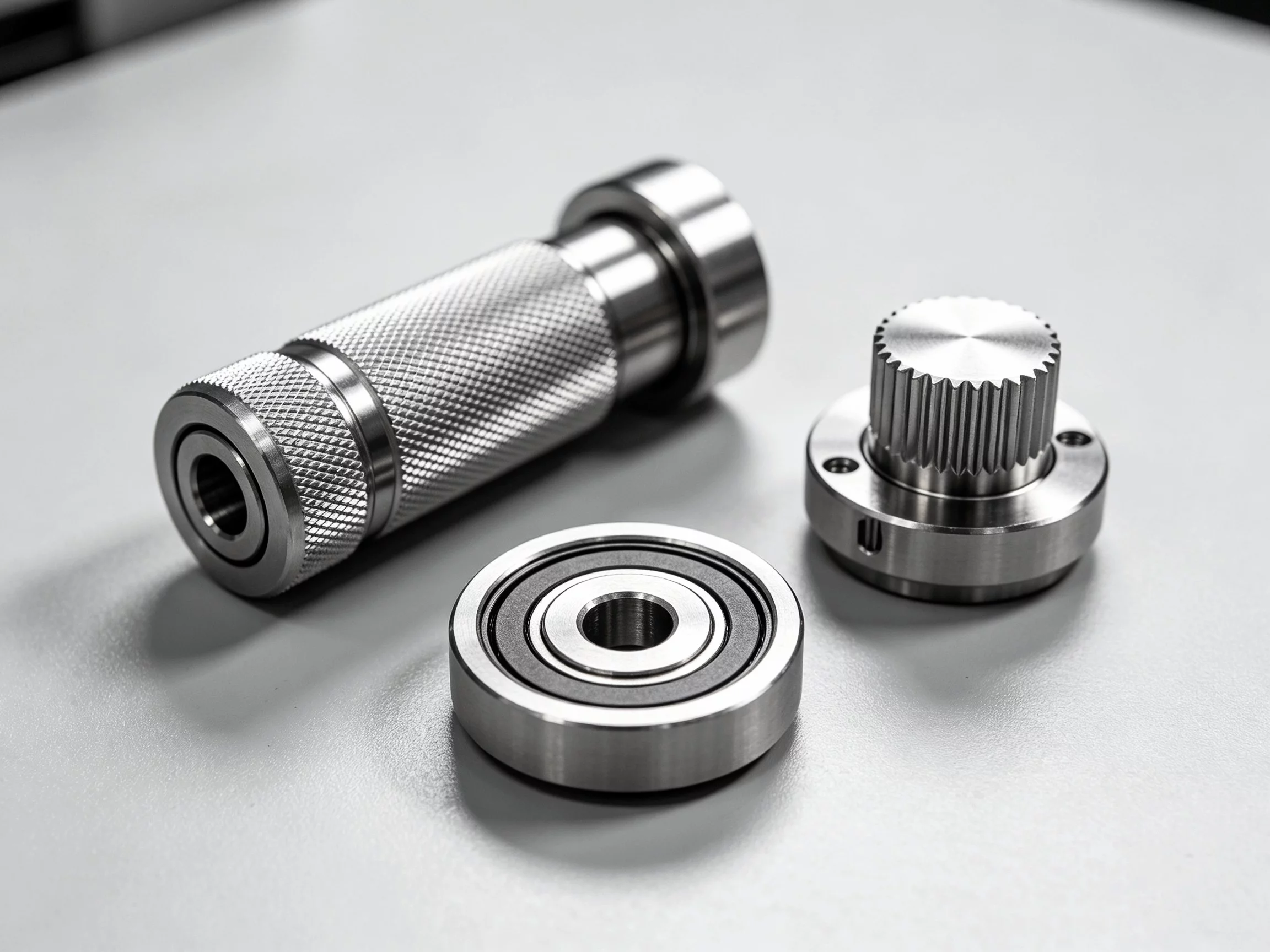
Personalizzato mini brass machining refers to producing small-diameter brass components (typically under 12 mm) via CNC turning, milling, or combined operations. The critical variables that determine whether your parts hold up in the field are material grade, tolerance stack, surface finish, and batch minimum. A common error is specifying only the outer diameter and length while leaving thread pitch, hole positioning, and chamfer angles undefined. For most applications, confirming your brass alloy grade and maximum allowable CNC tolerance before sending drawings will eliminate 80% of rework risk. YPMFG reviews incoming mini brass part specifications for exactly these gaps before quoting.
If you are sourcing small brass components for connectors, valve bodies, or medical-device housings, the gap between “it looks right” and “it passes assembly” usually comes down to how precisely your drawing captures micro-features. This short guide covers the specification points that most buyers overlook when ordering custom mini brass parts.
What “Mini Brass” Actually Means in CNC Work
In practice, “mini brass” is not a single standard. It describes a size class, not a material standard. Parts in this range typically fall between 3 mm and 12 mm in their largest dimension. The machining method shifts with size: under 5 mm, Tornitura CNC on a live-tool lathe dominates; between 5 and 12 mm,combined turning and milling handle most geometries.
The material is usually C36000 (free-machining brass) or C38500 (leaded brass with better machinability). C36000 is the default choice for electrical and fluid-connecting applications. C38500 suits high-volume runs where chip control matters. Your brass alloy grade selection should align with the part’s final function—conductivity, corrosion resistance, or weldability.
Key Specifications to Define Before Ordering
The table below lists the parameters that, when left ambiguous, cause the most rework on small brass components.
When you send drawings to YPMFG for a quote review, the engineering team cross-checks every dimension against the tooling that can actually hold the specified tolerance at that size. This step catches conflicts before you commit to a production run.
Material Grade and Tolerance Interaction
Choosing C36000 versus C38500 is not just a datasheet swap. Free-machining brass (C36000) produces shorter, more manageable chips, which keeps the Tornitura CNC spindle cleaner during a 20,000-piece run. Leaded brass (C38500) cuts even faster but introduces lead-content considerations for food-contact or medical applications.
Tolerance windows tighten as part size shrinks. A ±0.05 mm call on a 30 mm shaft is routine. The same call on a 3 mm shaft pushes into the range where thermal expansion of the workpiece during the cut becomes a measurable factor. Ask your machining partner whether their process includes in-situ measurement or post-heat stabilization for your batch.
Common Pitfalls With Small Brass Parts
Unspecified burr/chamfer calls. At sub-millimeter scale, a 0.1 mm burr can jam a connector. State chamfer angles explicitly on the drawing.
Plating stack-up not accounted for. If the part is later nickel- or gold-plated, the base dimensions must be offset by the plating thickness (typically 0.025–0.075 mm).
Batch minimum ignored. Many Produzione di componenti CNC shops set a practical minimum for setup time. Confirm the realistic MOQ for your geometry before pricing a 500-piece order.
No first-article inspection clause. For custom geometries, require a FAI report with your first batch so dimensional sign-off happens before full production.
## Questions Buyers Often Ask About Custom Mini Brass Machining
Can I mix two brass grades in one order?
Yes, provided both grades share the same plating and finishing specification. YPMFG can run C36000 and C38500 on the same schedule as long as the tooling is compatible and the batch size justifies the changeover.
What is the smallest reliable internal diameter in brass?
Internal features below 0.5 mm are machinable but require micro-tooling and often slow the cycle considerably. Confirm the feasible minimum with your supplier’s valutazione tecnica before finalizing the drawing.
Do mini brass parts need a second finishing pass?
Depends on the application. A Ra 0.8 µm as-machined surface is acceptable for many mechanical fits. Electrical contacts and plating substrates typically need an additional polishing or electropolishing step.
How do I verify lead content if the part touches food or water?
Richiedi un material certificate (mill cert) that lists the chemical composition. C38500 contains roughly 2–3 % lead; C36000 is essentially lead-free. For potable-water applications, C36000 or C45000 is the standard choice.
Getting a Quote on Your Custom Mini Brass Parts
The fastest path to a firm number is to send a 2D or 3D drawing plus your target tipo di materiale, quantity, finish, and any plating spec. YPMFG reviews incoming mini brass part requests for missing tolerance calls, feature conflicts, and tooling feasibility before returning a quotation. If your geometry is in early design, you can also share a preliminary sketch and ask for a selection recommendation on alloy, machining method, and realistic tolerance bands. That one call often saves a full rework cycle down the line.