 Russian
  English
  German
  Japanese
  Korean
  Spanish
  French
  Italian
  Portuguese
 Краткий ответ:
A 5-axis CNC milling machine cuts parts using five coordinated directions at once — three linear axes (X, Y, Z) and two rotary axes (typically A and B, or A and C). This lets the cutter approach the workpiece from almost any angle in a single setup, which dramatically reduces machining time, improves surface finish, and enables complex geometries that 3-axis machines simply cannot produce. For industrial buyers, the main trade-off is higher upfront equipment cost and greater programming complexity versus faster throughput and fewer setups.
In factories that produce aerospace components, medical implants, and precision molds, the need for tight tolerances on complex shapes is constant. Many procurement teams still evaluate 5-axis CNC milling as a luxury upgrade rather than a standard capability. That assumption often leads to costly rework, longer lead times, and missed opportunities for design optimization.
YPMFG works with engineering teams every day who face this exact dilemma. Buyers need to understand not just how 5-axis machines differ from 3-axis ones, but also which configuration suits their part geometry, what materials respond best, and how to evaluate quotes without being misled by incomplete specifications.
What Is 5-Axis CNC Milling?
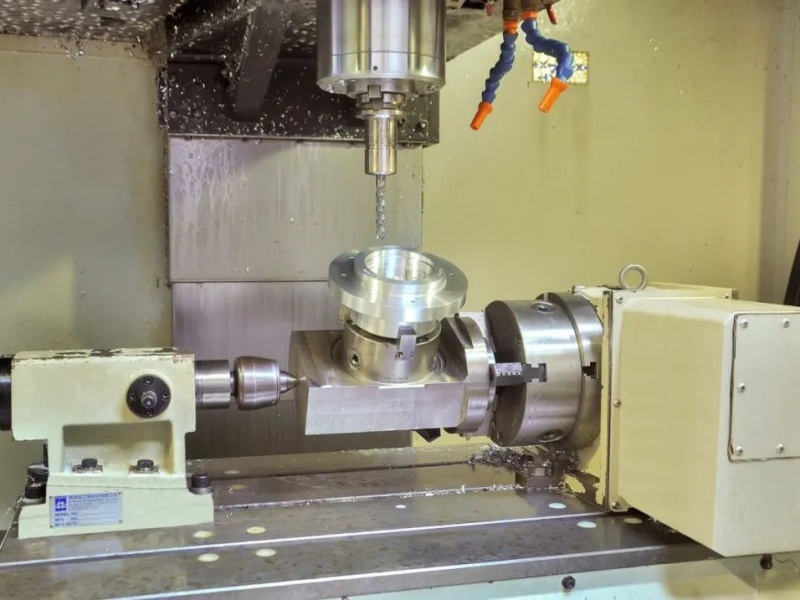
Five-axis CNC milling adds two rotational degrees of freedom to the standard three linear movements. The most common configurations are table-table (A and C axes), head-head (A and B axes), or table-head combinations. In a table-table setup, the workpiece tilts and rotates while the spindle moves linearly. In a head-head setup, the spindle head tilts and the table rotates.
This multi-directional approach allows the cutting tool to maintain optimal contact with the part surface throughout the cut. The result is fewer clamping operations, higher accuracy, and the ability to machine undercuts, deep cavities, and sculpted surfaces that would require multiple setups on a 3-axis machine.
The key difference from 3-axis machining is not just speed — it is geometric capability. A part with compound curves, angled features, or simultaneous multi-surface machining can often be completed in one fixture position on a 5-axis machine, whereas the same part on a 3-axis system may need three or four separate setups.
5-Axis Machine Configurations Explained
Choosing the right machine type matters more than most buyers realize. The configuration determines your part size limits, rigidity, accessibility, and programming complexity.
Each configuration has distinct advantages. A table-table machine typically offers the highest rigidity for precision parts because the spindle remains vertical and stable. A head-head machine handles larger workpieces more easily since the table does not carry the rotary burden. For general-purpose job shops, a table-head combination provides the broadest flexibility.
When evaluating suppliers, always confirm which configuration they use for your part type. A machine that is excellent for small aerospace brackets may not be suitable for large automotive intake manifolds.
Materials Compatible with 5-Axis CNC Milling
Five-axis milling works across a wide material spectrum. The ability to maintain optimal cutting angles means that even tough materials can be machined more efficiently than on 3-axis equipment.
Common materials include aluminum alloys (6061, 7075, 2024), stainless steels (304, 316, 17-4PH), titanium grades (Gr 1 through Gr 5), Inconel and other superalloys, copper and brass, engineering plastics like PEEK and Ultem, and hardened tool steels. Each material responds differently to multi-axis tool paths.
Titanium and Inconel benefit significantly from 5-axis approaches because the continuous chip load and optimized cutting angle reduce tool wear and heat buildup. Softer materials like aluminum gain primarily from reduced cycle time due to higher material removal rates possible with simultaneous axis movement.
Material choice also affects tool selection. Harder alloys require carbide tools with specialized coatings. Polymers need sharp tools with different geometries to prevent melting. Always verify that your supplier understands material-specific cutting parameters before committing to a quote.
Key Applications of 5-Axis CNC Machining
Certain industries rely heavily on 5-axis capabilities because their part designs simply cannot be produced efficiently otherwise.
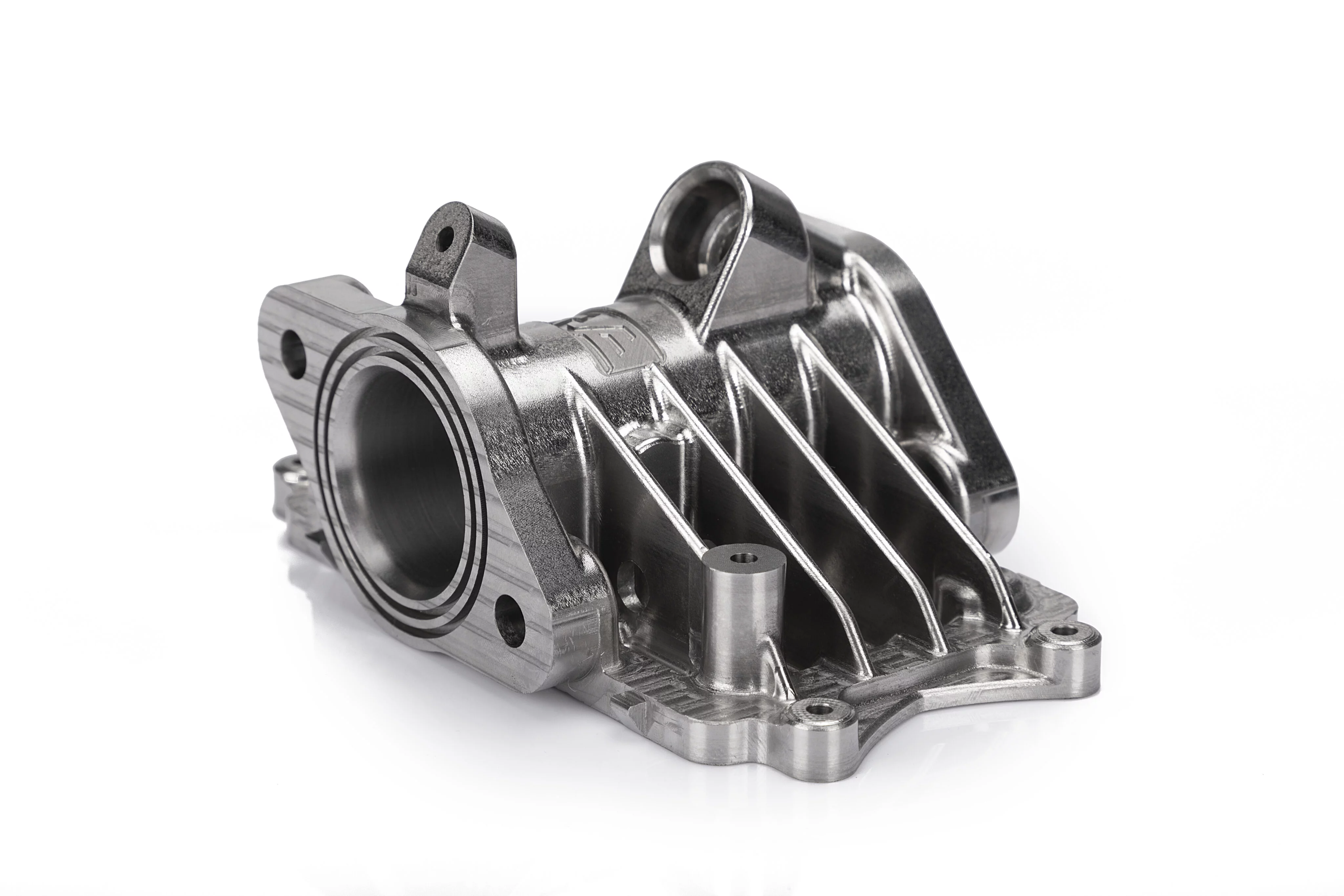
Aerospace components such as turbine blades, impellers, engine mounts, and structural brackets demand complex freeform surfaces and tight tolerances. Medical devices including orthopedic implants, surgical instruments, and dental components require smooth finishes and intricate geometries in biocompatible metals. Mold and die makers use 5-axis machines for cavity and core machining where undercuts and draft angles are essential.
Automotive prototype parts, racing component housings, and lightweight structural brackets also benefit. Energy sector applications like valve bodies and hydraulic manifolds with complex internal passages are routinely produced on 5-axis centers. Consumer electronics enclosures and connector housings increasingly use these machines for rapid iteration and high-quality surface finishes.
The common thread across all applications is geometric complexity. If your part has features on multiple faces, angled holes, or continuous curved surfaces, 5-axis machining is likely the most efficient production route.
Cost Factors in 5-Axis CNC Parts
Understanding pricing helps buyers avoid surprises and make informed sourcing decisions. Several variables directly influence the final cost of 5-axis CNC milled parts.
Machine time is the largest cost driver. While 5-axis machines have higher hourly rates than 3-axis centers, they often complete parts faster by eliminating multiple setups. Setup time decreases substantially when a single fixture can access all required surfaces. Programming time, however, remains higher due to the complexity of generating collision-free tool paths for five coordinated axes.
Material cost follows standard CNC pricing logic — larger billets and tougher alloys cost more. Tool wear is another factor; hard materials accelerate tool replacement, and 5-axis operations sometimes require specialized long-reach or angled tools that carry premium prices.
Surface finish requirements also affect cost. A standard mill finish may only require basic tool paths, while a mirror polish or specific Ra value may demand additional finishing passes, specialized tooling, or secondary processes. Tolerance tightness beyond standard ±0.05 mm typically increases cost due to slower feed rates and more frequent inspections.
When comparing quotes, request a detailed breakdown that separates machine time, material, setup, tooling, and finishing. This transparency reveals where costs come from and where there may be room for optimization.
How to Choose the Right 5-Axis Supplier
Not all machining providers offer the same level of 5-axis expertise. Evaluating a supplier requires looking beyond price and examining technical capability, quality systems, and communication responsiveness.
First, verify the machine configurations available. A shop with only one table-table 5-axis center may not handle your part geometry optimally. Ask about spindle speed ranges, controller type (Fanuc, Siemens, Heidenhain), and whether they use CAM software with proven 5-axis simulation capabilities.
Second, review their quality documentation. ISO 9001 certification is standard. For aerospace work, AS9100 compliance matters. Request inspection reports, CMM capabilities, and first article inspection processes. A supplier that takes measurement and documentation seriously will produce more consistent results.
Third, assess their engineering support. Can they review your drawings and suggest design improvements? Do they offer DFM feedback before quoting? Suppliers who proactively recommend tool access improvements, tolerance relaxations where possible, and material substitutions demonstrate genuine expertise.
Fourth, check lead time reliability. 5-axis programming and setup take longer than 3-axis work. A supplier who gives realistic timelines and communicates delays promptly is more valuable than one who promises impossible speed.
YPMFG supports buyers through each of these evaluation steps. We provide engineering assessments, detailed quotations with clear cost breakdowns, and ongoing technical support throughout production.
Hidden Risks When Sourcing 5-Axis Machined Parts
Several risks commonly affect buyers who do not fully understand 5-axis capabilities. Being aware of these pitfalls helps you avoid costly mistakes.
Collision damage is a real concern during programming. Poorly generated tool paths can cause the spindle, tool holder, or fixture to collide with the workpiece or machine table. Reputable shops use simulation software to detect and eliminate collisions before cutting begins. Ask your supplier about their simulation process.
Insufficient tool reach is another frequent issue. Deep cavities or angled features may require long-reach tools that deflect under cutting forces, compromising dimensional accuracy. Your supplier should evaluate tool access and rigidity for every feature in your design.
Inadequate fixturing can distort thin-walled or delicate parts during machining. Proper fixture design distributes clamping forces evenly and minimizes vibration. Experienced providers build custom fixtures or modify existing ones to suit each part family.
Poor surface finish control often stems from incorrect feed rates or tool path strategies. Simultaneous 5-axis motion requires careful consideration of chip load and cutting engagement. Suppliers with proven processes will specify appropriate parameters for each material and geometry combination.
Always request sample parts or prototype runs before committing to full production. Physical evaluation of surface quality, dimensional accuracy, and finish consistency provides confidence that the supplier can deliver.
Comparison: 5-Axis vs 3-Axis CNC Milling
Understanding the practical differences between these two approaches helps buyers make informed equipment and sourcing decisions.
The deciding factor should always be part geometry and production volume. Simple box-shaped components with holes and slots on parallel faces are efficiently produced on 3-axis machines. Parts with compound angles, curved surfaces, or features requiring access from multiple orientations benefit from 5-axis processing.
For low-volume prototype work, the higher programming cost of 5-axis may not be justified if the part design is simple. For medium to high volumes of complex parts, 5-axis typically delivers lower per-unit cost despite higher machine rates because of reduced setup time and faster cycle completion.
Practical Questions Before Choosing 5-Axis Machining
Buyers frequently ask the same questions during the evaluation process. Addressing these concerns early prevents misunderstandings and ensures smoother project execution.
Can 5-axis machining reduce my overall production cost even though the machine rate is higher?
Often yes. When you factor in eliminated setups, reduced handling time, and fewer quality checks between operations, the total cost per part can be lower than multi-setup 3-axis machining. The savings become more significant as part complexity increases.
What file formats do 5-axis CNC suppliers accept?
Most providers accept STEP, IGES, and native CAD formats like SolidWorks and CATIA. 2D drawings in PDF or DWG are also standard. Providing both 3D models and detailed 2D drawings with GD&T ensures the fastest and most accurate quotation process.
How important is CAM programming expertise for 5-axis parts?
Extremely important. Poor CAM strategy leads to collisions, excessive tool wear, and unpredictable surface finishes. Experienced programmers understand collision avoidance, optimal tool orientation, and efficient material removal strategies. Always ask about your supplier’s CAM software and programmer experience level.
Can I mix 5-axis and 3-axis operations on the same part?
Yes. Many parts combine features best suited to each method. Straight holes and flat faces may be efficiently machined on a 3-axis mill, while complex curved surfaces require 5-axis processing. A skilled provider will recommend the most efficient combination for your specific part.
What quality inspections should I expect on 5-axis machined parts?
Standard inspections include CMM measurement of critical dimensions, surface finish verification, visual inspection for defects,and first article inspection reports. For regulated industries, dimensional traceability and material certifications are also required. Request a sample inspection report before placing your order.
How long does 5-axis programming typically take?
Programming time varies with part complexity. Simple parts may take a few hours, while highly complex geometries can require one to three days of CAM work. Budget time for engineering review and simulation before production begins. Rushed programming often results in costly errors.
Choosing the Right 5-Axis Solution for Your Application
The decision to use 5-axis CNC milling should be driven by part geometry, production volume, and quality requirements rather than trend or cost pressure alone. When your design demands simultaneous multi-surface machining, complex curves, or tight tolerance control across angled features, 5-axis processing offers measurable advantages over traditional approaches.
The key is working with a supplier who combines machine capability with programming expertise and quality discipline. YPMFG provides end-to-end support from initial engineering evaluation through final delivery. You can send your specifications to YPMFG for a detailed review, request a customized quote, or ask for an engineering assessment of your part design. Every inquiry receives a response from qualified technicians who understand the nuances of multi-axis machining.