 Russian
  English
  German
  Japanese
  Korean
  Spanish
  French
  Italian
  Portuguese
 Краткий ответ:
Обработка на станках с ЧПУ is a subtractive manufacturing process in which a computer-controlled machine moves cutting tools along programmed axes to shape a workpiece. The machine reads G-код toolpaths and removes material with high требования к допуску accuracy, typically ±0.001 inches. Unlike manual work, it repeats identical cuts across thousands of units without drift. This makes Обработка на станках с ЧПУ the default method for precision prototypes, production parts, and components with complex geometry.
If you landed here searching “what is CNC machining,” you are probably deciding whether this process fits your part or supplier evaluation. The confusion often comes from mixing up machining with 3D printing, casting, or hand fabrication. Below is a plain-language breakdown you can use for a real procurement decision.
В данном руководстве:
How the process works
CNC vs. manual machining
When CNC is the right call
What drives cost
Practical questions buyers ask
Как работает обработка на станках с ЧПУ
A designer builds a CAD model, then CAM software converts it into machine-readable toolpaths. The controller interprets those paths and drives the spindle, feed rate, and axis moves in real time. No operator stands at the machine for the entire run.

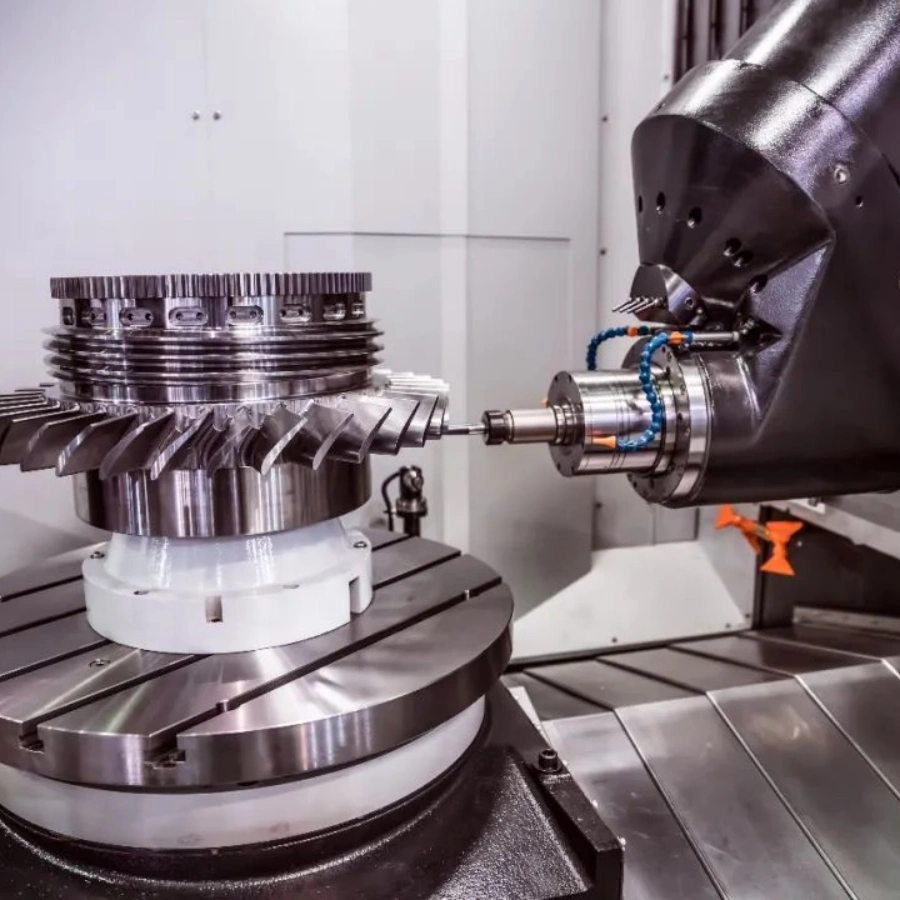
Большинство Фрезерование с ЧПУ setups use three, four, or five axes. Three-axis machines handle flat plates and simple contoured parts well. Five-axis configurations tackle complex surfaces where the tool must approach from multiple angles in one clamping setup.
Токарная обработка с ЧПУ works the other way around. The workpiece spins while a stationary tool cuts radially. It produces shafts, flanges, bushings, and any rotationally symmetric component.
The defining advantage is repeatability. Part one and part fifty thousand come off the same program with the same geometry. That consistency is why production buyers default to machining over hand work.
CNC vs. Manual Machining
For a one-off simple bracket, a skilled machinist on a lathe may be faster and cheaper. Once you need dozens of identical parts or tight internal features, the CNC path saves time and scrap. The crossover point depends on part complexity, not quantity alone.
When to Choose CNC Machining
CNC is the right process when your part hits one or more of these conditions:
Tolerance spec at ±0.001″ to ±0.005″ on critical dimensions
Internal or external geometry that no press or casting can form
Repeat batch from 50 to 100,000+ units with zero drift
Materials such as titanium, Inconel, or PEEK that need controlled cutting

Functional surfaces requiring a specific texture or finish
Prototype that must be dimensionally identical to the production part
If your component is a large cast housing or a simple stamped bracket, выбор материала and process choice will likely point you toward casting or fabrication. For mid-complexity, high-precision components, детали, изготовленные на станках с ЧПУ по индивидуальному заказу machined from bar stock or billet is the most reliable route. YPMFG supports projects that demand this level of dimensional control across aluminum,steel, stainless, and titanium families.
What Affects CNC Machining Cost
Стоимость обработки на станках с ЧПУ is never a single flat number. It shifts with several variables:
Material type: Aluminum is the lowest-cost base; titanium and superalloys can multiply material cost three to six times.
Geometry complexity: More setups, more axis changes, and deeper internal features add cycle time.
Tolerance and finish: Pushing from ±0.01″ to ±0.002″ increases setup and inspection time significantly.
Batch quantity: Programming and fixture design are one-time costs spread across the run.
Post-processing: Heat treatment, plating, anodizing, or deburring adds a separate line item.
A 50 mm aluminum bracket in a batch of 100 will cost a small fraction of a 200 mm Inconel impeller milled on five axes. Always request a quote against your actual drawing rather than relying on a per-piece catalog figure. YPMFG can review your specifications and flag which features will drive cost up before you commit to a programming or tooling budget.
Questions Buyers Often Ask About CNC Machining
How accurate is CNC compared to other methods?
For standard three- and five-axis work, repeatable accuracy of ±0.001 inches (≈0.025 mm) is typical. Precision runs can go tighter, but each step in tightness raises cost. Confirm the specific capability with your supplier for your material and geometry.
Can CNC machine plastic and composites, or only metal?
Yes. Polycarbonate, PEEK, Delrin, and carbon-fiber composites are all machinable. Feed rates and tooling differ from metal, but the process logic stays the same. Many shops now handle hybrid metal-and-plastic assemblies in one setup.
What files do I need to send a machinist?
Standard practice is a STEP or IGES 3D file plus a 2D drawing showing tolerances, surface finish, and material callout. A PDF drawing alone is not enough for CAM programming. Send both to avoid rework and revision cycles.
Is CNC better than 3D printing for functional parts?
For load-bearing, high-temperature, or tight-tolerance components, machined parts generally outperform printed ones in strength and dimensional stability. Printing excels at rapid design iteration. Many teams use both: print to validate the design, then machine for the production run.
Choosing the Right CNC Process for Your Part
The core value of Услуги по обработке на станках с ЧПУ is consistent, repeatable geometry without sacrificing material strength. Before locking a design into production, confirm your tolerance stack-up, material availability, and realistic batch volume.
You can send your drawings and specifications to YPMFG for an engineering review. The team will assess process fit, flag the features that drive cost, and provide a quotation with clear lead-time options so you can plan your production schedule with confidence.