Russian
 English
 German
 Japanese
 Korean
 Spanish
 French
 Italian
 Portuguese

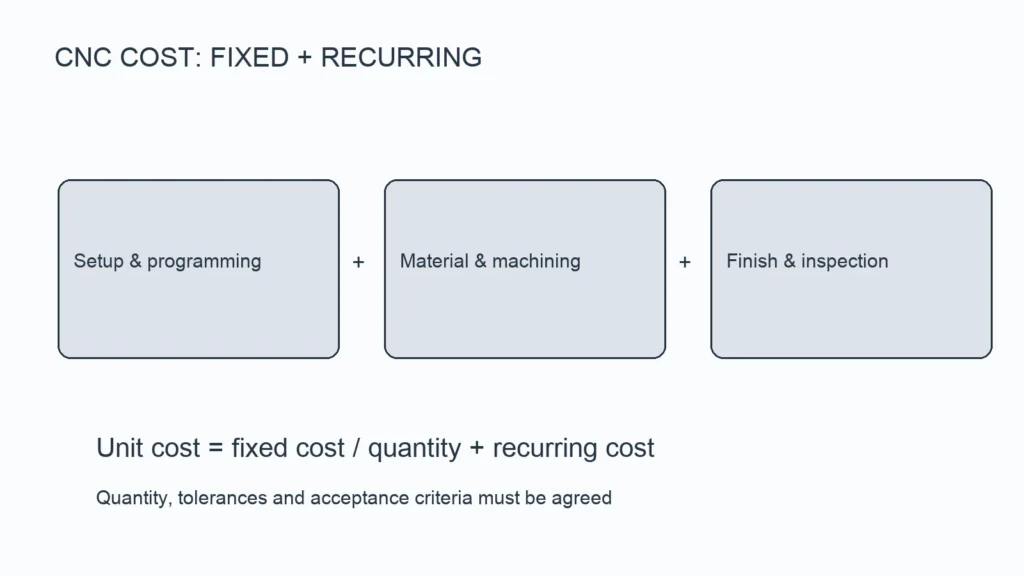
Break-even is the annual volume where your amortized die casting tooling cost per unit plus the casting run cost equals the Обработка на станках с ЧПУ per-unit cost for the same part. For simple geometries the crossover may arrive in a few thousand units; for complex parts with tight допуск при обработке на станках с ЧПУ calls, it can stretch into the tens of thousands. The number shifts with material, secondary operations, and design-revision risk.
Engineers weighing литье под давлением against Обработка на станках с ЧПУ often receive a single break-even figure from a supplier and treat it as settled. In practice, that number hides at least four moving parts: tooling amortization schedule, secondary machining hours, material waste, and the cost of mid-life design revisions. YPMFG has seen buyers lock into a casting process at low volume only to find post-machining erased most of the savings. The sections below walk through each cost layer so you can build your own crossover model before committing tooling dollars.
- Амортизация инструментального оборудования: A casting die costs an order of magnitude more than a CNC fixture. That gap is spread across the die’s expected shot life, which sets the minimum volume before the per-unit cost drops below the CNC alternative.
- Secondary machining: Most cast parts still need 2 to 5 minutes of CNC finishing per functional face. That post-machining line narrows the per-unit gap more than most break-even spreadsheets assume.
- Revision risk: A design change after the die is cut triggers re-tooling. CNC absorbs iteration in hours to days, which protects the 12- to 18-month product validation window where specs are still shifting.
At What Point Does the Total Cost Actually Crossover?
The table shows that die casting becomes the cheaper route only after the amortized tooling cost per unit drops below the CNC per-unit price. For most parts that threshold sits in the mid-thousands to mid-tens of thousands of annual units. Below that line, CNC wins on total cost of ownership even if the raw casting price looks lower on paper.
What Drives the Break-Even Volume Up or Down?
The crossover is not a fixed number printed on a quote sheet. It is the annual volume where your amortized die cost per shot plus the casting run cost equals the CNC per-unit cost for the identical part. Three inputs dominate: die cost and expected shot life, annual production rate, and whether the design is frozen or still iterating.
Tooling vs. Setup: The Upfront Split
A medium-complexity aluminum die costs an order of magnitude or more than a CNC fixture and program. That tool is spread across its shot life, which for a well-maintained die can range from 100,000 to several hundred thousand cycles depending on alloy and re-coating schedule. If your annual volume sits below that life, you are not fully amortizing the investment, and the per-unit die cost stays above the CNC alternative.
What Shot Life Means for Amortization
Shot life is not a guarantee; it is a planning envelope. Porosity, heat fatigue, and ejector wear all shorten effective life. A die that was designed for 300,000 shots may need a core rebuild at 180,000. That mid-life rebuild cost hits your amortization schedule and pushes the break-even volume higher than the original estimate. Track cycle count per lot and schedule a section check before the die reaches its design life.
Practical judgment: divide the die cost by its conservative shot life, add the casting per-unit cost, and compare to your CNC quote. You can send part drawings and annual volume to YPMFG for a side-by-side cost model before committing to tooling. One physical limit to note: even at the break-even volume, a cast part carries a parting-line mark and flash that no amount of shot-life extension removes.
How Does Part Geometry Push the Crossover Later?
Simple, flat-walled parts reach break-even earlier because the die is inexpensive and casting cycles run short. Add ribs, thin webs, deep bosses, or asymmetric undercuts, and the die cost jumps while cycle time lengthens. The crossover volume shifts upward, sometimes doubling, before die casting becomes the cheaper path.
Complexity Multipliers
Each additional undercut requires a separate ejector pin or core slide in the die. Each wall below the minimum practical casting thickness for the chosen alloy forces a thicker section or a CNC post-machining step. Both add tooling complexity and secondary labor. The more features your part carries,the later the break-even lands and the longer the payback on the tooling investment.
The risk of a wrong call is asymmetric: if you tool a die for a part with three deep blind holes and the spec later tightens on those positions, re-cutting the die core can cost as much as the original tool. CNC absorbs that change in a program edit within a day. Limit to acknowledge: no die design eliminates the minimum wall thickness constraint. If your part requires walls below the alloy’s practical casting limit, CNC or a hybrid route is the only option, and the break-even conversation ends at that geometry.
How Do Tolerances and Secondary Ops Reshape the Math?
Die castings come off the machine with dimensional accuracy in the range of ±0.05 mm per ISO 2768-m for most external features. Your engineering spec may call for ±0.01 mm on a bore or ±0.02 mm on a mating face. That gap is closed by material removal on a CNC machine, which adds setup time, tool wear, and a secondary labor line to every unit.
Post-Machining as a Hidden Variable
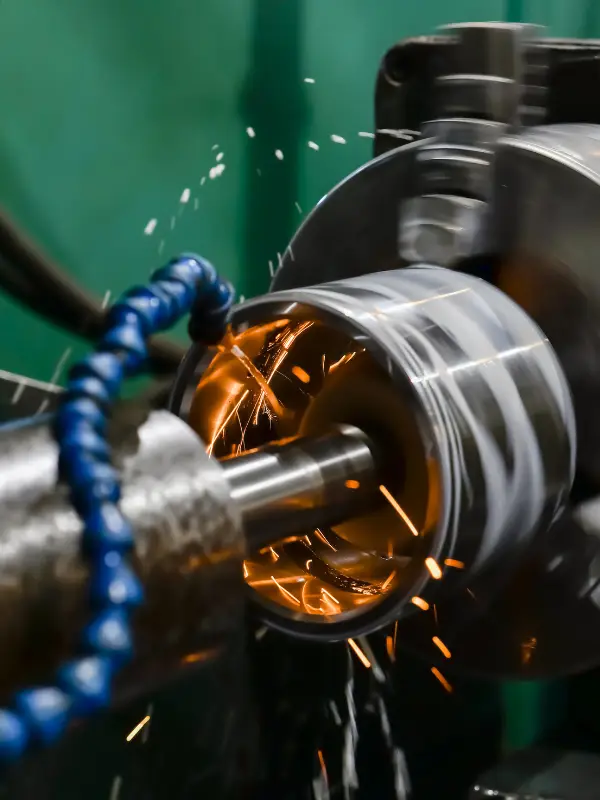
Most break-even spreadsheets stop at the casting cost per unit. They do not add the 3 to 8 minutes of turning, milling, or drilling needed to bring the casting to final spec. At high volume those minutes compound. A part that needs two milled faces and two drilled holes carries a secondary cost that can narrow the per-unit gap between casting and full CNC by a meaningful margin, sometimes enough to push the crossover into a higher volume band.
Before signing off on a die, confirm with your machinist exactly which features need post-machining and what размерная цепь each requires. If more than half the functional faces need secondary operations, the part is effectively a CNC job on a casting blank, and the headline “savings” from casting are smaller than the unit price suggests. Limit to acknowledge: even with aggressive secondary machining, you cannot remove the parting-line flash on a critical sealing surface without adding an extra face to machine.
What Hidden Costs Sit Behind the Per-Unit Number?
The per-unit casting price usually excludes tooling amortization, try-out and certification, die maintenance such as re-coating and runner trimming, scrap from porosity or misruns, and material waste from gates and sprues. Add those lines, and the “cheaper” number inflates. The CNC quote may in turn exclude fixture engineering, program writing, and first-article inspection labor. Both sides carry off-invoice costs that only appear in a total-cost model.
The Full Cost Stack
Build your comparison over a 3-year window, not a single unit price. Include die cost divided by expected shot life, an annual maintenance budget, scrap and rework allowance, material cost difference between billet and casting alloy, and any ISO 9001 или IATF 16949 certification your supply chain requires. If the part feeds an automotive or medical program, that certification overhead is non-negotiable and must be allocated to whichever process you select.
YPMFG can provide a 3-year total-cost worksheet that folds in these hidden lines so the decision rests on comparable figures rather than a single per-unit quote. Send your part drawings and volume forecast; the engineering team returns a side-by-side breakdown within the standard 24-hour response window. Limit to acknowledge: no spreadsheet fully captures the lump cost of a mid-life design revision. If you change a feature after the die is cut, the re-tooling expense cannot be smoothed into the per-unit amortization, and that risk peaks in the first 12 months of a product lifecycle.
How a Typical Aluminum Bracket Moves From CNC to Casting: A Process Route Walkthrough
Consider a medium-complexity A380 aluminum bracket used in an HVAC assembly: four mounting bosses, two through-holes, one milled mating face, and a ±0.02 mm tolerance on that face. The natural process route shifts from full CNC at low volume to a casting-plus-secondary-op hybrid at scale.
At 200 units per year the part runs on a 3-axis CNC machine in 6061 billet. No tooling, no scrap beyond chips. At 5,000 units a 2-cavity die is quoted; the casting comes off at ±0.05 mm and the ±0.02 mm face gets a single milling pass while the two through-holes are drilled. At 50,000 units the die moves to 4-cavity, cycle time drops, and the secondary op shrinks to a single face finish. At each volume step, first-article inspection and первичный контроль продукции documented traceability per ISO 9001 are confirmed before lot release.
Key control points at every step: verify the die try-out against the 3D model, log shot count and material lot number, record secondary-op tool offsets, and retain a witness sample per batch. A common failure mode is porosity in the boss region. Prevention: adjust fill speed and holding pressure during try-out and confirm with a sectioned sample before releasing the die to production.
Process Route Reference: YPMFG process library, reviewed against published tooling and alloy data. Client-specific parameters withheld per NDA.
Common Questions About Die Casting vs CNC Break-Even
Can a die-cast part hold the same tolerance as a CNC-machined part?
No. A die casting holds approximately ±0.05 mm as-cast per ISO 2768-m, while CNC machining routinely reaches ±0.01 mm on machined faces. If your drawing calls tighter than ±0.05 mm on multiple features, you are effectively running a CNC job on a casting blank. Plan the secondary operation and its tool path before quoting the break-even.
Does switching to die casting always lower my per-unit cost at 10,000 units a year?
It cannot be assumed. At 10,000 units a simple 2-cavity die may already be amortized, but a complex multi-slide die with five ejectors may not. The answer turns on die cost, shot life, and how many secondary operations your spec demands. Model the 3-year total cost before deciding.
How long does it take to design and try out a new die?
Typical lead time from design freeze to first try-out runs 8 to 12 weeks for a standard 2-cavity die. Complex multi-slide or hot-runner designs add 2 to 4 weeks. The try-out includes shot runs, dimensional checks, and sectioning. Plan at least one revision cycle before releasing the die to production volume.
What should I have ready before requesting a break-even quote?
Prepare your 3D model in STEP or IGES format, a bill of materials with material spec, a 3-year annual volume forecast, and a list of functional features with their tolerance callouts. The more complete the input, the more accurate the side-by-side cost model. YPMFG engineering returns the comparison within the standard 24-hour response window.
Making the Right Process Choice for Your Volume
The break-even question is not “which process is cheaper.” It is “at my volume, with my geometry, my tolerance stack, and my revision risk, which process gives me the lowest total cost over 3 years while protecting schedule and quality.” Get that answer before you commit tooling dollars to a die that may not earn its keep.
YPMFG engineering reviews part drawings, volume forecasts, and tolerance stacks to build a side-by-side total-cost model that includes hidden secondary operations, die maintenance, scrap allowance, and certification overhead. Send your specifications and volume data for a review. You will receive a comparison worksheet and a recommended process route, so the final decision rests on complete figures rather than a single per-unit number pulled from a one-line quote.