 English
  German
  Russian
  Japanese
  Korean
  Spanish
  French
  Italian
  Portuguese
 Quick answer:
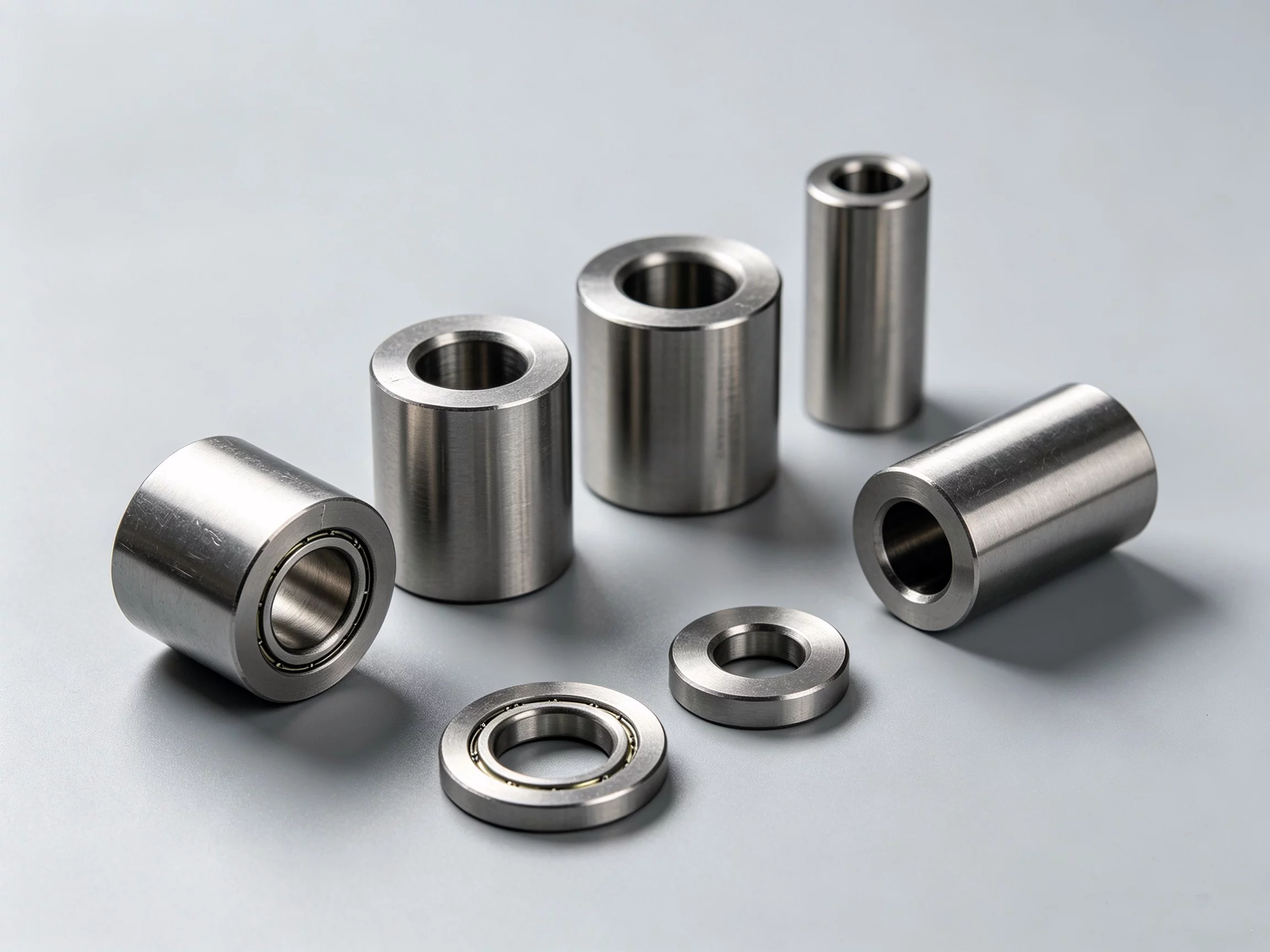
CNC plastic turning is a rotary machining process in which a cylindrical plastic billet spins against a single-point cutting tool, producing axisymmetric parts such as bushings, gears, insulators, and connectors. Unlike metal turning, plastic work demands lower feed rates, adjusted tool angles, and controlled temperature to prevent chip clogging and dimensional drift. Before sourcing, confirm the resin grade, tolerance class, batch size, and whether post-matching or surface treatment is needed. YPMFG supports buyers through engineering review, sample testing, and documentation so you can validate fit before a full production run.
Sourcing CNC-turned plastic parts often trips up procurement teams on material selection, tolerance feasibility, and hidden finishing costs. The gap between a usable prototype and a reliable production batch usually comes down to specification clarity. YPMFG works alongside design engineers and buyers to close that gap before any cutting begins.
What CNC Plastic Turning Involves
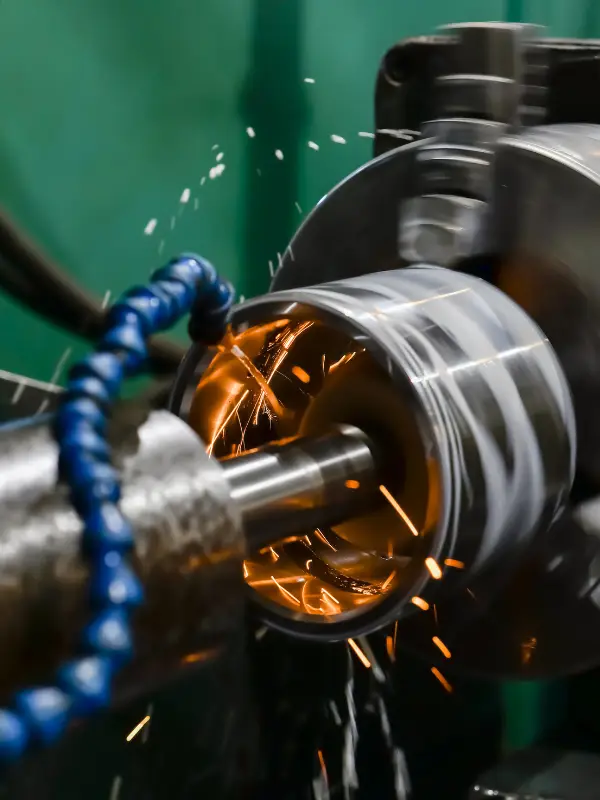
The term refers to a lathe-based operation where a plastic blank rotates while a carbide or coated tool removes material in concentric passes. The result is parts with uniform wall thickness, smooth bores, and precise outer-diameter profiles.
Common resins include POM (acetal), PTFE, nylon, UPE, and PEEK. Each behaves differently under the cutting edge: POM chips cleanly, PTFE tends to stick to the tool, and PEEK requires very slow feeds. If your drawing includes flat features or deep internal pockets, a hybrid turning-and-milling setup may be necessary. Flag this early, because it changes tooling, cycle time, and unit cost.
Material and Tolerance Decisions
Material grade is the single largest cost factor in plastic turning. A POM gear and a PTFE seal of identical geometry can differ in unit price by 3–5× depending on resin source and post-processing. Tolerance tightness compounds the effect: holding ±0.01 mm on a 50 mm bore is standard on POM,but the same feature on PTFE may realistically land at ±0.02 mm without special fixturing.
Use this table as a starting point, then verify against your specific load, temperature range, and chemical-exposure conditions before finalizing a material call.
Common Sourcing Mistakes
Three errors recur in plastic part procurement. First, specifying a material by trade name without confirming the exact resin grade and filler content. “Nylon” can mean PA6, glass-filled PA66, or a MOPA blend, and shrink rates differ by 0.5–1.5%. Second, assuming post-machining color, UV coating, or deburring is included in the base turning price. These are often separate line items. Third, skipping the first-article inspection. A 20-part sample batch with a dimensional report catches tool-wear and setup issues before a 10,000-piece order does.
YPMFG provides a structured first-article report and material certification with every trial lot, so buyers can verify conformance without waiting for full-scale delivery.

Questions Buyers Often Ask
What is the minimum order quantity for CNC plastic turning?
Most CNC turning cells favor batches of 500 to 10,000 pieces to amortize setup and tooling. Below 500, a manual or semi-automated lathe may be more economical. Above 10,000, continuous-production scheduling typically lowers the unit cost. Confirm whether setup fees are charged separately for smaller lots.
How close can plastic turning get to metal-level tolerances?
Standard CNC turning holds ±0.01 mm on most stable plastics. Tolerances tighter than ±0.005 mm are achievable on POM or PEEK but require temperature-controlled environments and frequent in-process measurement. If your drawing demands tighter specs, flag it during the engineering review so the machining strategy can be adjusted.
Can YPMFG handle mixed-material assemblies?
Yes. YPMFG supports sub-assembly projects where a turned plastic core is paired with a metal insert or O-ring. The engineering team reviews interference fits, thermal differential, and assembly tolerances before machining begins, reducing field-rework risk.
Which standards should I reference for turned plastic parts?
Material properties are typically cited against ISO 10476 (nylon), ISO 1428 (POM), or ASTM D4065 (PTFE). Tolerance classes often follow ISO 286 or DIN 7205. Verify which standard your application specification references and ask your supplier to document test results against that standard.
Making the Right Sourcing Decision
Choosing the right CNC plastic turning service comes down to matching material, tolerance, and volume to your functional requirements—not just the lowest quote. A clear drawing, a confirmed resin grade, and a defined acceptance criterion will get you a faster, more accurate quotation.
Send your specifications, material sheets, or partial drawings to YPMFG. The engineering team will return a feasibility assessment, suggested material grades, and a cost range within a few business days, so you can compare options before committing to production.