 English
  German
  Russian
  Japanese
  Korean
  Spanish
  French
  Italian
  Portuguese
 Quick answer:
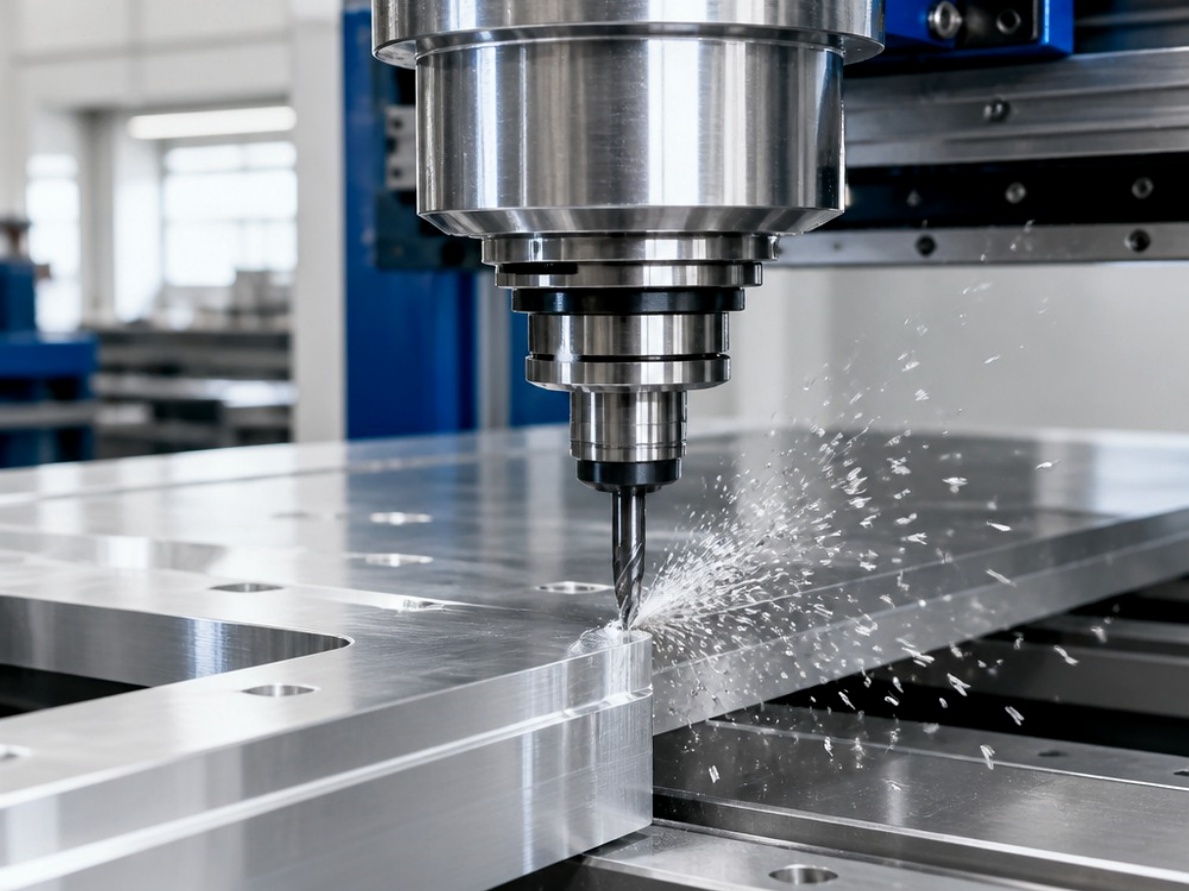
Large CNC milling services for oversized components means using machines with extended travel—often exceeding 1,500 mm on at least one axis—to machine heavy or long parts in fewer setups. Your choice should be driven by part geometry, material, and tolerance class rather than just machine size. Before sending a drawing, confirm the shop’s actual X/Y/Z travel, spindle torque, and fixture capacity. Mismatched specs lead to rework, extra setups, or a rejected batch.
Sourcing large CNC milling services carries a specific risk: the part is too big for standard three-axis machines, so capability gaps surface late in the process. A mismatch means shipping costs that exceed part value, or a batch that fails downstream inspection. The practical starting point is matching your part’s dimensions and material to the machine’s true envelope—not the marketing brochure. YPMFG supports this matching step through a pre-quote engineering review of your drawings, so feasibility is confirmed before any commitment.
What to Review
Work Envelope and Machine Specs
Material and Tolerance Considerations
Cost Drivers for Large CNC Milling
Common Questions Before Ordering

Making the Right Match
Work Envelope and Machine Specs
Work envelope is the first spec to verify, not the machine model number. A “large” machine may travel 2,000 mm on X but only 600 mm on Z, which limits the usable volume significantly. Always confirm three numbers before sending a drawing: maximum X, Y, and Z travel; spindle torque at low RPM; and the largest chuck or fixture the table supports.
These three values determine whether your part can be held and machined in a single setup. Parts requiring multiple setups lose positional accuracy with each re-clamp, and the accumulated error may push a critical dimension out of tolerance. If your tolerance budget is tight, a single-setup strategy on a larger machine typically costs less over the project than repeated fixturing on a smaller one.
Material and Tolerance Considerations
Large parts in 7075-T6, Inconel, or titanium introduce thermal growth and rigidity issues that smaller components do not. A two-meter steel casting expands differently from a 200 mm bar, and the machine bed must hold dimensional tolerance across the full travel without drift.
You should specify your material grade, initial stock size, and critical tolerance zones directly on the drawing. Vague callouts like “±0.1 mm overall” do not give the shop enough information to plan tool paths or clamping sequences for a part this size.
If the geometry requires a multi-setup strategy, the plan should be documented before cutting begins. YPMFG engineers review your drawing against available machine capabilities before quoting, so you learn early whether one setup is feasible or a split approach with re-fixturing is needed.
Cost Drivers for Large CNC Milling

Pricing for large CNC milling is driven by a small set of variables. Understanding them helps you compare quotes from different shops intelligently.
If two quotes differ by more than 20 %, the gap usually comes down to material handling, setup count, or inspection depth—not raw hourly rates.
Common Questions Before Ordering
Can a shop handle my part if it exceeds one axis but fits the others?
Yes, provided the machine’s travel on every axis covers the part’s largest dimension plus fixture clearance. A 1,800 × 900 × 1,200 mm part needs at least that envelope plus 100–150 mm for clamping and tool reach.
How do I verify tolerance capability on a large casting?
Ask for the shop’s CMM or in-process probing setup and their process capability data on similar geometry. A large casting’s grain structure varies across the volume, so a first-article inspection with a full dimensional report is standard before batch release.
What lead-time factors are unique to large parts?
Stock availability for oversized billets, heat-treat furnace capacity, and rigging for internal transfer each add days. Factor in two to four weeks of buffer for large-component logistics within your project timeline.
Do I need to specify cutting fluid or tooling?
Usually not for a service mill. The shop selects tooling based on material and required finish. You do need to call out any restricted tool materials or coolant requirements imposed by your downstream assembler.
Is a sample run necessary for small production quantities?
For runs above 50 pieces or any safety-critical application,a first-article inspection with dimensional report is the norm. It catches setup errors before the full batch is cut.
Making the Right Match
The decision to use large CNC milling comes down to three things: machine capability matched to your geometry, material expertise for your specific alloy, and a transparent cost structure. Send your part drawings, material spec, and tolerance callouts to YPMFG for an engineering review. The team confirms machine fit, flags fixturing risks, and returns a detailed quote with setup strategy and inspection plan—so you are not guessing at feasibility after the first invoice.