 German
  English
  Russian
  Japanese
  Korean
  Spanish
  French
  Italian
  Portuguese
 Kurze Antwort: CNC, or computer numerical control, is the process of using a computer program to control machining tools that cut, drill, mill, or turn a raw blank into a finished CNC part. The software translates your 3D model into toolpath instructions, and the machine executes them with tight machining tolerances. In most shop-floor applications, CNC repeatability lands within ±0.01 mm on standard 3- or 5-axis platforms, though actual results depend on part geometry, material, and fixture setup. If your design pushes toward micro-tolerances or complex multi-axis moves, request a feasibility review before committing to a production run.
Most buyers walk into a CNC conversation with a specific part in mind but no clear picture of what the machine can realistically deliver. That gap creates surprises on cost, lead time, or quality. This piece breaks down the essentials so you can specify, compare, and verify with confidence.
How CNC Machining Works in Practice
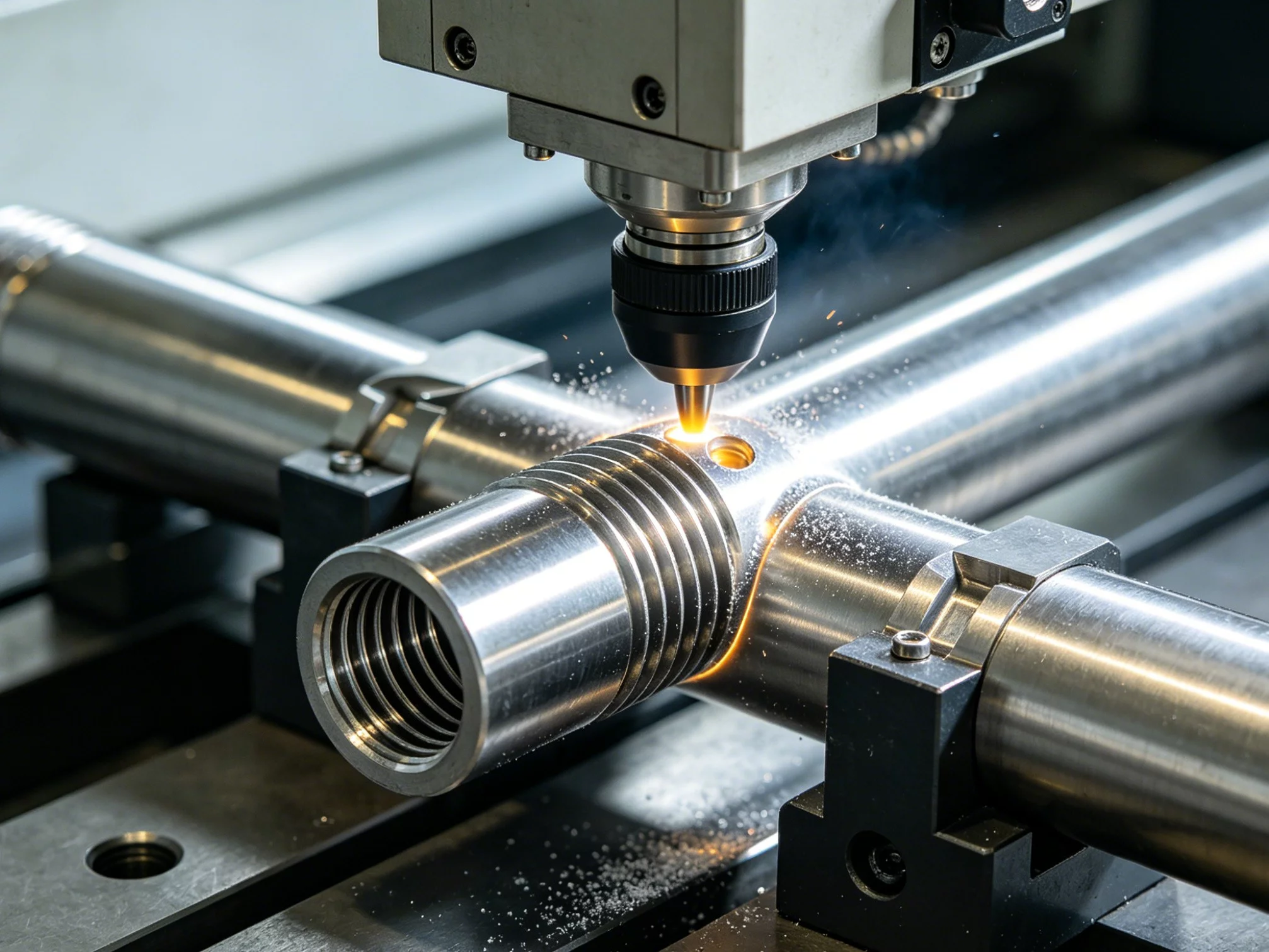
CNC-Bearbeitung converts a CAD file into G-code, which tells the spindle, axes, and tool changer exactly where to move and when to cut. A typical flow runs: import the model, define stock, select tools, generate toolpaths, simulate, then run the job.
The two dominant process families are milling (removing material with a rotating cutter) and turning (rotating the workpiece against a fixed tool). Hybrid 5-axis machines combine both in a single setup, reducing fixturing errors and cutting cycle time on complex geometries.
Key parameters that shape the outcome include spindle speed, feed rate, depth of cut, coolant type, and tool wear schedule. Each of these interacts with material hardness and part feature size, so a “one-size-fits-all” program rarely works across a full production batch.
Common CNC Materialien and Their Trade-offs
Choosing the right alloy is one of the highest-leverage decisions in a CNC-Teile project. The table below covers the materials most frequently specified in contract machining.
Material choice directly affects cycle time, tool cost, finishing options, and final part performance. If your application involves cyclic loading or elevated temperatures, verify the material’s fatigue and creep data against your service conditions before freezing the BOM.
How to Choose a CNC Service Provider
Ein zuverlässiger CNC service provider will ask you for more than a drawing. Look for these signals:
Toleranzangaben are matched to a documented capability statement, not just a generic “±0.01” claim.
The shop publishes or shares its calibration schedule, tooling management process, and first-article inspection reports.
Material certifications (mill certs, heat-lot traceability) are available on request for every lot.
The provider offers a custom CNC solution path when your geometry exceeds standard tool reach or axis count.
YPMFG supports buyers at this stage by reviewing your print, flagging potential DFM issues, and confirming achievable tolerances before any commitment. You can send your specification files for an engineering evaluation and receive a documented feasibility response.
Cost Factors and Hidden Risks
The sticker price on a CNC part often hides the real cost drivers:

Anforderungen an die Oberflächenbeschaffenheit (Ra values below 0.8 µm) add pass time and tooling.
Tight internal features may force a second setup or a dedicated micro-mill, doubling cycle time.
Material waste on thin-wall parts can push scrap rates above 15 %, inflating the effective material cost.
Rapid prototyping a single unit versus a 500-piece batch shifts the economics dramatically; setup amortization changes at roughly 100–200 pieces.
Hidden risk shows up when a buyer specifies a finish or tolerance the shop cannot reliably hold at the quoted price. Always ask what the acceptance/rejection rate looks like for that geometry and volume, and who absorbs rework. YPMFG helps quantify this by providing a capability matrix and a preliminary cost breakdown before you lock in a purchase order.
Practical Questions Before You Order
What is the smallest internal radius my part can hold?
Most standard end mills limit internal radii to about 0.5 mm. Below that,you need a micro-tool or a different geometry. Confirm with your machinist before finalizing the CAD.
Which reference should I tie datums to?
Pick datums that reflect how the part will be mounted in its final assembly, not just how it is easiest to machine. This reduces functional variation in the field.
Do I need heat treatment, and when does it happen?
Heat-treating before final machining locks in dimensional drift. If your print calls for a hardened face, verify that the sequence (rough → temper → finish) is baked into the program.
What documentation will I receive with each lot?
At minimum: first-article inspection report, material heat certs, CMM or laser data, and a traceability record linking part serials to raw-material lots.
How is production lead time quoted and protected?
Ask whether the quoted lead time assumes a clean calendar with no tooling waits or material backorders. A realistic buffer of 10–15 % protects your downstream schedule.
Need Help Specifying Your CNC Part?
The right CNC decision hinges on matching geometry, material, tolerance, and volume to a process the shop can actually repeat at quality. If you are comparing quotes, revisiting a DFM note, or simply need a second opinion on a print, send your files to YPMFG. The engineering team will review your CNC-Teile specification, flag risks, and return a documented recommendation covering material, process sequence, expected lead time, and a transparent cost range—so you can move to procurement with clarity rather than guesswork.