German
 English
 Russian
 Japanese
 Korean
 Spanish
 French
 Italian
 Portuguese

G codes are the standardized numerical commands that direct a CNC machine to move axes, start spindles, change tools, and control coolant. In CNC-Bearbeitung, they form the essential link between a CAD design and the physical part on your bench. Every program, whether handwritten or exported from CAM software, relies on a consistent set of G-Code and M-code instructions recognized by nearly all modern controllers. Getting these lines right separates a clean, repeatable cut from a crashed tool or a scrapped batch.
Wenn Sie Folgendes angeben CNC-gefräste Teile or reviewing a supplier’s program, a working knowledge of G-code basics helps you evaluate output quality, spot errors early, and make more informed procurement decisions.
The G Codes You Will See on Almost Every Program
Most CNC programs build on a small core of G and M codes. The table below lists the instructions that appear in the majority of routine CNC-Bearbeitung jobs, from 2D milled profiles to multi-axis turned components.
Reading these lines in sequence lets you follow the tool-path logic and flag anything that looks inconsistent before a part ever reaches the machine.
How G Codes Become Machined Parts
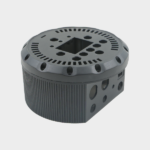
A G-code program is essentially a recipe. Each line tells the controller where to go, how fast, and what the spindle should do. CNC tool paths generated by CAM software translate your CAD geometry into hundreds or thousands of short instructions. The controller then executes them in order, driving each axis with sub-millimeter accuracy.
Für CNC-gedrehte Teile or milled housings, the tool-path sequence determines surface finish, dimensional tolerance, and cycle time. A single misplaced G04 dwell or an incorrect G01 feed rate can shift a critical dimension by several thousandths of an inch. That is why experienced operators review the first-article program before releasing a full production run.
When you send drawings or specifications to YPMFG, our engineering team maps your geometry to verified tool paths and confirms that every G-code line matches the intended cut, feed, and speed before production begins.
Common G Code Mistakes That Cost Buyers Money
Missing G00 before a G01 cut. The tool can travel into material at rapid speed instead of cutting feed, causing a crash.
Wrong arc direction (G02 vs G03). A clockwise arc where a counter-clockwise arc is needed can gouge the part or the fixture.
Unplanned dwell (G04). An extra pause in a tight tolerance zone adds heat and can push the dimension out of spec.
Tool-change sequence errors. Skipping the correct M-code before a G-code move may leave the wrong tool in the holder.

Unit mismatch. A program written in inches but run in metric,or vice versa, will produce parts at the wrong scale.
Each of these errors can trigger rework, scrap, or downtime. Reviewing the G-code logic with your machinist before the first run is the lowest-cost way to catch them.
Questions Buyers Often Ask About G Codes
Do I need to read G code myself before ordering CNC parts?
Not necessarily. Most buyers work from drawings and CAM-generated tool paths. That said, a working familiarity with the core G and M codes listed above helps you verify that a supplier’s program matches your tolerance and finish requirements.
Can G code vary between different CNC machines?
The ISO standard defines a common base set, but each controller—Fanuc, Heidenhain, Siemens, Mazak—adds proprietary extensions. Always confirm which G-code dialect your supplier’s machine uses before releasing a program for production.
How does G code affect part cost and lead time?
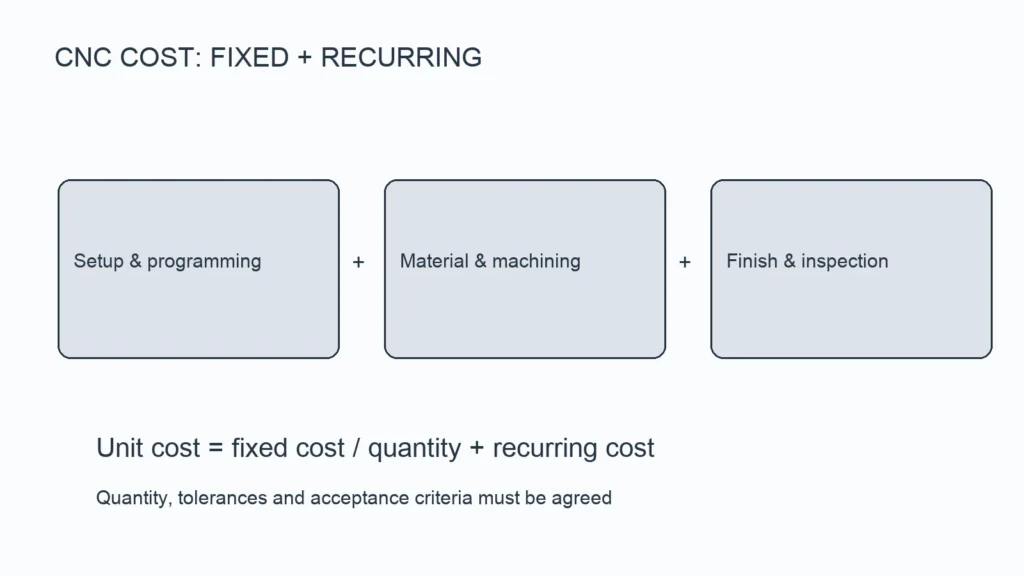
Complex tool paths with many small G01 segments increase cycle time and tool wear. A well-optimized program can cut machining time by a noticeable margin, which directly affects Kosten für die CNC-Bearbeitung and your delivery date.
What should I check when a supplier sends me a G-code file?
Verify the unit system, spindle speed ranges, feed rates, and tool numbers. Confirm that every rapid move clears the fixture and workholding. If you are unsure, route the file through a CNC engineering review before giving final approval.
Making a Better Decision on CNC G Code Programs
Understanding G codes is not about becoming a full-time programmer. It is about giving yourself enough context to review a program, ask the right questions, and trust that the part you receive will match the drawing you sent.
If you want a second set of eyes on a G-code file, a CNC tool path review, or help selecting the right CNC-Bearbeitungsdienstleistungen for your component, YPMFG supports buyers with engineering assessment, documentation, and sample testing. Send your specifications or drawings and our team will walk you through the program logic, flag any risky lines, and confirm the setup before production starts.