German
 English
 Russian
 Japanese
 Korean
 Spanish
 French
 Italian
 Portuguese

The cost of Präzisionsbearbeitung typically ranges from $5 to $50+ per part, depending on tolerance, material, geometry, and batch size. Tighter Toleranzen (±0.001″ or less) and alloys like Inconel or titanium push unit prices well above standard 6061 aluminum at ±0.005″. For production runs, per-part cost drops as setup and programming are spread across units. The dominant cost drivers are CNC tolerance requirements, material grade, and secondary operations such as Oberflächenbehandlung oder Wärmebehandlung.
Most buyers approach a precision machining quote with one number in mind: unit price. In practice, total ownership cost hinges on how well the part specification matches its functional role. Over-tightening tolerances on non-critical faces adds expense without improving performance or service life. The goal is to specify only the tolerances that matter for fit, motion, seal, and fatigue.
What Actually Drives the Cost
The largest variable is tolerance and fit class. A general-purpose bracket at ±0.01″ machines at near-standard feed rates. The same part at ±0.0005″ may need multiple setups, in-process CMM checks, and slower cutting speeds. Each added step increases machine time, operator attention, and scrap risk.
Material choice affects cutting speed, tool life, and post-processing. Stainless 316 cuts roughly 40% slower than 6061 aluminum. Inconel 718 or 17-4 PH often requires 5-axis CNC work, longer tool-change cycles, and a dedicated heat-treat step to reach target hardness. Raw material cost alone can be 5 to 15 times that of mild steel.
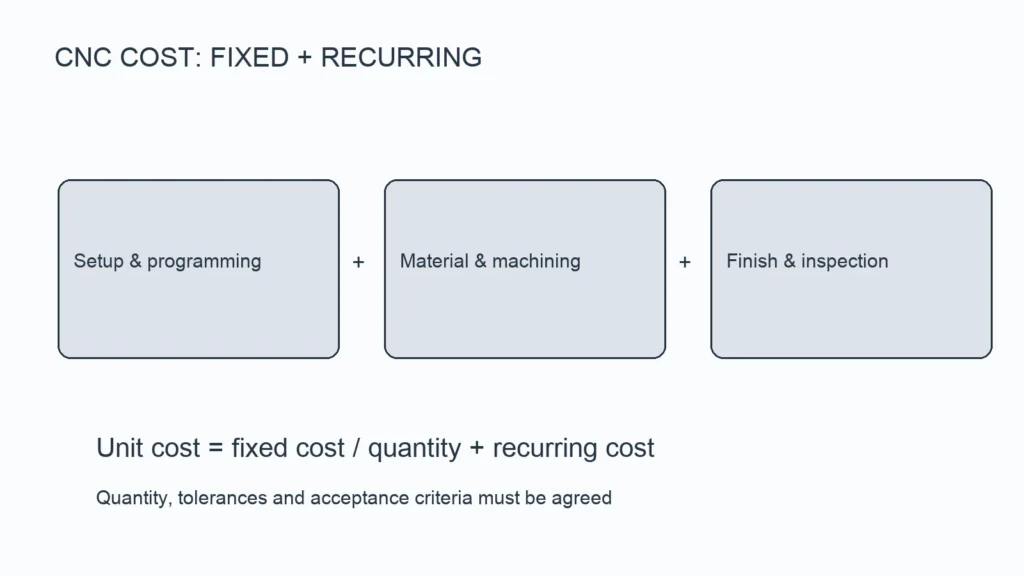
Prototype versus production also shifts the cost curve sharply. A single machined part absorbs the full setup, programming, and first-article inspection cost. At 500 units, those fixed costs amortize to a fraction of the per-part price, and CNC-Programmierung time becomes negligible.
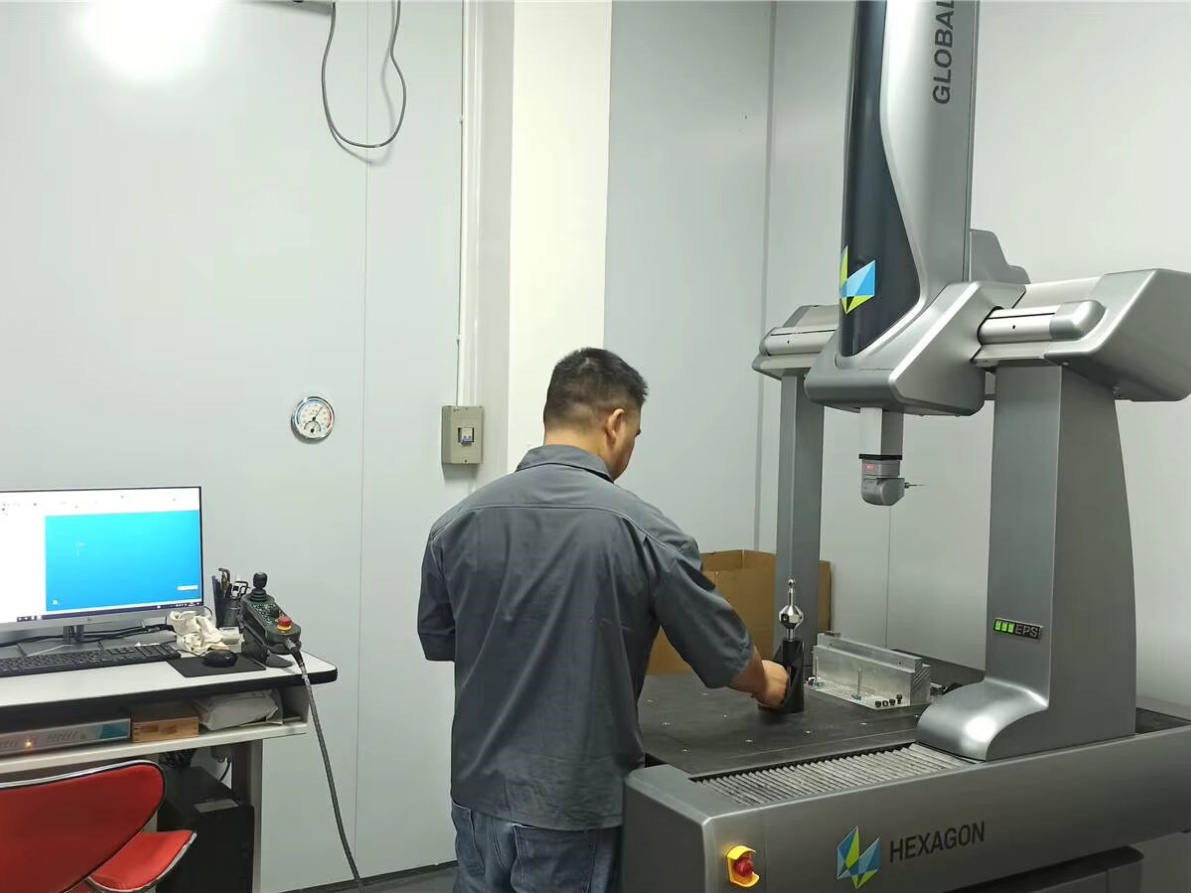
Inspection method matters as well. A part requiring CMM verification at every critical dimension carries higher per-unit labor than one checked with calipers and go/no-go gauges. Confirm the inspection level in your drawing before comparing quotes.
Key cost factors to review before requesting a quote:
Tolerance tightness (±0.01″ vs. ±0.0005″)
Material grade and availability
Part geometry: undercuts, thin walls, deep pockets
Batch quantity and setup amortization
Secondary operations: anodizing, electroless nickel, plating
Identifying which of these apply early prevents overpaying for unnecessary precision.
Common Mistakes When Specifying Parts
A frequent error is copying a tolerance from one surface and applying it to every face. Only dimensions that affect assembly, motion, or sealing need tight control. Marking a non-functional flat at ±0.0005″ adds cost with zero functional benefit.
Another pitfall is specifying a material “just to be safe.” Upgrading from 303 to 17-4 PH stainless without a documented strength or corrosion requirement increases material cost, machining time, and post-machining steps. Confirm the operating environment and service temperature before locking a material call.
Omitting a Oberflächenbeschaffenheit callout is a third common oversight. Without a specified Ra value, the machinist defaults to a general finish that may not meet sealing or lubrication needs downstream.
## Tolerances, Materials & Finishing – A Quick Reference
This table is a starting point, not a formula. YPMFG’s engineering team reviews your technische Zeichnungen and functional description to flag where tighter specs may be redundant or where a material substitution would save cost without risk.
Before You Send Drawings
A quick pre-submission checklist saves a round of back-and-forth:
All dimensions referenced to a common datum
GD&T symbols applied where functionally critical
Material grade specified with heat-treat condition
Surface finish method and Ra value called out
Quantity and acceptable lead time noted
Any design changes or future revisions flagged
Practical Questions Before You Request a Quote
What is the tightest tolerance I actually need?
Map every tolerance to a function: fit, seal, motion, or fatigue. If a face never contacts a mating part,±0.01″ is usually sufficient. Over-tightening a non-functional dimension adds machine time and cost with zero performance gain. When in doubt, ask the part designer which surfaces are load-bearing.
Should I run single units or batches?
Below 50 parts, per-unit cost is high because setup and programming dominate. Once you cross 100 to 200 units, per-part cost typically drops 30 to 60 percent. Confirm expected annual volume before finalizing your Herstellungsprozess Pfad.
Can I mix Materialien on one assembly?
Yes, but thermal expansion mismatch must be evaluated. Aluminum paired with steel shifts fit at operating temperature. Specify the service environment and temperature range so Materialauswahl accounts for differential expansion.
What documentation should I have ready?
Minimum: a 3D CAD file (STEP preferred), GD&T callouts, material spec, and finishing requirements. Adding a one-paragraph functional description or assembly context helps the machinist prioritize which dimensions are truly critical versus those that can stay at general tolerance.
How do I verify a quote is realistic?
Compare at least two or three quotes on the same drawing set. If one bid is dramatically lower, ask which tolerances, inspection steps, or secondary operations were dropped. Request that each quote itemize setup, machining, finishing, and inspection as separate line items so you can compare like for like.
Eine bessere langfristige Entscheidung treffen
Rather than chasing the lowest unit quote, evaluate total cost across the part’s service life. A slightly more expensive alloy or a well-chosen Wärmebehandlung can extend replacement intervals by years and reduce unplanned downtime. If your project involves multi-material assemblies or tight CNC-Toleranzen, an early engineering conversation catches issues before they become rework.
YPMFG supports buyers who want a pre-production engineering review. Send your drawings, functional specs, and expected volume, and you’ll receive a tolerance audit, material recommendation, and a transparent line-by-line cost breakdown. No minimum project size is required.