German
 English
 Russian
 Japanese
 Korean
 Spanish
 French
 Italian
 Portuguese

Benutzerdefiniert CNC cast iron parts are machined components produced from cast iron blanks using CNC-Fräsen, turning, or grinding. The four specifications you must define before placing an order are: material grade, Maßtoleranzen, Oberflächenbeschaffenheit, and any required post-machining heat treatment. Locking these in early prevents rework,rejected lots, and redesign costs that far exceed the part itself.
Wenn Sie Folgendes angeben cast iron machined parts for a production run, the biggest risk is ambiguity. A missing tolerance callout or an unclear material grade can mean the part arrives out of spec, or the quote you approved no longer matches what is actually made. YPMFG works with buyers on turning vague drawings into precise, manufacturable specifications before the first chip is cut.
Choosing the Right Cast Iron Grade
The grade you select dictates strength, machinability, and cost. Most buyers narrow to one of three families based on the load, thermal, and corrosion demands of the application.
Gray cast iron (GG20–GG45): Excellent vibration damping and ease of machining. Standard choice for pump housings, brake discs, and machine frames.
Ductile iron (GGI400/GGI500): Roughly 30–40 % higher tensile strength than gray iron. Used where bending or impact loading is a factor, such as gears and structural brackets.
Compacted graphite iron (CGI-60): Thermal conductivity sits between gray and ductile. Common in exhaust manifolds and cylinder heads where heat cycling is severe.
Choosing the wrong grade is the most expensive single mistake. A part designed for gray iron but machined from ductile iron will run 15–25 % higher in material cost and may require different cutting parameters throughout the program.

Tolerances, Surface Finish, and Machining Strategy
CNC machining of cast iron starts from a rough casting, so the first cuts remove a layer of skin that can be 1–3 mm thick depending on the casting process. Wall thickness on your blank must account for that removal without leaving features too thin to hold shape.
Typical dimensions buyers should specify on the drawing:
Hardness matters as much as geometry. Gray iron typically lands at 180–249 HB; ductile iron at 179–371 HB. If your application requires hardness outside those ranges, ask whether Wärmebehandlung oder ein CNC-Schleifen pass is needed before final inspection.
Cost Factors That Move Your Quote
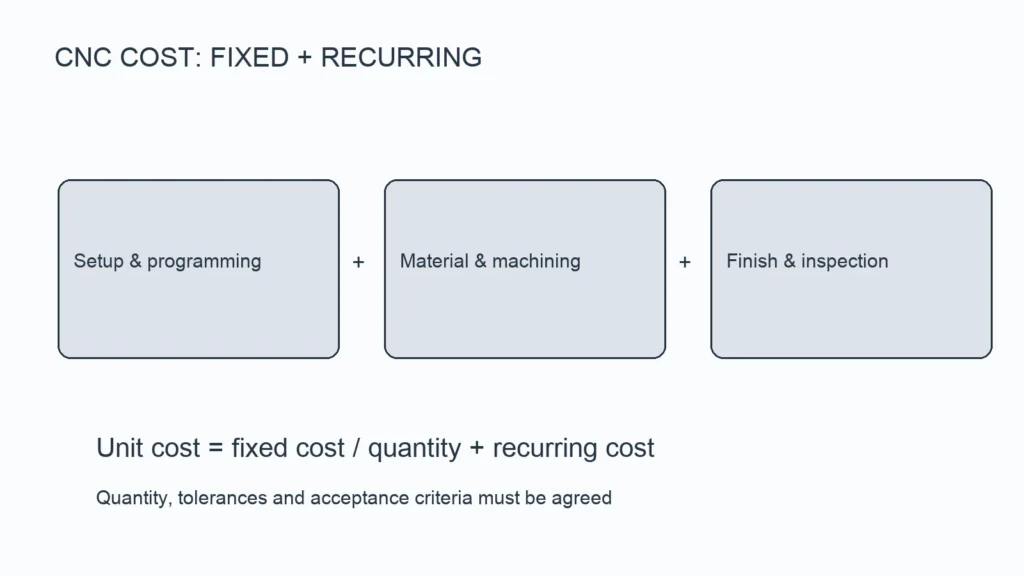
The unit price of a custom cast iron part is not a single number. It shifts based on several variables that interact with each other.
Material grade and blank weight: A heavier ductile iron blank increases raw material cost proportionally to volume.
Toleranzklasse: Going from ±0.25 mm to ±0.02 mm can double machining time on critical features.
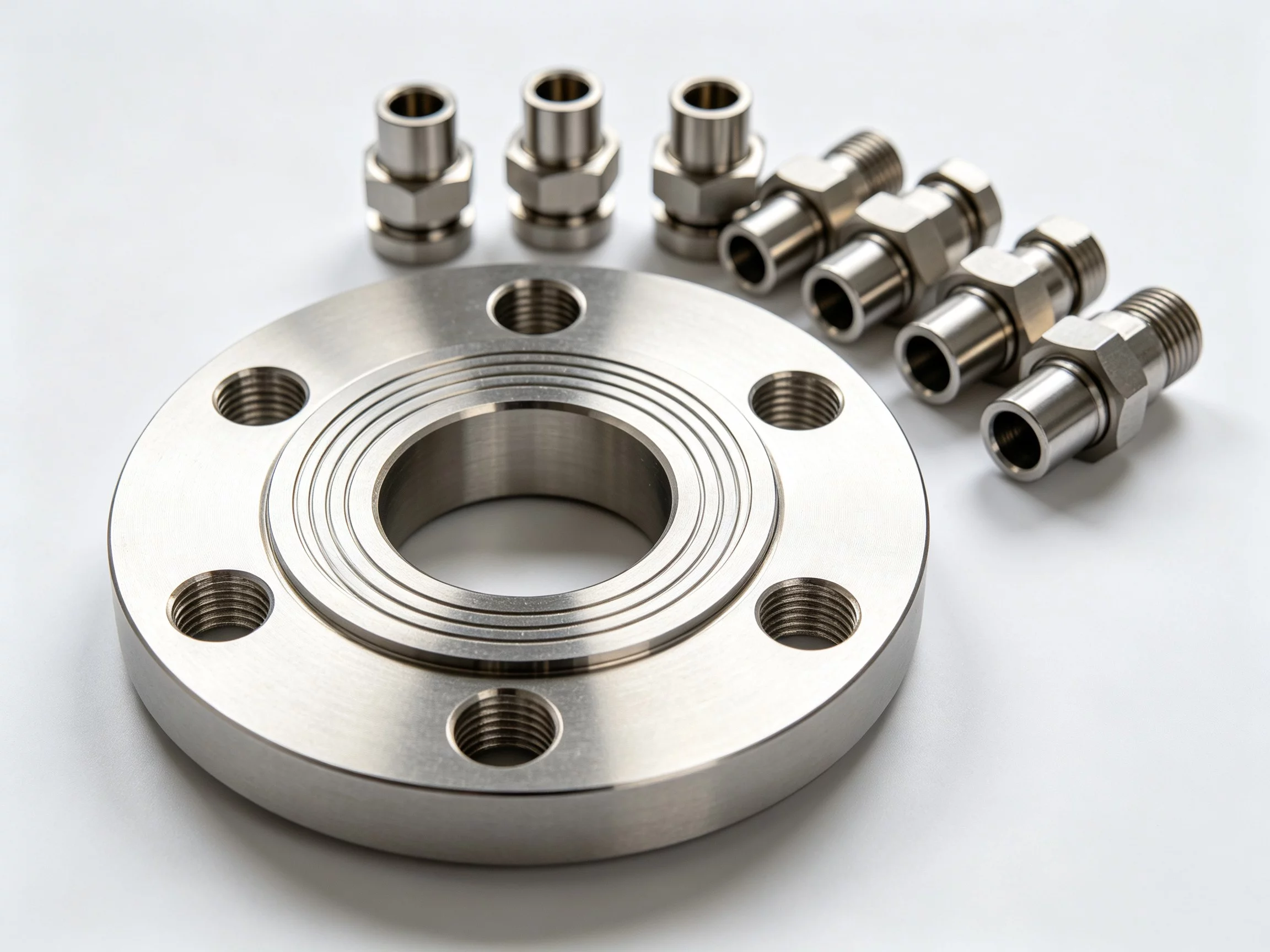
Surface finish requirement: Ra 0.4 µm on a large flat face adds grinding cycles that Ra 3.2 µm does not.
Volume: A 500-unit run spreads setup and programming costs differently than a 5-unit prototype.
Secondary operations: Plating, quenching, or deburring add line items that are easy to overlook in a first-pass estimate.
Before comparing quotes, confirm that each vendor is pricing the same scope. A lower number that excludes heat treatment or deburring can cost more in the end.
Fragen, die Käufer häufig stellen
Do cast iron parts need stress relief before machining?
For thick-section ductile iron blanks, yes. Residual casting stresses can cause dimensional drift after the part is machined. Ask your supplier whether stress relief annealing is already included in the process plan.
Can I run gray iron through a standard CNC mill without special tooling?
Yes, but carbide inserts with a positive rake angle perform best. Cast iron chips are brittle and abrasive, so tool life is shorter than when cutting steel.
How do I verify the material grade on a received lot?
Fordern Sie eine material test certificate (EN 10204 3.1 or equivalent) and, for critical production runs, a spectrographic spot check at your receiving inspection.
What is the minimum practical wall thickness for CNC-machined cast iron?
As a rule of thumb, keep machined walls above 3 mm. Below that, vibration during cutting can produce chatter marks and push features out of tolerance.
Is there a standard for measuring surface finish on cast iron parts?
ISO 21927 and ASME Y14.36 define the measurement methods. Specify the Ra value and the measurement zone directly on your drawing rather than relying on a generic “machined surface” note.
Getting Your Specification Right
The fastest way to avoid a costly second round is to bring your drawing, material callout, and quantity to a supplier who can flag manufacturability issues before metal is cut. YPMFG reviews incoming drawings for Maßgefertigte CNC-Teile in cast iron and can confirm blank feasibility, tolerance stack-ups, and finish requirements against your load case. Send your part geometry and quantity range for an engineering assessment and a scoped quotation.