German
 English
 Russian
 Japanese
 Korean
 Spanish
 French
 Italian
 Portuguese

Brass CNC machining produces precision metal components from brass alloy blanks using computer-controlled lathes and mills. The process is widely used for brass CNC machined parts that require corrosion resistance, good machinability, and a warm metallic appearance in electrical connectors, fluid fittings, and decorative hardware. Final part quality depends on grade selection, Toleranzangaben, finish requirements, and the machinist’s capability with brass-specific cutting parameters.
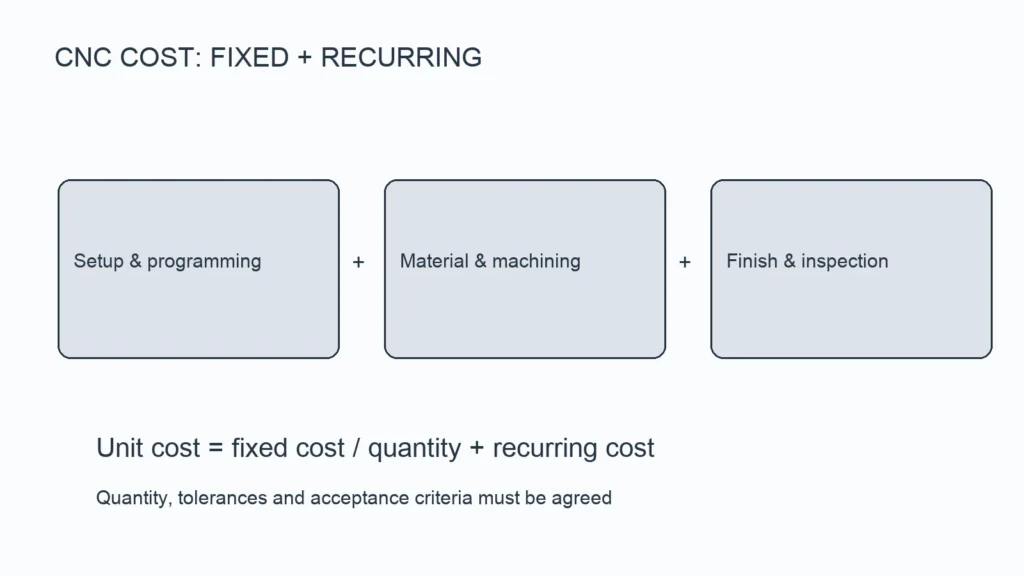
Before ordering, the core question is not just “what does it cost per piece?” The real cost drivers are material grade, geometry complexity, post-machining finish,and whether the part will see corrosive or thermal stress. Choosing the wrong grade can force a redesign months into a project. YPMFG supports buyers at this stage by reviewing drawings and suggesting a grade that balances performance and unit cost.
Brass Grades and When to Use Each
Most brass CNC work uses one of three grades: C360, C377, oder C464. C360 (free-cutting brass) is the default for high-volume parts because its sulfur content allows very high cutting speeds. C377 offers slightly better corrosion resistance and suits marine or chemical environments. C464 (leaded brass) is the most economical but has lower free-machinability.
The grade choice affects cutting speed, chip behavior, and whether a post-machining pass is needed. C360 can often be machined in a single setup on a CNC-Drehen lathe. C464 may require slower feeds and more operator attention to maintain Oberflächenbeschaffenheit consistency.
Grade Comparison for Buyers
Free-machinability values follow ASTM/ANSI reference data; actual rates vary with machine setup and operator skill. The table gives a starting point, but the final grade call should factor in the part’s service environment. A connector in a coastal facility may justify C377 over C360 despite the small premium. YPMFG can review your application conditions and recommend a grade before you lock in a drawing.
Tolerances, Finishes, and Design Checks
Standard Toleranzangaben for brass CNC parts typically range from ±0.001 in. to ±0.005 in. per feature. Going tighter than ±0.001 in. increases cycle time and may require secondary operations such as lapping or honing. For most functional and decorative parts, ±0.002 in. to ±0.005 in. is a practical target.
If your part has a visible surface, specify the finish early. An as-machined finish on brass shows tool marks and can look uneven. A common request is a 32 µin (0.8 µm) Ra polish, which adds a secondary pass but significantly improves appearance. Plating options such as nickel or chrome can also be applied for added corrosion protection.
Run these design checks before releasing your drawing:
Minimum wall thickness for the selected grade (C464 parts under 0.020 in. may deform during cutting).
Internal undercuts that require a back-bore or separate milling setup.

Threaded features: specify the standard (UNC, UNF, metric) and whether threads are tapped or rolled.
Whether Materialzertifikate (mill certs, PPAP) are required by your quality system.
Fragen, die Käufer häufig stellen
How many samples should I expect before production?
Most shops, including YPMFG, provide 1 to 3 functional samples for customer approval. Sample lead time depends on part complexity. Simple turned parts may be ready in 3–5 days; multi-axis milled parts can take 1–2 weeks.
Can I mix brass grades in a single order?
Yes, but mixing grades in one PO complicates tooling changeovers and may raise the unit price. Grouping parts by grade reduces setup waste and keeps pricing predictable across the batch.
Was ist die praktische Mindestbestellmenge?
There is no universal minimum. A CNC lathe can run a batch of 50 C360 parts economically, but simpler geometries may be viable at lower volumes. Send your quantity range and YPMFG will confirm whether the setup cost justifies the run.
Does brass corrode in industrial environments?
Brass resists many common environments, but sulfur-rich or acidic atmospheres can cause surface discoloration over time. For aggressive conditions, specify C377 or add a thin protective plating. Verify with a 30- or 90-day exposure test for your specific site.
Choosing the Right Brass CNC Parts
The decision path is straightforward: confirm the service environment, lock the grade, set realistic tolerances and finish, then compare shop capability. A facility that routinely machines custom brass components will have brass-specific tooling, cutting-fluid practices, and chip-management setups that reduce burr and surface defects.
Send your drawing, quantity, and any environmental or finish requirements to YPMFG for an engineering review. The team will flag potential design issues, suggest a grade-and-finish combination, and return a quotation with lead-time estimates. That single exchange often saves a revision cycle and keeps the project on schedule.