Spanish
 English
 German
 Russian
 Japanese
 Korean
 French
 Italian
 Portuguese

Low volume CNC machining typically covers runs of one to a few hundred parts. The cost driver shifts from material to setup time. A 3-axis CNC job on 6061 aluminum is the fastest route to a functional part in 3 to 7 days.
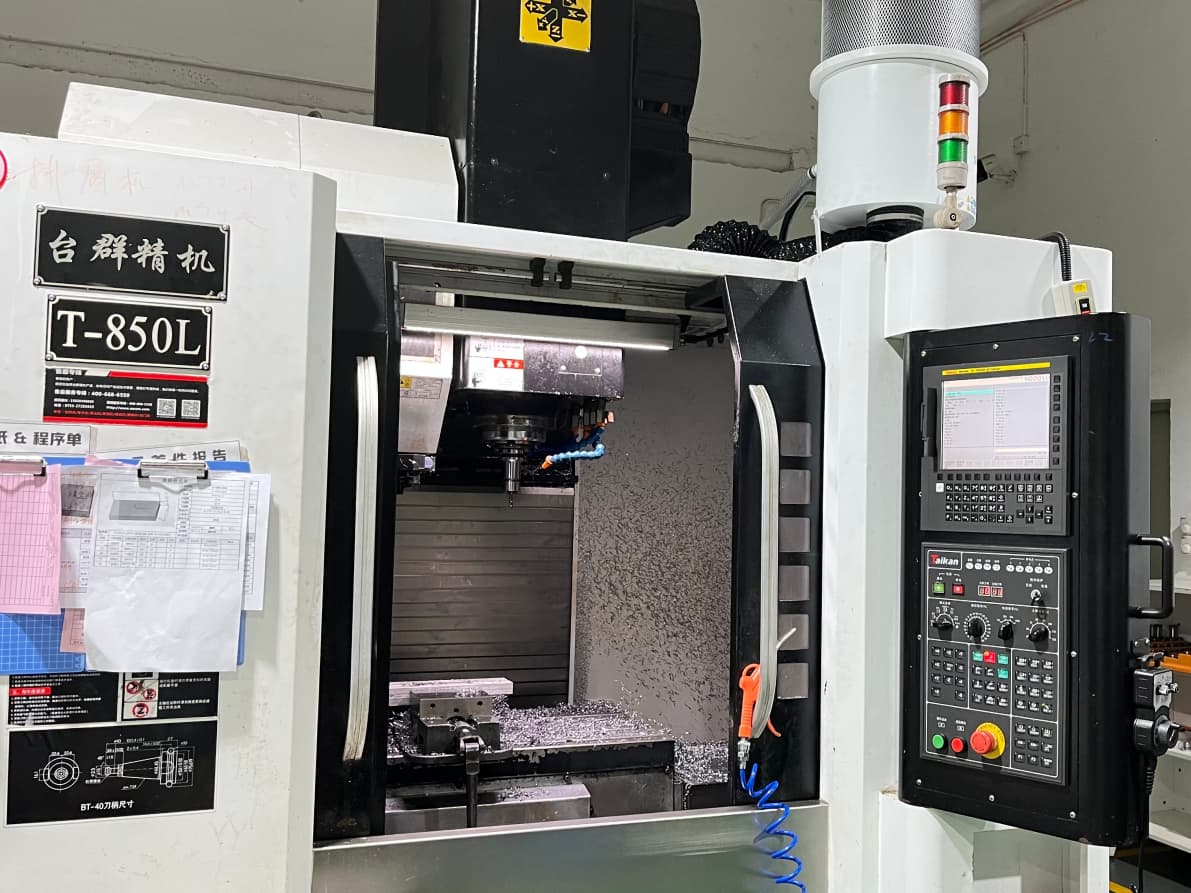
Most engineering teams hit a wall when they need 20 to 200 machined parts but cannot justify dedicated tooling. Low volume CNC machining fills that gap without a mold or fixture investment. It still delivers Tolerancia de mecanizado CNC to ISO 2768-mK. The real cost trap is wasted setups, not the cutting itself. YPMFG matches part geometry to the right 3-axis or 5-axis machine before quoting.
Puntos clave
- Tiempo de instalación: A single 3-axis setup can dominate the total cost of a 50-part batch.
- Material: 6061 aluminum and 304 stainless steel cover most low volume needs without specialty alloy premiums.
- Plazo de entrega: A 3-day sample turnaround is achievable for parts under 100 mm in the longest axis.
- Tolerancia: ISO 2768-mK is the default; tighter fits require Anotaciones GD&T per ASME Y14.5.
3-Axis vs 5-Axis at Low Volume
If your part has one flat reference face and no undercuts, a 3-axis route cuts Mecanizado CNC cost noticeably versus a 5-axis setup. The threshold is geometric, not a volume question.
What Actually Qualifies as Low Volume?
The industry does not publish a fixed cutoff, but in practice low volume covers one prototype through a few hundred units. Above that, buyers move into medium volume where dedicated fixtures start to amortize. The defining feature is that the batch is too small to spread a custom mold cost across enough parts.
Setup time, not cutting time, dominates per-part cost at these quantities. A simple bracket cut on 6061 with one vise operation is the cheapest case. Add a chamfer on three faces and the job shifts to two setups or a 5-axis head. The decision is geometric, not purely numeric.

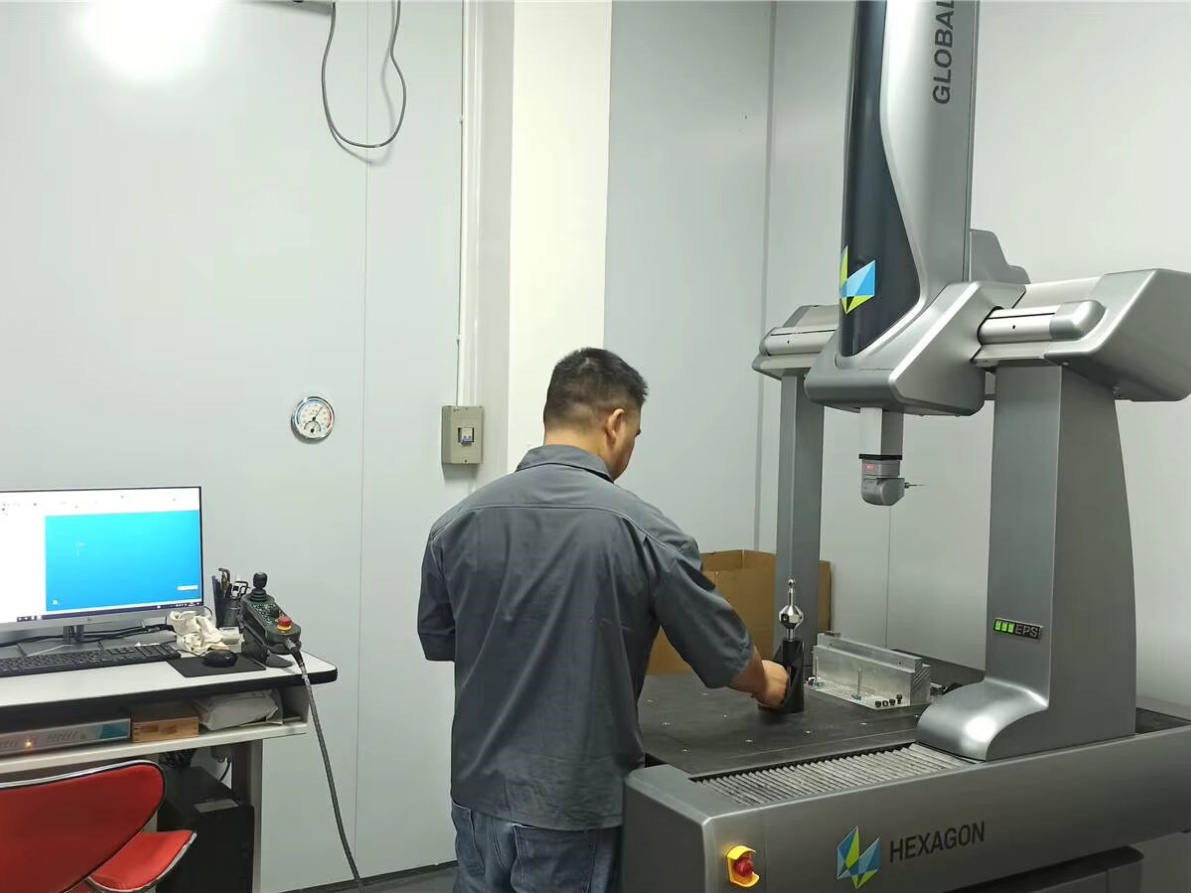
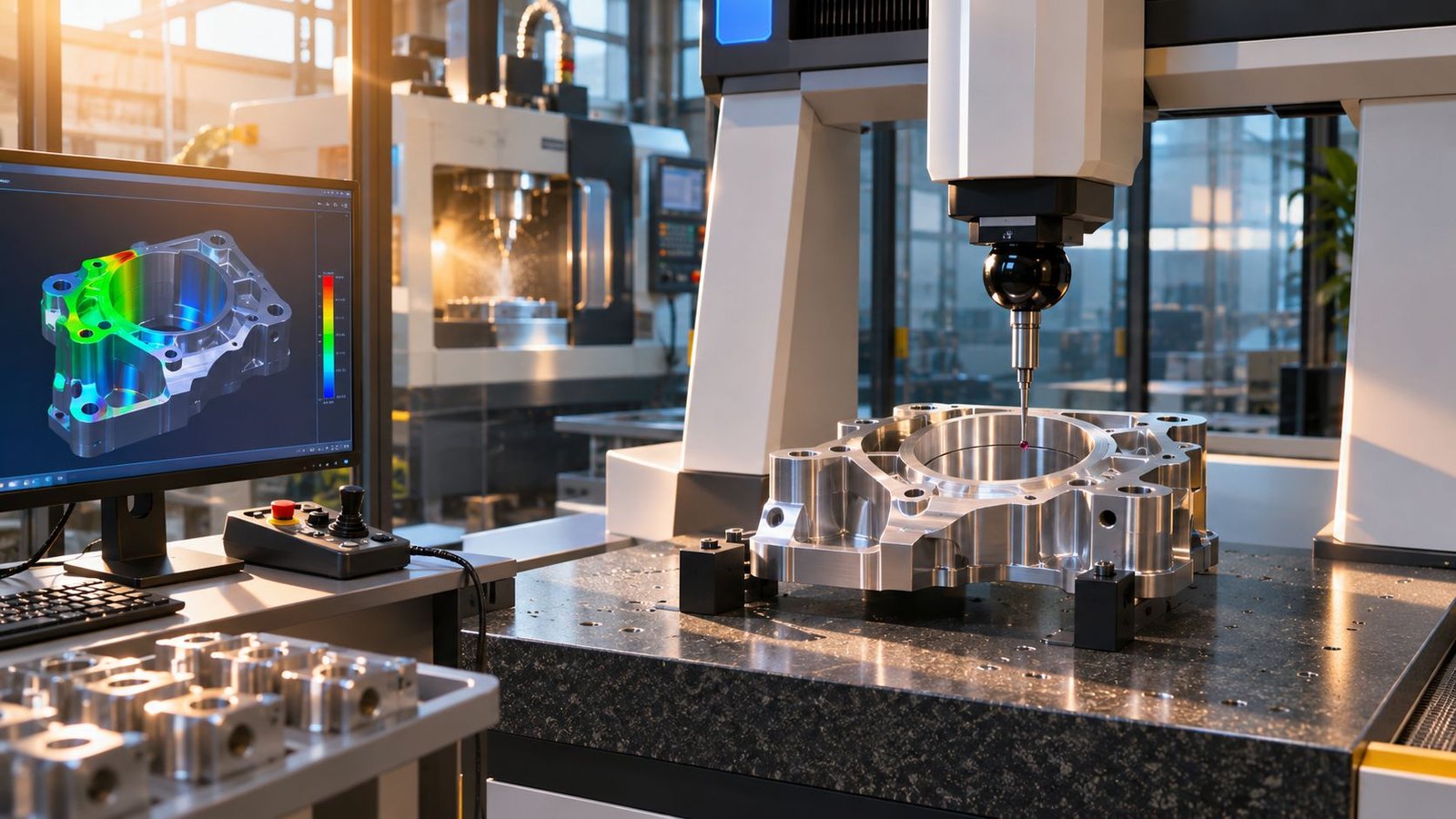
One physical limit to name: no CNC setup eliminates post-machining inspection. Tolerances tighter than the machine’s positional repeatability require CMM or laser scan verification. That adds a cost line scaling with feature count, not part count.
How Does Pricing Work at Small Batch Quantities?
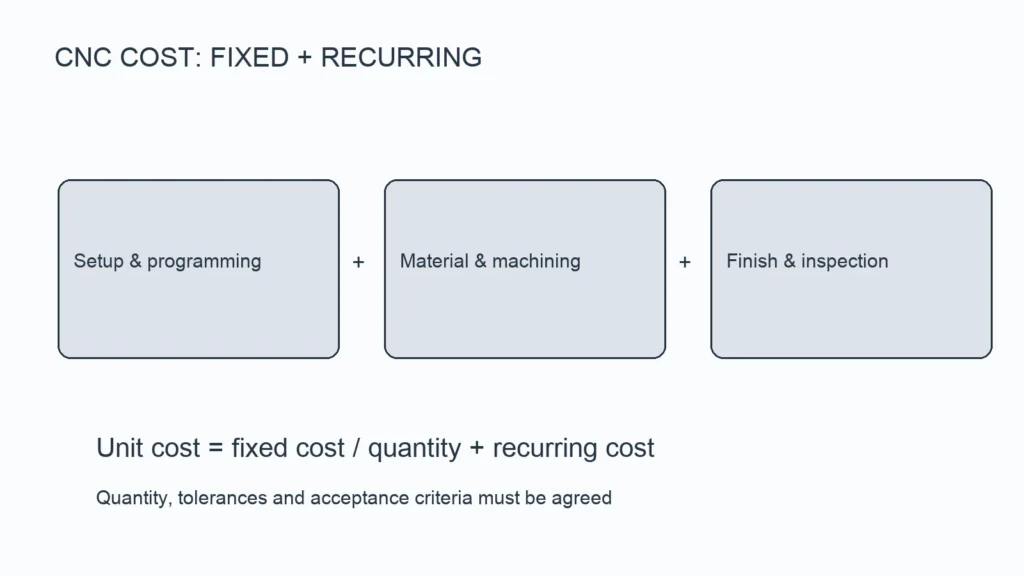
The cost structure inverts what production pricing suggests. The first unit carries the full setup: programming, tooling selection, fixture alignment, and first-article verification. Units two through N carry only material, cutting time, and inspection. A 50-part order is not 50 times the prototype price.
Three Factors That Move the Per-Unit Number
- Calidad del material: 316L stainless runs well above 6061 aluminum in material cost, nearly linear with part weight.
- Tightest tolerance: Moving from ISO 2768-mK to a 0.01 mm feature changes tool selection and pass count.
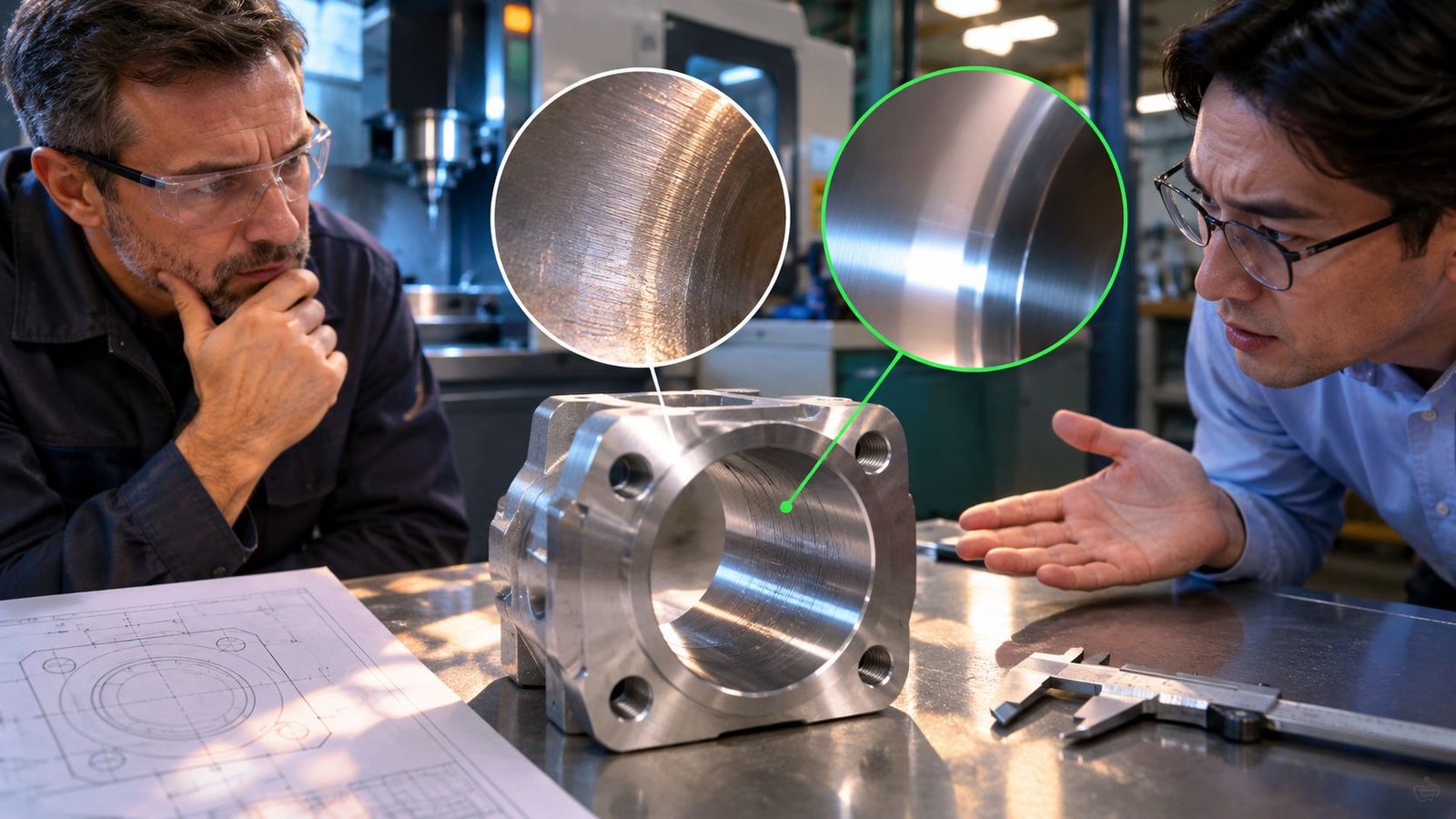
- Acabado superficial: An as-cut finish is standard; a specified Ra value may add a polishing or deburring step.
YPMFG structures quotes so the setup fee and per-unit rate are separated. That lets buyers see exactly where adding 50 units moves the curve versus adding 500. The per-unit decline is steepest in the first 50 to 100 units, then flattens.
An honest constraint: the per-unit decline has a floor. Once material and cutting time dominate, adding more units saves very little. The floor is set by tool speed and the specific material pairing.
What Should You Send Before Requesting a Quote?
A complete package prevents a Pieza mecanizada con CNC from bouncing back out of tolerance. The minimum set is a 3D CAD file in STEP or IGES, a 2D drawing with Anotaciones GD&T, and a material spec with the standard number, not just a grade name.
Three gaps that delay a quote by a week or more:
- No defined datum scheme: the machinist must guess the primary face, adding a DFM review cycle.
- Missing surface finish callout on a bore: defaults to as-machined, but the buyer expected a lapped finish.
- Material listed as “stainless” without 304 vs 316: a 316 part costs more and changes corrosion expectations.
Send your files for an engineering review. The team checks datums, tool access,and tolerancia de mecanizado feasibility against available 3-axis and 5-axis machines before turning the quote back. That review catches issues that would otherwise surface at first-article inspection.
A practical limit: if your drawing calls a tolerance below the machine’s thermal stability window, no fixture refinement closes the gap. That part needs a process change, not a tighter clamp.
Preguntas prácticas antes de realizar un pedido
Can a 3-axis machine handle a part with a blind hole on a side face?
It cannot, unless the hole axis is parallel to the tool approach. A perpendicular blind hole requires a 5-axis head or a second setup with re-clamping. Check your drawing for feature angles beyond 90 degrees first.
What is the minimum order quantity?
It cannot be below one part. A single prototype is a valid order. Most shops find a practical minimum around 5 to 10 units that justifies the setup time, but a true one-off is still producible.
Does low volume restrict the material options?
Not in a meaningful way. 6061, 5052, 304, 316, Brass, and Copper are stocked for any run size. Specialty alloys like H13 tool steel can vary by application and lead time, so confirm stock before committing.
Choosing the Right Volume Tier for Your Part
The core question is not “is this low volume?” It is “does the geometry justify the setup I am paying for?” A simple bracket cut on 6061 does not need a 5-axis machine, and a 200-unit batch of that bracket still carries a setup fee that dwarfs the cutting time per part. Match the machine to the geometry, keep your drawing package complete, and separate setup cost from unit cost in the quote you receive.
If you are unsure which Mecanizado CNC route fits your part count, send your CAD files and drawing to YPMFG. The engineering team confirms machine selection, flags tolerancia de mecanizado risks, and returns a structured quote with setup and unit lines itemized. You get a clear cost picture before committing to a batch size.