Spanish
 English
 German
 Russian
 Japanese
 Korean
 French
 Italian
 Portuguese

Secondary machining operations are the finishing, re-fixturing, and follow-up steps that run after your primary cut. A typical CNC part needs 1 to 3 secondary setups before it ships. Each setup adds cost but unlocks features a single setup cannot reach.
You spec a part with features on three faces. The primary CNC pass handles two. The third face needs a flip or a second clamp. That flip is a secondary machining operation. It sounds simple, but it shifts your lead time, fixturing budget, and whether the part holds Mecanizado CNC tolerancia across datums. YPMFG sees this decision come up in nearly every quote request.
Key Takeaways
- Setup count: A part with features on 3 or more faces typically needs 2 to 3 secondary operations minimum.
- Cost driver: Each secondary setup adds fixturing and inspection time, often doubling per-part machining cost.
- Tolerance risk: Re-fixturing introduces a new datum; tolerance on the re-fixtured face can drift past spec.
- Elección de materiales: Softer alloys like 6061 aluminum forgive secondary operations; H13 steel compounds errors fast.
Primary Versus Secondary: A Quick Comparison
If your part has features on fewer than 3 faces and your tolerancia de mecanizado sits at 0.05 mm or looser, one setup covers everything. Past that, plan for secondary work.

What Counts as a Secondary Machining Operation?
Any step that runs after the primary material-removal pass and requires a new setup, new tool, or new datum counts. Common examples include flipping the part to machine the back face, running a finish turn after a rough mill,drilling from a second orientation, and a post-machining deburr or chamfer pass.
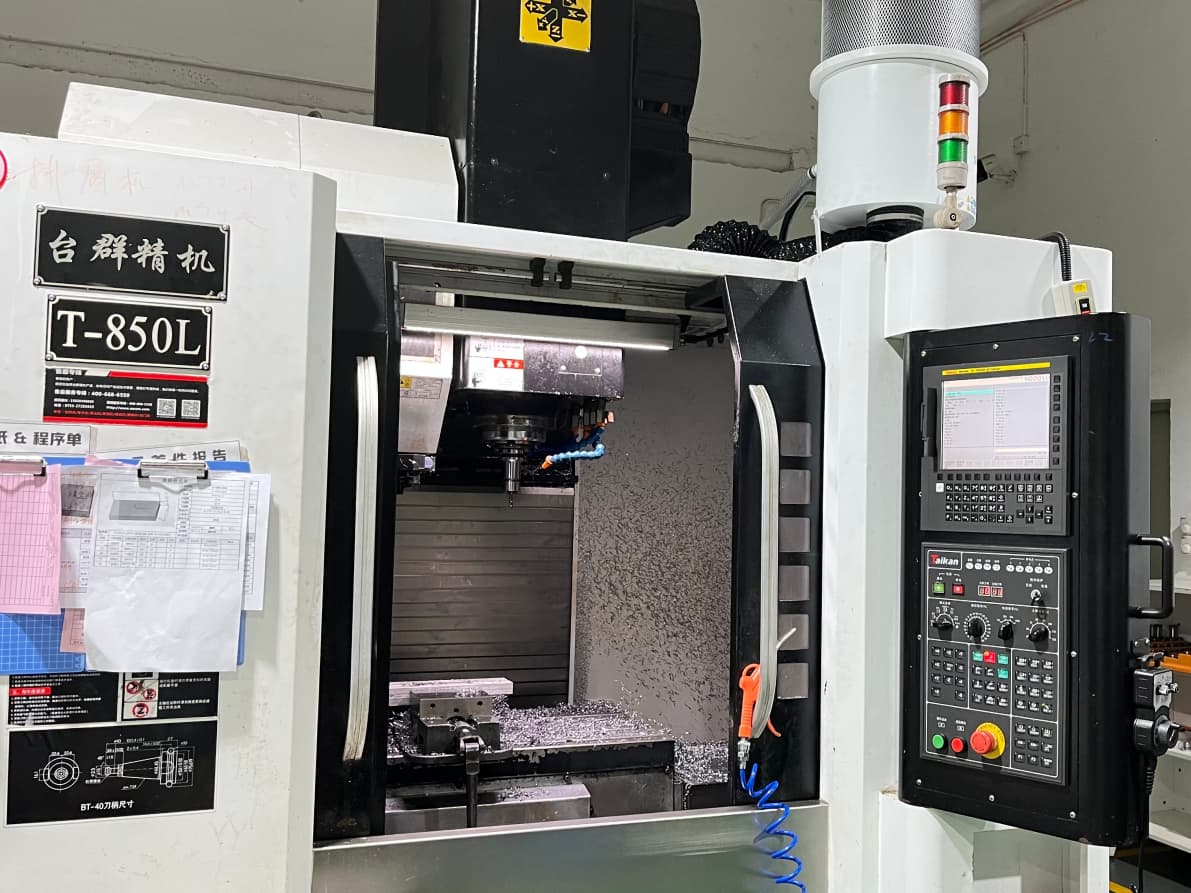
The physical reason is straightforward. A five-axis CNC spindle reaches features only from the direction the tool approaches. A through-hole needs two sides. A pocket with a side wall below the clamp line needs a flip. The machine cannot reach what the fixture blocks.
- Re-fixturing: Part moves to a new clamp. New datum, new alignment risk.
- Back-side machining: Features on the face opposite the primary setup.
- Finishing passes: A lighter cut to hit surface finish below Ra 1.6 micrometers.
- Secondary drilling or tapping: Holes from a face not accessible in the first setup.
What you cannot do: machine a closed internal cavity in a single setup if the clamp physically covers it. You must remove the clamp, re-fix, and cut the cavity. That is a secondary operation by definition.
How Do Secondary Operations Affect Tolerance and Cost?
Every re-fix introduces a new datum. The tolerance stack between the primary and secondary datums is what your engineer must control. A 0.01 mm hold on a re-fixtured face is achievable, but it demands a precision clamp and a post-fix inspection gate.

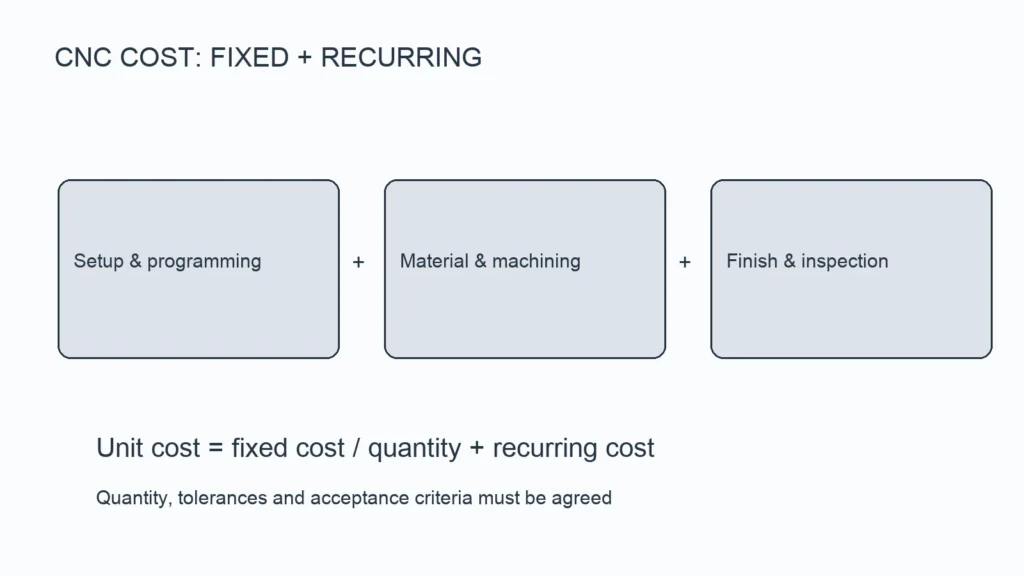
Cost scales with setup count. Roughing dominates the first pass. A secondary finishing pass adds tool-change time, a shorter cycle, and an inspection step. For a batch of 500 parts, each extra setup typically adds 1 to 2 days of queue and a measurable per-part cost increase depending on complexity.
Material matters. Aluminum 6061 is forgiving; a slightly loose clamp still holds. Hardened 316L stainless or H13 steel demands tighter clamping because thermal drift during the secondary cut can push the part out of spec.
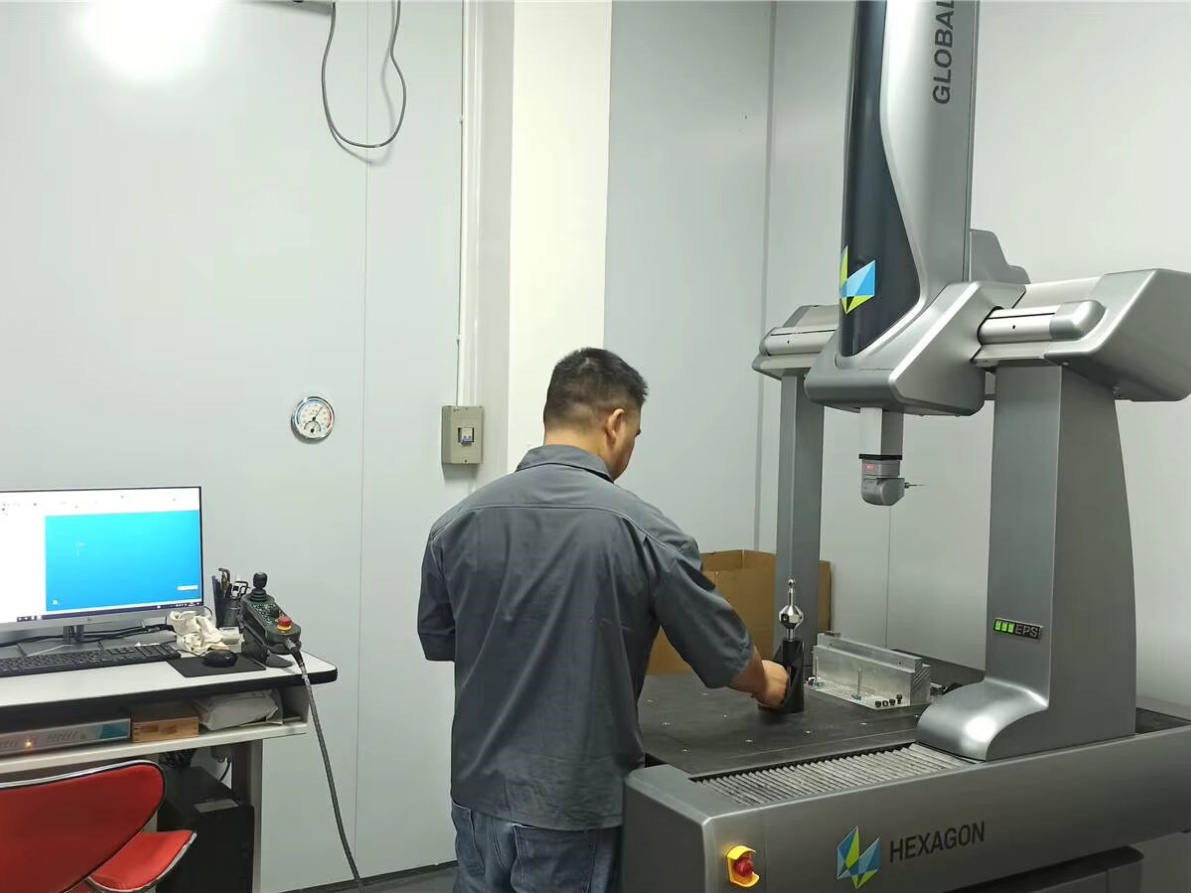
If your drawing calls for ISO 2768-m general tolerances, secondary work is manageable. At tighter than 0.01 mm, you need a documented fixturing plan and a post-fix CMM check. No clamp design eliminates all secondary drift. You reduce it to a risk band, not to zero.
When Should You Combine Primary and Secondary Work in One Job?
The answer depends on part geometry and tolerance. If all features face one direction and your tolerance is 0.05 mm or looser, a single setup finishes the part. If you need a through-hole, a back-face pocket, or a cross-drilled hole, the part must move. That move is the secondary operation.
A practical rule: count the accessible faces. One face, one setup. Two faces on opposite sides, two setups. Three or more faces, plan 2 to 3 secondary operations. Each additional face adds fixturing time and a new alignment check. YPMFG can review your drawing and flag which features force a secondary pass before you commit to a quote.
Heat treatment changes the equation. A part hardened after machining needs a final grinding or finishing pass on the work-hardened surface. That grinding is a secondary operation in its own right, and the post-heat-treat tolerance is harder to hold than the pre-treat one.
What you cannot avoid: a complex housing with features on 4 faces will need at least 2 secondary setups regardless of machine capability. A five-axis spindle reduces setups for contour work but does not eliminate the need to access a buried face from a new direction.
How a Typical Multi-Face Part Moves Through Secondary Operations
Take a machined 6061 aluminum housing with a top pocket, two side mounting faces, and a bottom through-hole. The process route works like this:
- Primary setup: Clamp on the bottom face. Mill the top pocket and both side faces with a 10 mm end mill, roughing then finishing. Full pocket depth in one pass.
- Secondary setup: Flip to the bottom face. Drill and tap the through-holes. Inspect top-face dimensions against the original datum before drilling.
- Deburr and inspect: Remove sharp edges. Run a CMM check on critical features. Package with an FAI report for the first article.
Process Route Reference: YPMFG process library, reviewed against published tooling data. Client-specific data withheld per NDA.
Practical Questions Before You Spec Secondary Operations
Do I always need a secondary operation? No. If every feature is reachable from one face and your tolerancia de mecanizado is 0.05 mm or looser, a single setup handles the job.
Can a five-axis machine eliminate all secondary setups? It cannot. A five-axis spindle improves reach on contoured surfaces, but a face fully hidden by the clamp still requires a re-fix or a separate operation.
How much extra cost should I expect? Depending on part geometry and batch size, each secondary setup often adds a meaningful share of total machining time. Send your drawing to YPMFG and you will get a setup count with the quote.
What drawing callouts prevent secondary-operation problems? State your datum scheme, specify which face is the primary reference, and call out ASME Y14.5 geometric tolerances on re-fixtured features. This removes ambiguity at the fixture stage.
Making a Smarter Decision on Secondary Work
The cost of a missed secondary setup shows up in rework, rejected batches, or a part that barely passes inspection. The cost of planning one is a few extra minutes of fixture design and a clearer drawing. YPMFG reviews your specification before quoting and flags every feature that forces a re-fix, a new datum, or a finishing pass. Send your drawing and tolerance callouts to YPMFG for an engineering review. You get a setup plan, a lead-time estimate, and a first-article inspection outline before any metal moves.