Spanish
 English
 German
 Russian
 Japanese
 Korean
 French
 Italian
 Portuguese

TL;DR: CNC bracket fabrication typically holds flat-surface tolerance within ±0.01 mm on aluminum. Process choice (3-axis vs. 5-axis) hinges on whether your bracket has undercuts or more than two workable faces. Material selection drives 40 to 60 percent of unit cost.
Buyers ordering brackets face three uncertainty gaps: will the part hold Tolerancia de mecanizado CNC across a 500-piece run, does the alloy match the load cycle, and can the fabricator actually inspect what you need? YPMFG works with engineering teams on exactly these decisions—reviewing drawings, flagging DFM issues, and aligning process to spec before a single chip is cut.
- Tolerancia stack-up: Three mating faces on one bracket accumulate error fast. Hold each face at ±0.01 mm to protect assembly fit.
- Material cost share: Aluminum 6061 runs 30 to 50 percent cheaper per bracket than stainless 316L. Choose by load and environment, not habit.
- Process gate: Five-axis CNC handles undercuts and angled features in one setup. Three-axis requires flip work, adding 15 to 20 percent cycle time.
3-Axis vs. 5-Axis: Which Route for Your Bracket?
The threshold is straightforward: if your bracket has more than two workable faces or any undercut, a single-setup five-axis route cuts handling error and shortens cycle time.
What Determines Bracket Fabrication Tolerance?

Tolerance on a bracket is set by three variables: material, tool path, and fixturing strategy. Most buyers over-spec flatness on non-mating faces and under-spec positional holes that actually carry load.
Tolerance by Feature Type
On aluminio 6061, a roughing pass leaves surface texture in the 25 to 40 µm range. A finishing pass drops that below 15 µm. For stainless 316L, expect roughly 1.5 times the cycle time at the same tolerance because chip formation is slower.
Material and Fixturing Interaction
Specifying ±0.005 mm on a non-critical face adds cost without functional gain. Check which faces actually mate in the assembly and allocate tolerance accordingly. ISO 2768-m covers general tolerances; go to ASME Y14.5 GD&T when positional holes drive the design.
Even five-axis cannot eliminate thermal drift on long runs. Parts exceeding 300 mm in length may need a rest period or in-process compensation. Send your drawing to YPMFG and mark which features are critical-to-function. Engineering reviews DFM against ISO 2768-m before quoting.
Which Material Fits Your Bracket Load Case?
Material selection drives 40 to 60 percent of unit cost and sets the maximum load the bracket carries. The wrong choice either adds unnecessary expense or fails under real service conditions.
Aluminum vs. Stainless Selection
6061-T6 offers 310 MPa yield strength, good fatigue life, and fast machinability. It is the default for dry, non-corrosive environments. 316L adds molybdenum for chloride resistance; cost is 2 to 3 times aluminum. Use it when the bracket sees salt spray or chemical wash.
High-Temperature and Specialty Alloys
H13 tool steel handles sustained temperatures near 400 °C. Machinability drops sharply, so expect longer cycle time and faster tool wear. Brass and copper brackets suit electrical and low-stress applications where conductivity matters more than strength.
No aluminum alloy matches 316L in chloride pitting resistance. If the service environment is marine or contains sustained chlorides, steel or titanium is required regardless of cost. Cross-reference your load, temperature range, and exposure with ASTM material specs before finalizing.
How Do You Control Bracket Fabrication Cost at Volume?
Cost per bracket falls in three distinct stages: prototype,pilot, and production. The steepest drop happens between the first 50 pieces and the 500-piece run, where fixture amortization kicks in.
Cost Curves by Production Stage
- Prototype (1 to 50 pcs): Single setup, no dedicated fixture. Per-unit cost is 3 to 5 times production.
- Pilot (50 to 200): Custom fixture amortized over the batch. Cycle time drops 20 to 30 percent.
- Production (200 plus): Fixture and program locked. Per-unit cost stabilizes and scales linearly.
Fixture Investment vs. Per-Unit Trade-Off
Ordering 500 pieces without a validated prototype risks scrapping the entire lot if the DFM assumption was wrong. Even at high volume, a bracket with 8 or more features cannot drop below a per-unit floor set by minimum tool engagement time. Request a phased quote from YPMFG and send your BOM quantity split so engineering can recommend the fixture-versus-unit-cost balance.
What Are Common Bracket Fabrication Errors to Avoid?
Most bracket defects trace back to two mistakes: wrong fixturing strategy and unmarked critical features. Both are catchable at the DFM stage, long before metal is cut.
Fixturing and Deformation
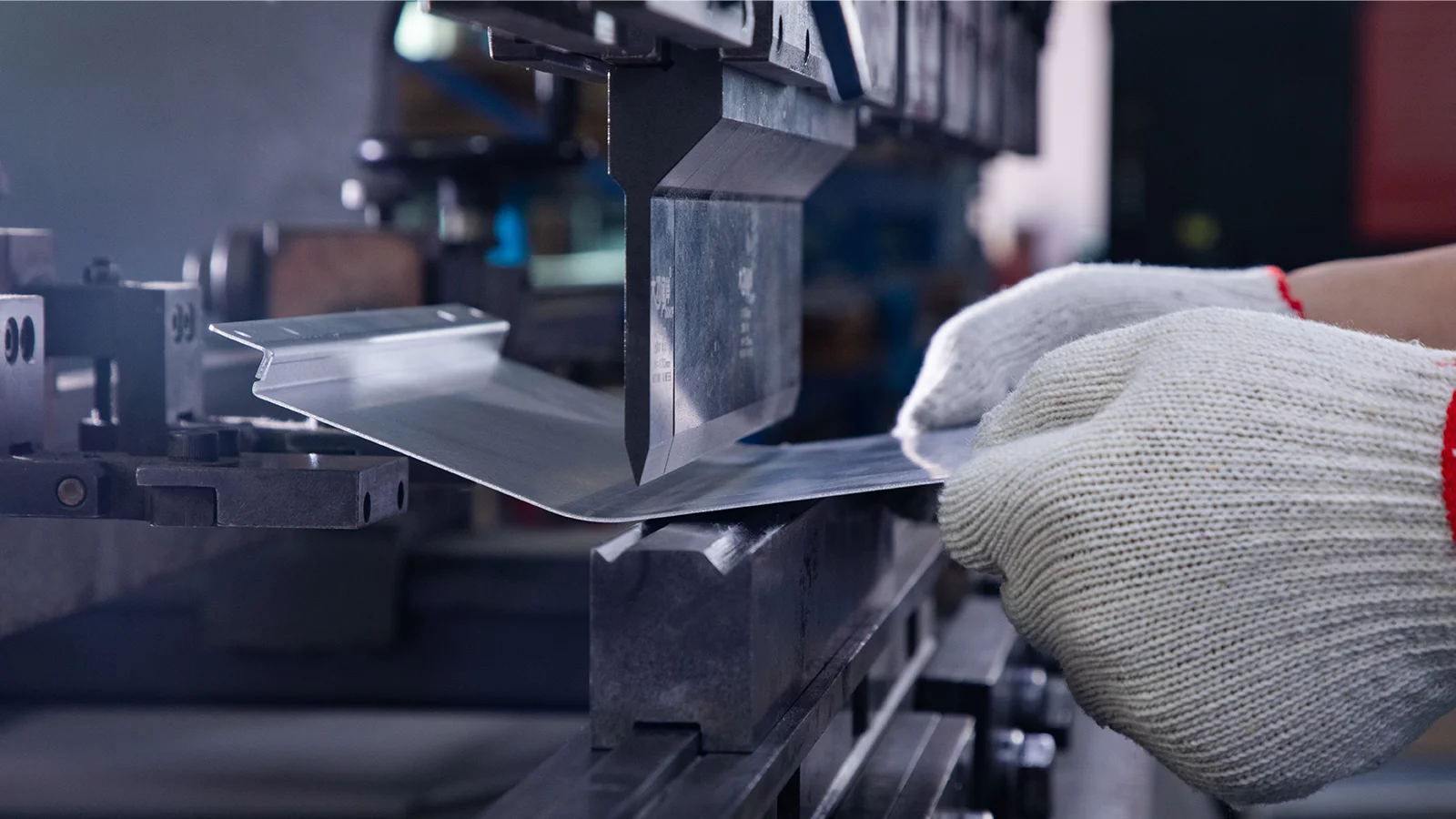
A bracket with thin walls at 3 mm or less deforms under standard vise pressure. Use vacuum fixturing or soft jaws to distribute clamping force. In stainless 316L, a 2 mm wall will heat-stress during milling; below 3 mm, forming or casting is the safer route.
Feature Marking and DFM
Unmarked holes become all-or-nothing in final inspection. Mark critical-to-position holes clearly on the drawing. Designers also place undercuts that force a second operation or EDM pass; flag any internal cavity during DFM review. Run a DFM check before releasing the drawing. YPMFG provides a written report flagging wall thickness, undercut risk, and fixturing concerns so you correct the design before committing tooling.
Practical Questions Before Sourcing Brackets
Can a 3-axis machine produce a bracket with a 45-degree angled face? No. A 3-axis mill cannot reach a 45-degree face without flipping the part. A 5-axis head or a manual flip is required. Angles at 10 degrees or less can be handled with a tilt fixture on a 3-axis setup.
What is the smallest feature a CNC bracket can hold? It depends on tool diameter and wall thickness. In practice, a 3 mm feature in aluminum is the floor. Below that, spring forming or EDM becomes more economical than milling.
How do I verify bracket flatness before shipping? Request a CMM report or laser-interferometer data against ISO 2768-m. YPMFG ships a full dimensional report with every batch. Visual inspection alone will miss warp below 15 µm.
Does 5-axis bracket fabrication always cost more? Not per unit at volume. At 500 pieces or above, single-setup 5-axis often costs less than multi-setup 3-axis because you eliminate flip operations and re-fixturing error.
Choosing the Right Bracket Fabrication Route
Getting the bracket right the first time comes down to matching process to feature, material to environment, and tolerance to actual function. Over-specifying costs you in cycle time and tooling; under-specifying costs your assembly line in rework. If you have a bracket drawing in hand, send it to YPMFG for an engineering review. You will receive a DFM assessment, a material recommendation tied to your service conditions, and a phased cost estimate that separates prototype from production. The goal is to lock the process, material, and tolerance stack before the first cut, so the 500th bracket matches the first. YPMFG engineers review your drawing against published tooling data and ISO 2768 before any quote is issued, which keeps surprises out of the production window.