English
 German
 Russian
 Japanese
 Korean
 Spanish
 French
 Italian
 Portuguese

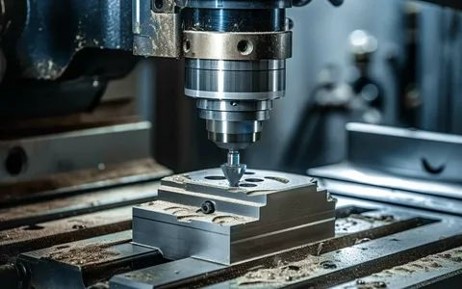
Manufacturing of raw metal parts starts with assessing basic geometric forms. A good example is that a flat block of material would need a very different cutting tool than a circular tube. Once the geometry of the part to be produced has been determined, the machine shop decides on the tools they should employ.
Flat blocks (such as square blocks) or other complicated forms can be processed on a CNC Milling Machine. High-speed rotating cutters remove unwanted material from the stationary block of metal. Conversely, cylindrical blocks of material are cut with a stationary cutting tool while being rotated at high speed. Decisions about the appropriate equipment to utilize during production are made based on the shape of the part.
Evaluating Flat Surfaces
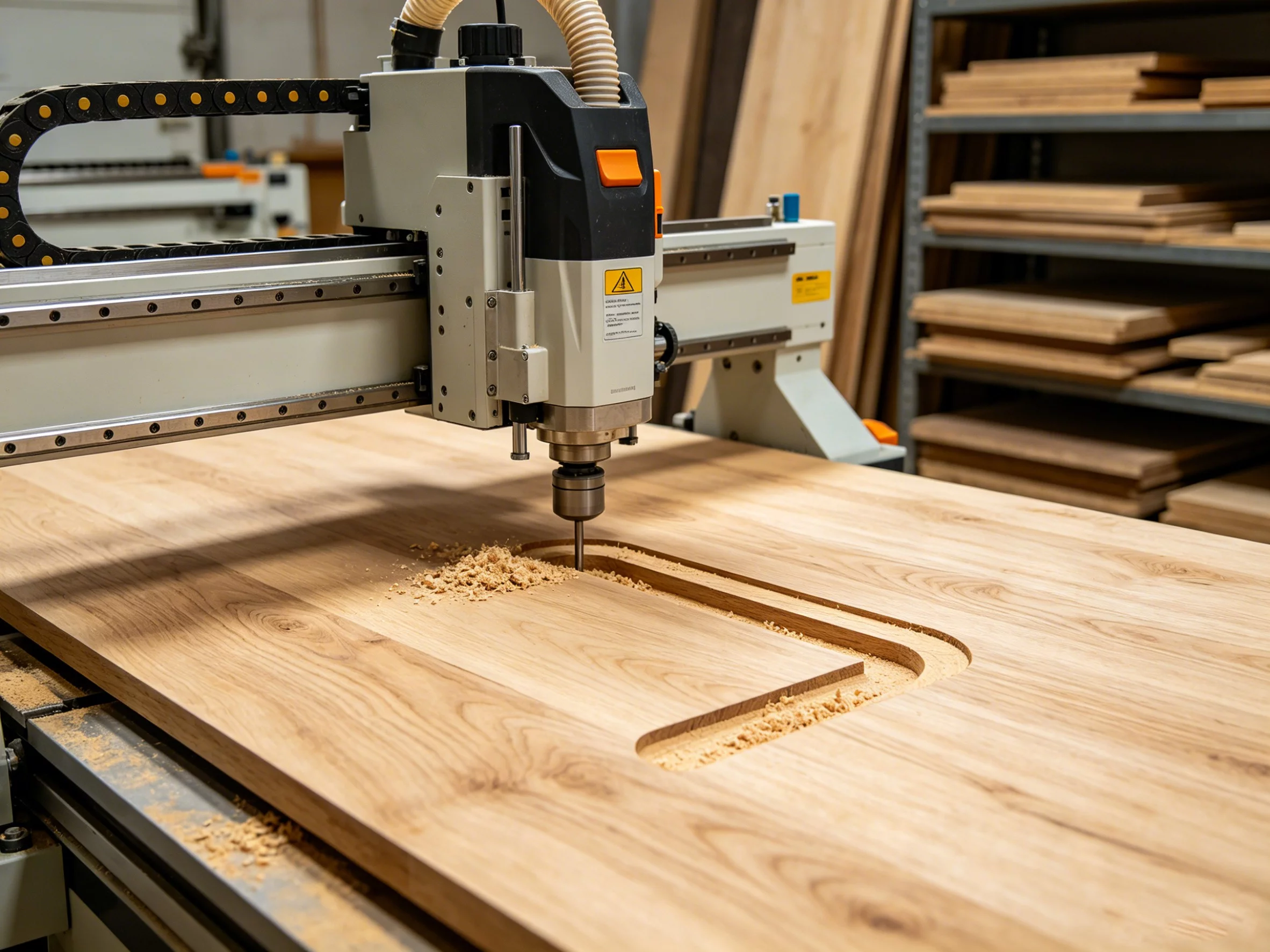
Square stock and flat angle stock require a cutting process. It’s recommended that the operator use a rotating drill bit when the stock being cut rests on a level surface. To prevent movement of the stock while it’s being cut, operators attach the stock securely to the work table.
Once the operator has attached the stock to the work table, they will then use the cutting head to travel around the stock to develop corners and deep pocket areas in the stock. When developing sharp edged geometric shapes (i.e. the corner of a box), the machine shop utilizes a rotating base.
However, a rotating base cannot accurately develop sharp square corners. Therefore, machine shops will always position their flat design projects on their fixed bed machines.
Handling Round Profiles
The use of cylindrical shapes in your machining process will create many differences in how you can setup the machine. For example, long shafts, special custom bolts, etc., need to spin very fast. The long metal rods used as the source material for these types of parts must be securely mounted into a heavy duty chuck.
The heavy lathe then spins the rod at extremely high speeds. At the same time, the single-point cutting tool remains stationary. Therefore, CNC turning is capable of handling complex curved geometries.
Producing a smooth cylinder on a stationary work table would require an enormous amount of time. It is therefore, always more efficient to have the actual metal rod spinning.
Complex Grooves And Slots
Deep grooves are cut into several areas on each end. Cutting grooves in this manner requires use of cutting tools that have a sharp edge, and operate from the top. Due to the deep groove formed during the cutting process, it is difficult for the rotating part to accommodate the groove.
Once again, using a flat metal sheet as a work piece worked out well. Drills are capable of drilling directly down into the cold metal. Once the drill reaches the desired depth, it can quickly sweep left to right to remove enough material from the sheet to create a wide groove.
The product’s shape will determine exactly where the drill enters the raw metal sheet to create a very smooth and clean surface.
Symmetry Changes The Setup
When making perfectly round parts, the machine needs to have a symmetrical spin. The symmetry of a geometry to itself works well for a lathe. Sometimes, a part has a small bump or protrusion on one side.
Although the bump is tiny, it causes the entire spinning balance of the part to be thrown off. If a non-symmetrical part is spun fast, the cutting machine will shake. Factory workers must use flat surfaces for non-symmetrical parts.
Workers put the non-symmetrical part flat on a surface and cut it from above. Whether a machine can make a particular part depends on the symmetry of the part.
Combining Multiple Shapes Together
Shops typically create complex geometries by using multiple angles in the cutting tool. For example, if a shop wants to make a circular cutout from the top of a rectangular piece of metal, they may first place the rectangular metal on a flat surface.
Then, they would cut out the circular pattern. Since there are many different angles in the shape, shops usually alter their cutting strategy as they proceed through the cutting operation.
Conclusion
The part’s form dictates which type of manufacturing tooling will be chosen. Round parts can now most effectively be machined using high-speed lathes. Parts with flat or rectangular forms may be securely positioned on the bed of a conventional milling machine.
The selection of the proper tooling is solely based on a team’s ability to properly interpret the angles shown on the blueprint. If teams select the incorrect tooling, they risk losing expensive raw materials immediately.
Prior to beginning work on any machine, teams review the geometry carefully. By selecting the most appropriate tooling, factories are able to run at maximum efficiency and machine operators can produce accurate parts consistently.