English
 German
 Russian
 Japanese
 Korean
 Spanish
 French
 Italian
 Portuguese

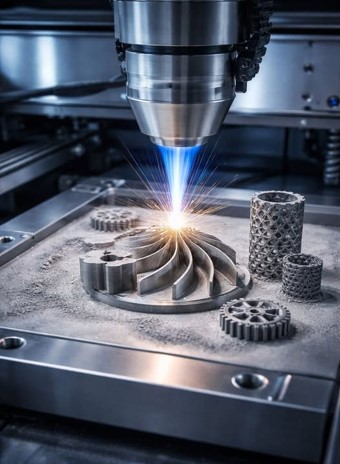
Making the choice as to what type of production process is most suitable for creating parts may be extremely hard. Today, manufacturers have two choices. First, we look at using existing equipment. Then, we see new equipment performing incredible feats.
There will be times when you need parts quickly. There will be times when you need parts that are durable. The introduction of 3D printing has changed how many manufacturing facilities operate. 3D printers create shapes by stacking layers, resulting in less waste and less waiting time. Today, employees are excited about the possibilities of this new way of manufacturing.
Looking At Hard Design Needs
Complex shapes present a huge challenge to those who create products. When using traditional printing techniques, you must use straight lines. Printing the interior surface of a complex object with traditional printing methods is extremely difficult.
Printers that use new technology have no problem printing complex designs. All you have to do is upload your design file to the printer and sit back and watch as the printer prints your design layer-by-layer. Since this allows teams to explore different design concepts, they can be as creative as they like.
For example, a solid piece of plastic can be printed within a few seconds. However, printing a hollow sphere of plastic is a completely different story. Engineers must decide what they want to achieve with their product. By making good decisions early on, engineers can avoid making errors later on.
Fast Speed Matters for Teams
Wait times for molds can last several months; however, factory owners prefer to not wait for items to arrive, rather, they desire for the finished product to be in their hands no later than the close of business on the following day.
Rapid prototyping addresses this long waiting period. An engineer may create a prototype part using CAD software on Monday, and then receive the physical prototype part the next business day. For older employees, rapid prototyping appears as if it were a type of magic.
Engineers can quickly identify issues within the design. Any changes needed to the design are implemented prior to significant financial resources being expended on the project. Slow, traditional manufacturing techniques simply cannot match the fast turnaround provided by rapid prototyping.
Customers are satisfied consistently and provide reasons to smile when they realize that rapid prototyping provides quick turnaround times.
Picking The Best Solid Material
Traditional manufacturing techniques involve taking a large block of metal and cutting it up into smaller pieces; however, the amount of waste that is created during this process can be extensive.
On the other hand, today’s 3D printers use lasers to melt metal powder so that parts can be built. Parts produced in this manner are usually extremely strong.
There are many instances where using cheap plastic is more than adequate for a given job. Therefore, you should always choose the right material for each job. As an example, a toy will probably need to have some bright colors, whereas a car engine will need to withstand high temperatures.
Thus, before choosing a material for any job, make sure you know what you want to achieve with the job.
Looking Closely at Total Costs
In other words, money has always been and still is what makes things happen. Because mold tooling is expensive at the start, you should only consider investing in mold tooling if you intend to produce many items.
If you are going to produce fewer items, you may wish to consider using layering techniques. With layering techniques, you are only charged for the material that was used to create your items.
When layering is used as part of a prototype development program by startup companies, layering can be very inexpensive. Startups have the ability to fail and then try again.
However, if you are planning to produce a lot of items, you should use injection molding. Injection molding offers substantial cost savings per item produced as the number of items being produced goes up.
In summary, mathematics will help you decide which manufacturing technique would be the most effective for your company each and every time. It would also be wise to budget accordingly.
Thinking Hard About Batch Scale
Manufacturing 10 parts is easy. However, manufacturing 1,000,000 parts makes things completely different. Printers work slowly on large orders because they make each part individually.
On the other hand, factories need to run at high speeds (stamping) in order to meet the demand of mass-producing parts. Thus, you install large equipment which produces identical parts continuously.
Engineers are aware of this concept. You start by using your new equipment to manufacture a few parts. Then you will utilize heavy-metal stamping to produce a lot more parts. This will give your supervisor confidence.
When your sales grow, you can adapt your manufacturing plan accordingly.
Conclusion
When selecting a course of action, it requires careful thought. Both an established store model and cutting-edge technology offer significant advantages.
Begin by evaluating what makes up who you are. Next, assess the amount of time you have available. Finally, determine the financial resources at your disposal.
You can find the right tool to accomplish your goal; you simply have to select the one that works best for you. If you plan to test out potential solutions, be prepared to act quickly and use low-cost materials.
If you intend to sell products on a grand scale, you will require large-scale production facilities. Companies that combine both of these concepts (established store model and cutting-edge technology) are more likely to achieve success.
If you can produce superior products today, then your business should continue to thrive.