Portuguese
  English
  German
  Russian
  Japanese
  Korean
  Spanish
  French
  Italian
CNC machining precision refers to how closely a manufactured part matches its nominal dimensions on the drawing. Typical CNC machining precision ranges from ±0.1 mm for general housings down to ±0.001 mm for aerospace or medical components. What you achieve depends on machine rigidity, tooling condition, material behavior, and fixturing strategy. If your application demands tight functional fits or batch-to-batch consistency, the tolerance level you specify directly affects part performance, assembly yield, and unit cost. Getting it right during the design phase avoids rework and downstream failures.
Most buyers do not question whether CNC can hit a tolerance. The real challenge is specifying the right level, understanding what drives cost, and knowing where to invest. YPMFG works with engineers and procurement teams on peças CNC de precisão where a 0.005 mm window determines whether a component functions or fails.
What CNC Machining Precision Actually Means
CNC precision is not a single number. It describes the total deviation between the as-machined surface and the nominal dimension on your drawing.
For any CNC mechanical part, three measurements define precision:
Dimensional accuracy – how close the actual size is to the target
Geometric accuracy – flatness, roundness, concentricity, and positional tolerance
Acabamento da superfície – Ra value that affects friction, sealing, and wear life
A part can pass its dimensional check yet still fail in assembly if concentricity is loose. Specifying both dimensional and geometric tolerance on the drawing is essential for any functional fit.

Key Factors That Affect CNC Machining Precision
Machine capability sets the ceiling, but five practical factors determine what your part actually achieves on the shop floor.
These factors compound. A part held in a worn vise on a spindle that has drifted 0.005 mm will rarely hold a ±0.002 mm feature, regardless of the program. YPMFG reviews these variables during avaliação de engenharia before committing to a production run, so risk is identified before material is cut.
Tolerance Levels and What They Typically Cost
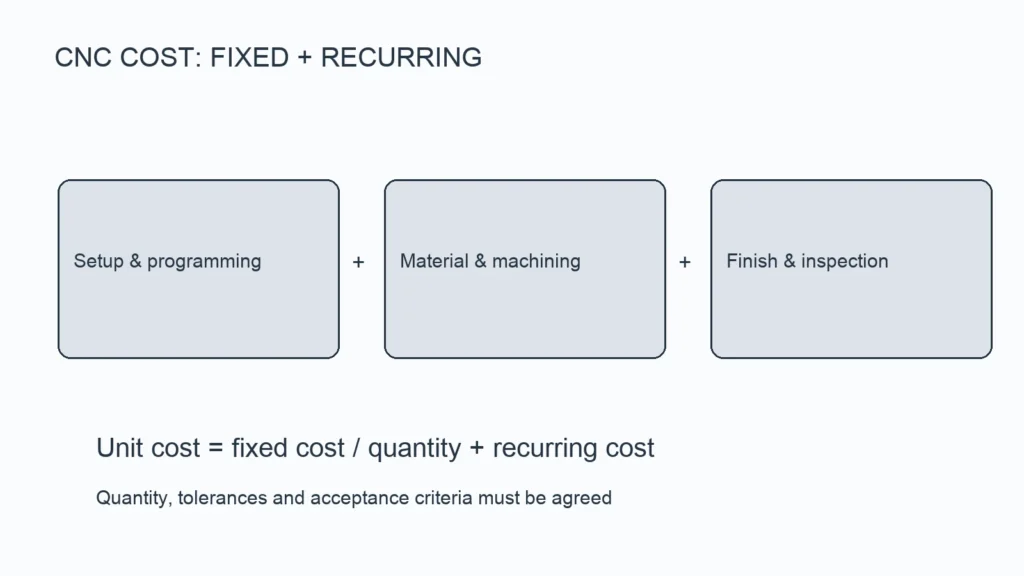
Tighter tolerance is not just a higher price tag. It changes tooling, fixturing, cycle time, and inspection method across the entire process.
Moving from standard to precision tolerance can add 30–80% to machining time, depending on part geometry. A solução CNC personalizada that tightens tolerance on one critical feature is often more economical than raising it across the entire drawing.
How to Specify Precision on Your Drawing

Three rules keep your especificação de tolerância clear to the shop floor:
State the nominal dimension and tolerance directly on the drawing, not only in a general tolerance block.
Call out geometric tolerances as separate feature control frames, not as implied values.
Flag which features are functional. Not every 0.01 mm dimension needs ±0.005 mm.
If you are unsure which tolerances actually matter for your assembly, send your specifications for a drawing review. The engineering team will identify over-toleranced dimensions that waste machining time and under-specified features that risk assembly failure.
Common Questions About CNC Machining Precision
What is the tightest tolerance a standard CNC machine can hold?
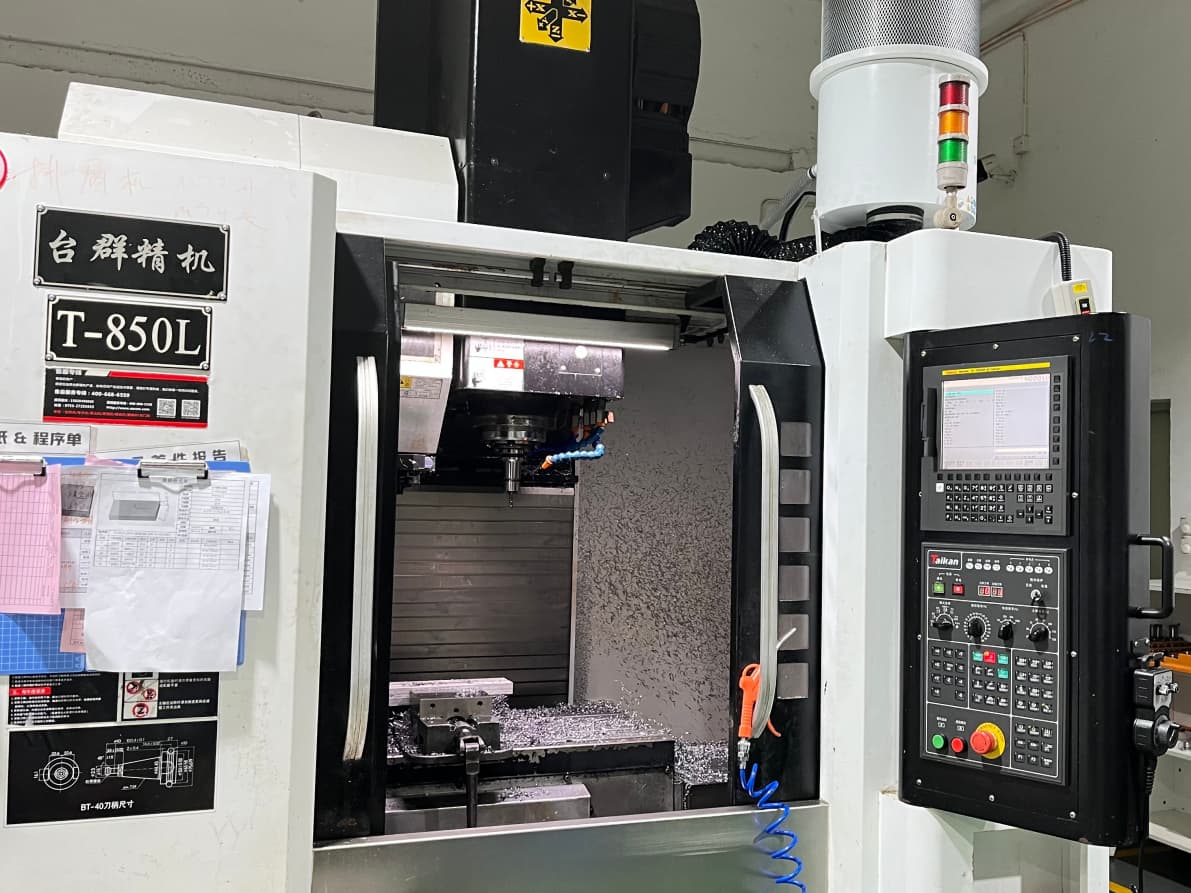
Typical 3- or 5-axis CNC centers hold ±0.001 mm on well-rigged, moderate-complexity parts. Actual achievable tolerance depends on machine age, tooling condition, and material. Always verify against your specific part geometry before committing to a quote.
Does a tighter tolerance always cost more?
Not automatically. If only one bore or shaft needs ±0.002 mm, the cost impact is localized. Raising tolerance across every dimension on the drawing, however, can add 30–80% to cycle time and inspection cost.
How many parts need full inspection for precision?
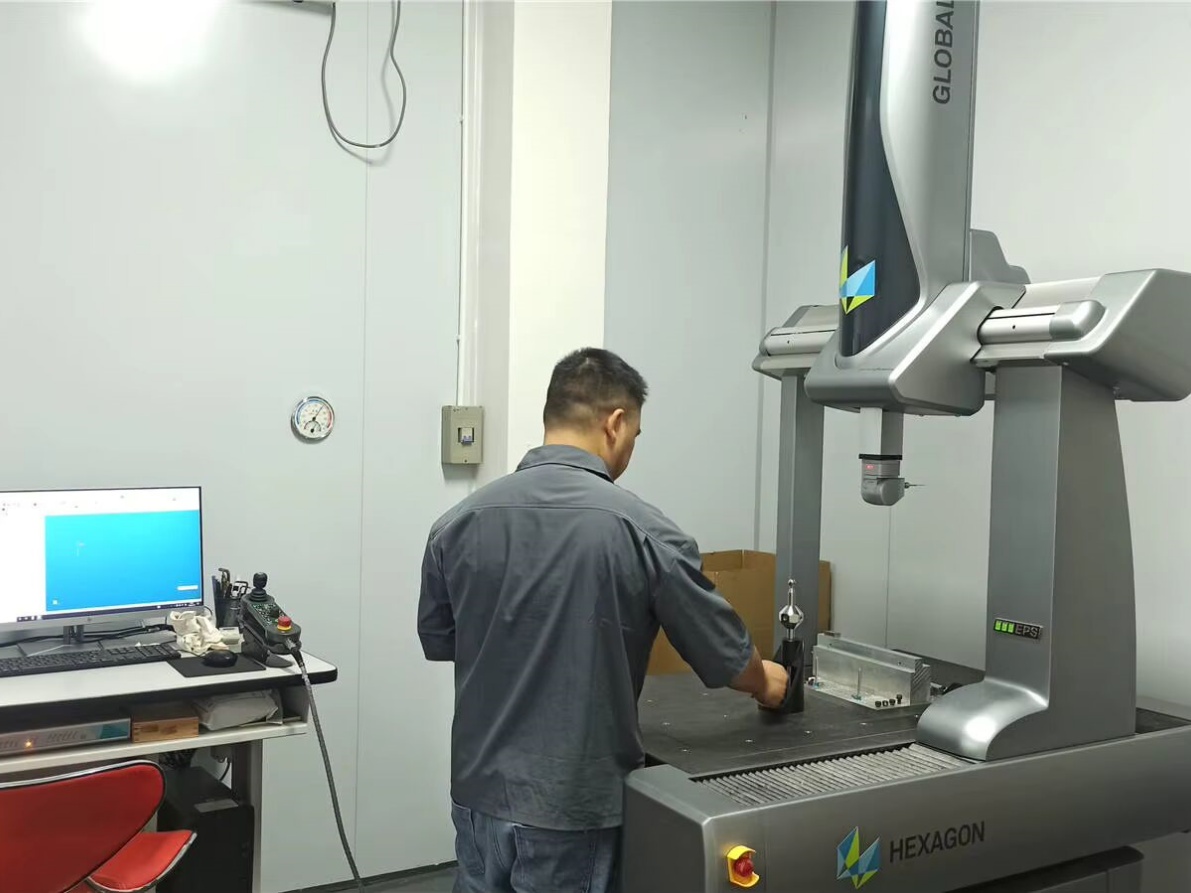
For production runs, SPC-based sampling per ASQ Z1.4 or an equivalent standard is typical. For first articles or critical aerospace and medical components, 100% CMM inspection is the norm. Define the sampling plan in your quality agreement.
Can I mix precision and general tolerances on one part?
Yes. Apply general tolerance to non-critical dimensions and tight tolerance to bore diameters, shaft fits, or seal grooves. This keeps the part functional without inflating cost across the board.
Choosing the Right Precision Level for Your Part
The right tolerance specification balances functional requirement, material behavior, and total ownership cost. Over-specifying on non-critical features adds machining time without improving performance. Under-specifying on a functional interface causes assembly rejection and field failures.
If you need help mapping tolerances to actual function, YPMFG’s engineering team can review your drawing, flag features that truly need tight control, and recommend a cost-effective strategy. Send your specifications or a 3D file for a free engineering assessment and a detailed quote.