Russian
 English
 German
 Japanese
 Korean
 Spanish
 French
 Italian
 Portuguese

Specifying steel parts для прецизионная CNC-обработка comes down to three decisions: the right alloy grade, a realistic tolerance stack, and a defined surface finish. Most quality failures and cost overruns trace back to vague drawings or missing material certifications. The unit price of a custom steel part is rarely the dominant cost driver. Tooling time, fixture design, post-machining treatment, and inspection overhead often outweigh the raw material expense. Before you request a quote, confirm the alloy designation, critical tolerances, and any required certifications. That single step eliminates the most common back-and-forth with a machining shop and keeps your project on schedule.
In practice, procurement teams managing Токарная обработка с ЧПУ или Фрезерование с ЧПУ projects hit the same wall: the drawing says “steel” but not which grade, the tolerance callout is generic, and the finish is left to the shop’s discretion. YPMFG regularly reviews incoming part prints and finds that clarifying these three points up front cuts revision cycles by half.
Alloy Selection Determines Everything Downstream
Choosing between AISI 1045, 4140, 304, or a specialty alloy changes tool wear, achievable tolerance, and post-heat-treatment distortion. Each grade has a different machinability rating and response to quenching. A part machined from 1045 steel may hold ±0.01 mm without secondary finishing. The same geometry in 4140 often requires grinding after case-hardening to meet that same tolerance.
If your application involves high-impact loading or cyclic stress, a hardened and tempered alloy is typically the correct call. For corrosion-critical environments, stainless grades shift the machining strategy and cost structure. Выбор сплава should always be driven by the load case and service environment, not by the lowest material price on a BOM.
## Tolerance and Fit Specifications That Actually Matter
A generic “±0.1 mm” tolerance on a critical bearing seat will cause assembly rejection at the customer’s end. The practical question is which dimensions drive functional performance and which are purely cosmetic. Flag the functional tolerances explicitly on the drawing—GD&T symbols or positional callouts beat general tolerances every time.
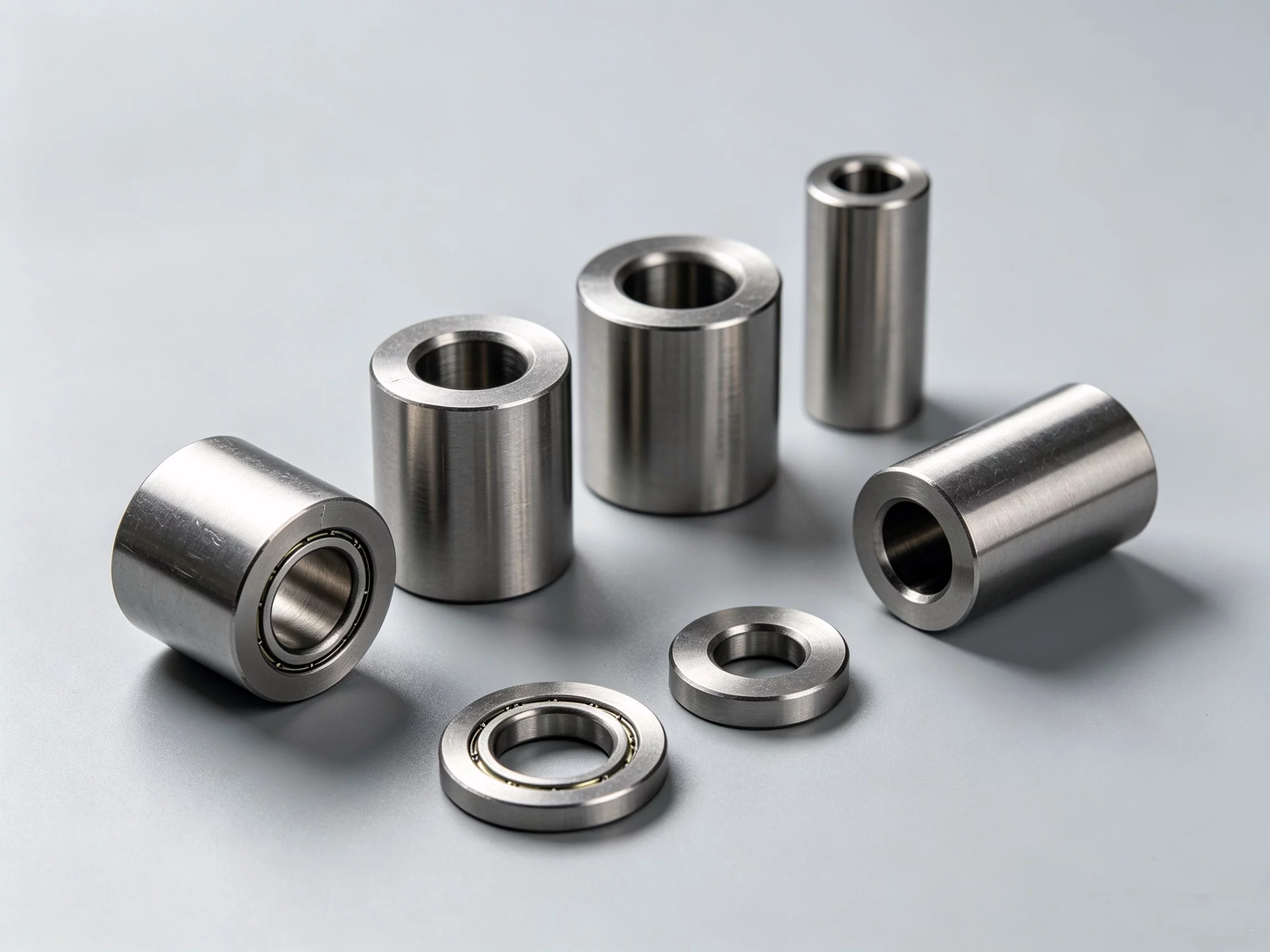
Machinability also sets a realistic floor. Hold-to-tolerance on Изготовлено на фрезерном станке с ЧПУ steel features typically starts around 0.02 mm without grinding. Tighter values become a finishing operation, not a machining one. Defining this boundary on the print avoids misquoting and surprise cost adders.
## Five Things to Verify Before Sending a Quote Request
Filling in this table before sending a request for quotation turns a one-hour quote into a ten-minute one. YPMFG can review your part print against this checklist and flag any missing callouts before a quote is issued.
Surface Finish and Post-Machining Sequence
A raw machined surface on steel typically lands at 1.6 µm Ra. If the print calls for 0.4 µm Ra, that is a polishing or grinding step, not a milling parameter. Calling it out saves the shop from guessing and adds the correct labor line to the quote.
Electroplating, passivation, or heat-treatment after machining can also shift dimensional stability. Specify the post-process sequence on the drawing so the shop programs the correct operation order. This is especially critical for parts that will be case-hardened or nitrided, where dimensional growth is predictable but must be accounted for in the tolerance stack.
Common Specification Mistakes That Add Lead Time
Saying “steel” without a grade or heat-treat condition
Leaving hardness values in the notes instead of the BOM
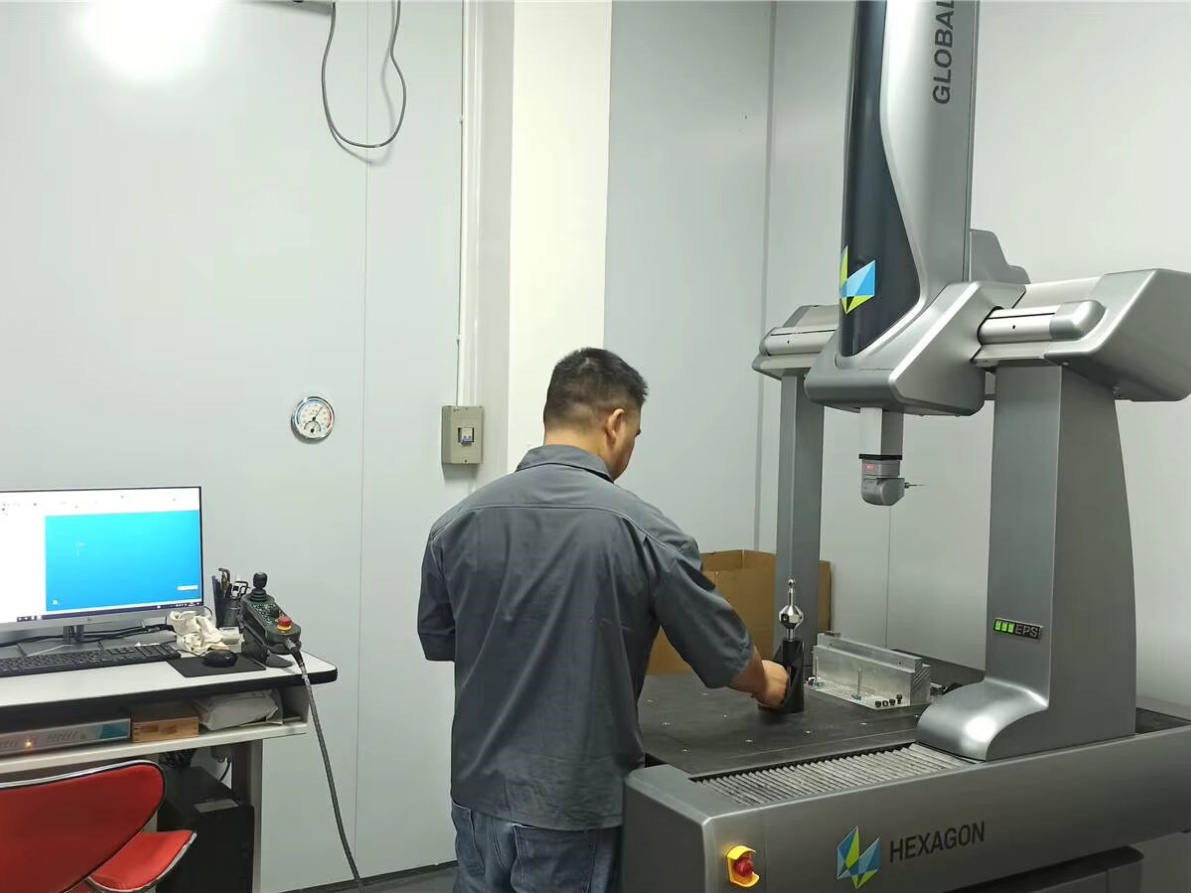
Omitting the inspection plan (CMM report, first-article inspection)
Not stating whether burrs are acceptable on internal features
Mixing metric and imperial tolerance callouts on one drawing
Each of these sends the part back to the shop for clarification, adding lead time and risk. A single revision loop can push a two-week job to five weeks.
## Practical Questions Before Choosing Steel Machining Parts
What is the tightest tolerance a CNC shop can hold on steel without secondary grinding?
Depending on the material and feature geometry, unground Обработанные на станках с ЧПУ steel parts commonly hold 0.01–0.02 mm on straight dimensions. Below that, grinding or lapping is required, and the cost structure changes significantly.
How do I know if 4140 or 4340 is the right alloy for my part?
It depends on peak load, impact resistance, and required core hardness. 4140 suits moderate-stress rotating components. 4340 handles higher impact and fatigue loads. Your engineer should verify against the service stress spectrum before locking the grade.
Does quantity affect the tooling and setup cost per unit?
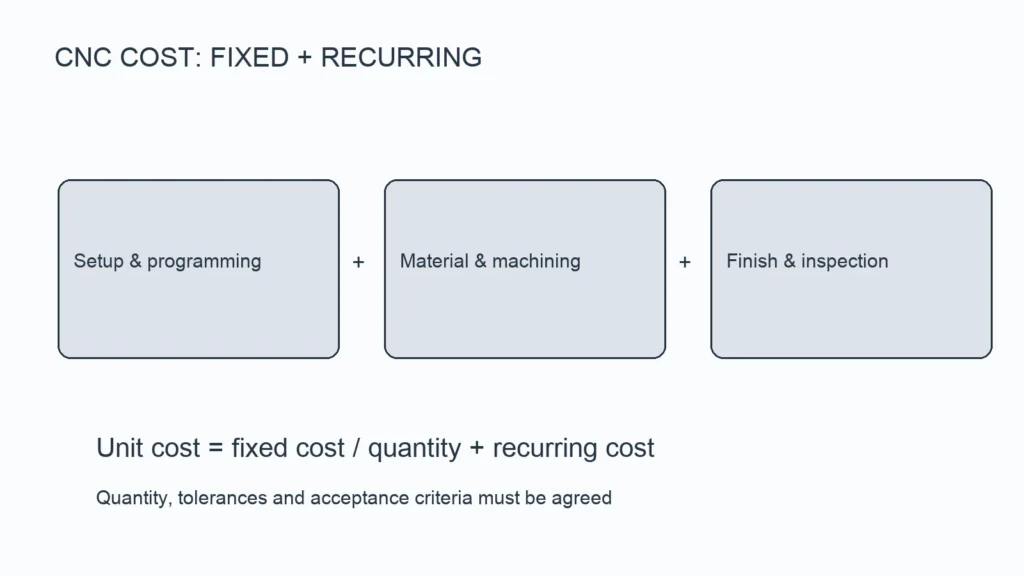
Yes. Low-volume runs amortize fixture and setup cost across fewer pieces, raising the unit cost per part. Break-even points vary by geometry complexity, but shops typically see a noticeable step-down in per-unit price once you pass 50 to 100 pieces.
What documentation should I request with a batch of machined steel parts?
A material test certificate (MTC), a final inspection report covering critical dimensions, and the heat-treatment log if the part was quenched or tempered. For regulated industries, add the PPAP or equivalent first-article record.
Can I send just a CAD file without a full drawing and still get an accurate quote?
You can request a preliminary estimate, but expect it to be a range. Tolerances, finish, and heat-treat conditions are usually on the drawing, not the CAD. Sending the complete print avoids a second, more expensive revision cycle.
## Making a Better Long-Term Decision on Steel CNC Parts
The goal is to lock the alloy, tolerance, and finish decisions at the drawing stage, not at the shop floor. Every ambiguity you leave unresolved becomes a revision cycle, a potential rework, or a quiet cost increase. Send your part print, CAD files, and target quantity to YPMFG for an engineering review. You will get back a clarified specification, a realistic lead time, and a line-item quote you can defend internally.