English
 German
 Russian
 Japanese
 Korean
 Spanish
 French
 Italian
 Portuguese

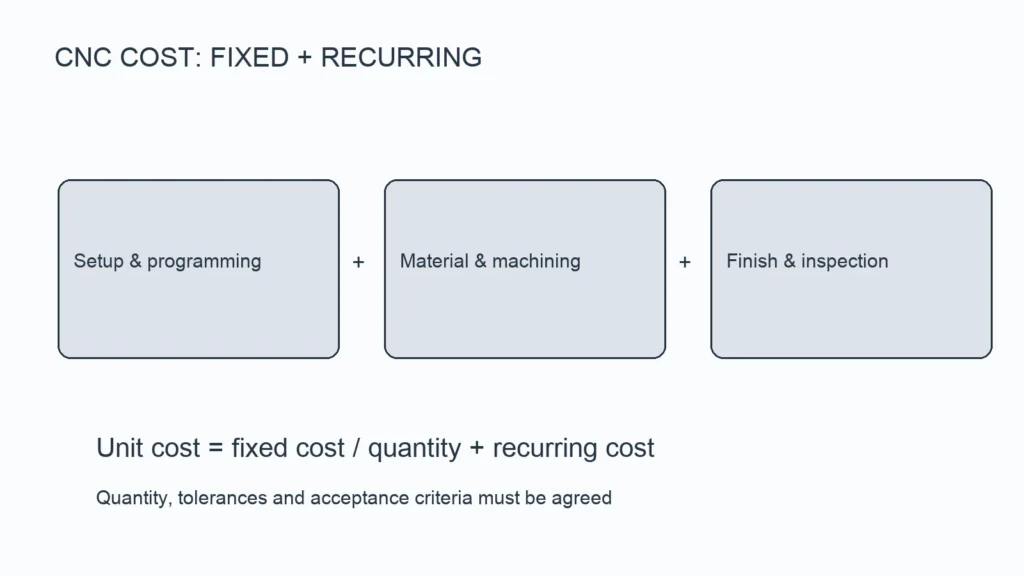
6061 aluminum CNC machining cost depends on more than the price of aluminum. Stock size, material removal, workholding, tool access, tolerances, finishing and inspection all affect the quote. Separate fixed preparation costs from recurring costs before deciding whether a design or quantity change will save money.
Specify 6061 and its condition
6061 is used for many machined brackets, housings and fixtures, but the material callout should also identify temper and any required stock specification. 6061-T6 and stress-relieved stock supplied in other specified conditions should not be treated as interchangeable without approval. Mechanical properties depend on temper, product form and governing specification.
Confirm available stock dimensions and certification requirements. A part that barely exceeds a standard stock size may need a larger blank; finished-part weight alone does not describe material cost.
A practical cost model
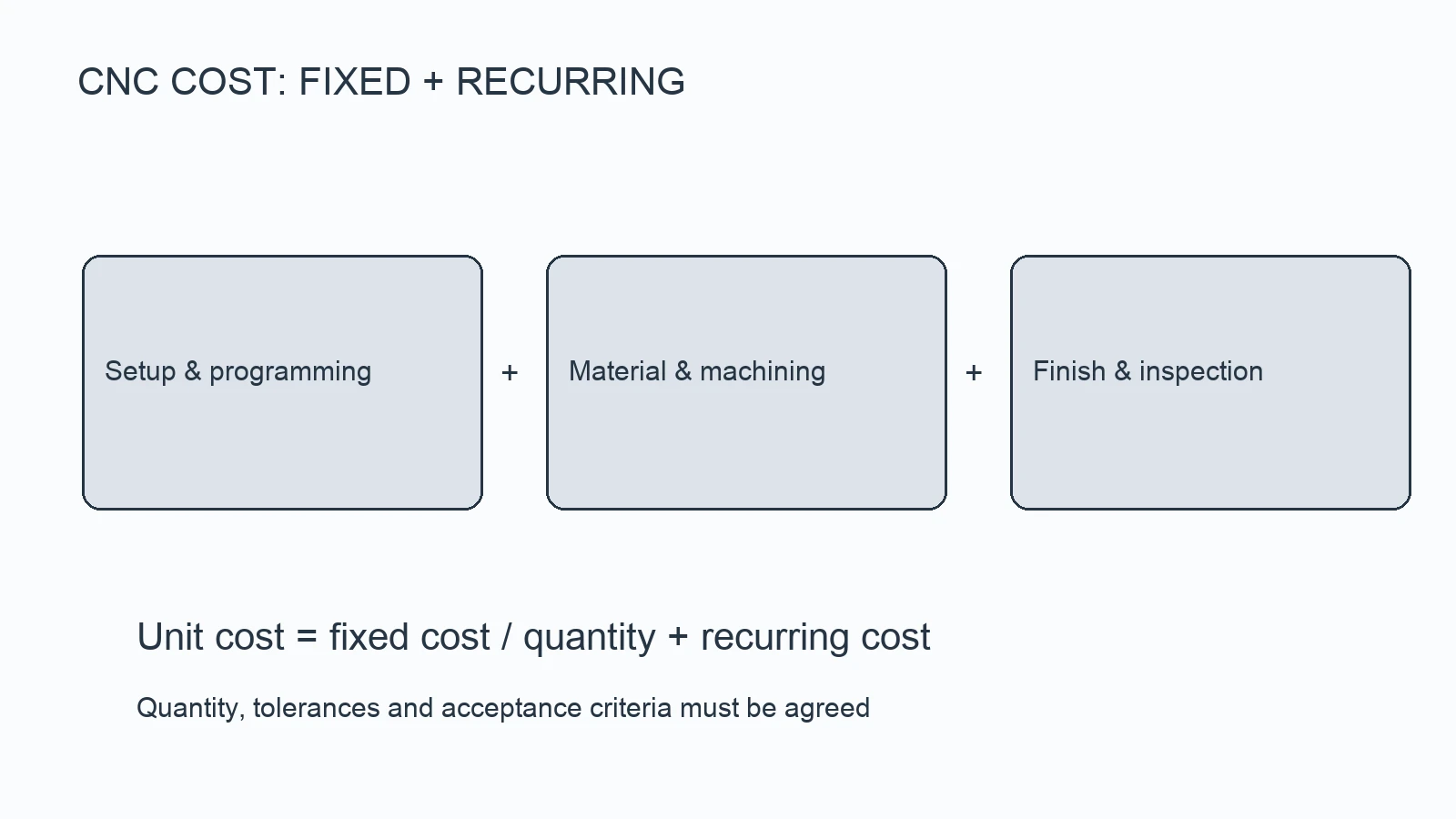
Unit cost = fixed preparation cost / order quantity + recurring cost per part. Fixed work can include programming, fixture preparation and first-article setup. Recurring work can include stock, machining, deburring, finishing and agreed inspection. Freight and import charges should be compared separately or included consistently.
This model explains why a repeat batch may cost less per part without predicting a fixed discount. New drawing revisions, tool replacement, changed stock prices or a different inspection scope can change repeat-order pricing.
Geometry that changes machining time
| Design feature | Why it can cost more | Review option |
|---|---|---|
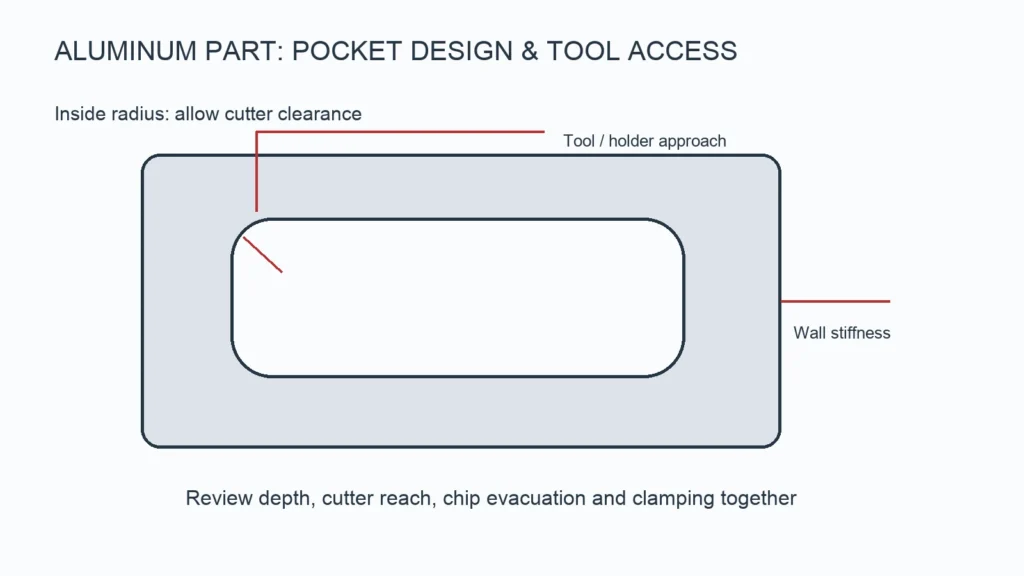
| Deep narrow pocket | Long tool reach and chip removal constraints | Larger internal radius or improved access |
| Large stock-to-finished volume difference | More roughing and material handling | Alternative stock form or revised envelope |
| Features on several faces | Additional setups or more complex equipment | Consolidate critical features where practical |
| Thin unsupported walls | Deflection and distortion control | Ribs, support or process staging |
| Sharp internal corners | Rotating cutter cannot make a zero-radius corner | Relief, radius or a secondary process |
Use our aluminum DFM guide to review geometry before requesting quantity prices.
Tolerances affect both machining and verification
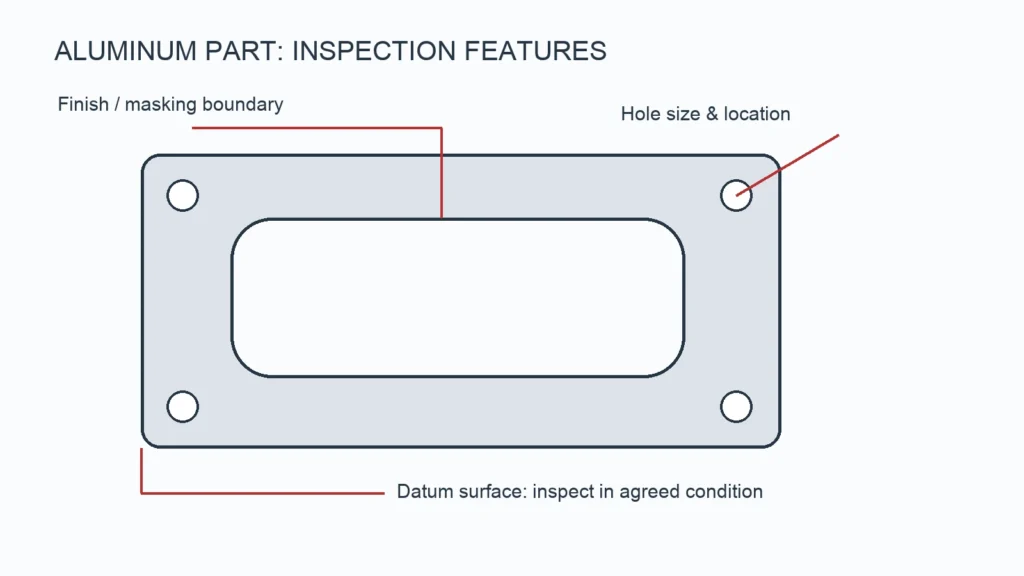
A tight bore fit may need a dedicated finishing operation and a suitable gauge. A positional requirement can require a controlled datum strategy and more detailed inspection. These costs depend on the feature; they cannot be expressed as one universal percentage surcharge.
Specify tight tolerances only where function requires them. An illustrative RFQ might distinguish a critical mounting bore from a non-mating outside edge. Give each its own justified requirement rather than applying the bore tolerance to the whole part. Ask the supplier to explain which features drive cost.
Finishing: define the final fit
Common options for aluminum include as-machined surfaces, bead blasting and specified anodizing processes. They serve different cosmetic and functional purposes. Stainless-steel passivation is not a substitute for an aluminum finishing specification.
Anodizing affects dimensions and appearance. Define final-size requirements, masking, coating type and relevant thickness limits. Finishing lead time includes scheduling, preparation, processing and inspection, not just time in a treatment bath.
How to compare 6061 quotes
Send the same revision and request prototype and expected production quantities. Ask for setup charges, recurring unit price, finishing, inspection, packaging, shipping terms and lead time. Confirm whether quoted delivery means dispatch or arrival. Avoid changing alloy or critical tolerances solely to match a lower price without designer approval.
6061 machining FAQ
Does increasing quantity always reduce unit cost?
Fixed costs may be spread over more units, but capacity, yield, inspection and inventory also matter. Request actual quantity breaks instead of assuming a discount.
Is 6061 suitable for every medical or aerospace part?
No. Suitability depends on the design, service conditions and applicable requirements. A machinable alloy does not establish biocompatibility, product qualification or industry certification.
How can I reduce cost without weakening the part?
Start with nonfunctional constraints: unnecessary tight tolerances, inaccessible corners, cosmetic requirements on hidden faces and avoidable setups. The responsible designer must approve any change that affects performance.
Request a drawing review
YP-MFG accepts custom machining orders from one piece. Send a 3D model and dimensioned drawing, material specification, finish, quantity and delivery destination through our quote request page. We normally respond within 24 hours after receiving complete information; engineering questions may need clarification before a firm quote.