English
 German
 Russian
 Japanese
 Korean
 Spanish
 French
 Italian
 Portuguese

Welding parts are components joined by fusion welding, forming a permanent bond between two or more metal pieces. Unlike machined parts, weld integrity depends on process selection, joint geometry, and material match. Before sourcing, buyers should verify the welding process, material grade, and inspection standard to avoid field failures.
Most procurement teams order welding parts based on unit price alone. That approach creates hidden risks: porosity, distortion, or insufficient throat thickness that only surface under load. The goal is to lock down specifications early so the first batch passes on the first inspection.
What Determines Welding Part Quality
The single biggest factor is matching the welding process to the material and joint type. TIG welding delivers cleaner, more controlled beads on stainless steel and aluminum. MIG handles thicker structural steel faster and at lower cost. Spot welding suits sheet-metal assemblies where full-penetration joints are not required.
Joint geometry matters as much as the process itself. A butt joint in a lap configuration distributes stress differently than a fillet or T-joint. Getting the preparation angle and root gap wrong forces the welder to compensate, which weakens the final bond.
At YPMFG, we review joint drawings against the intended load case before fabrication begins. This step catches weld joint design conflicts early and prevents costly rework after the part is already welded.
Key Specifications to Verify Before Ordering

Every welding part request should include the data points below. The table summarizes what to confirm with your fabricator before releasing a purchase order:
Match these specs to your application’s failure mode. A pressure-containing part demands far more inspection depth than a decorative bracket.
YPMFG supports projects that require multi-process joints, such as TIG-welded frames combined with MIG-filled butt seams, and can document each process separately in the mill report.
Common Failure Points and How to Prevent Them
Porosity appears as small voids inside the weld bead, often caused by moisture or inadequate gas shielding. Undercut creates a sharp groove at the weld toe that acts as a crack initiation point under cyclic loading. Distortion in thin-gauge parts can shift tolerance on mating surfaces and cause assembly rework.
Requesting a weld inspection report with your order is the simplest safeguard. Visual and penetrant testing catch surface defects. Radiographic or ultrasonic testing is warranted for critical load-bearing or fatigue joints. If the part must meet a specific code, state it explicitly in the drawing notes.
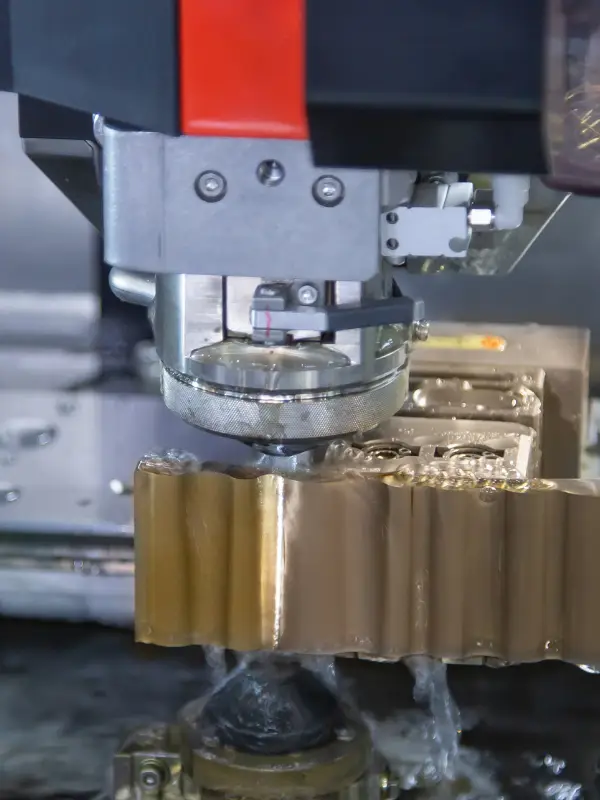
Welding specifications that remain vague—such as “weld to general standards”—give the fabricator too much latitude. Define the process, size, and acceptance criteria in writing before production starts.
Questions Buyers Often Ask
Can I combine welded and CNC-machined features on one part?
Yes. Many assemblies require a welded structural frame with precision CNC machining on mounting faces or bore locations. Send both the weld schedule and the machined-feature tolerances so the fabricator plans fixturing in the correct sequence.
What weld size should I specify for a fillet joint?
Fillet weld size depends on the thinner plate thickness and the load type. For shear-loaded connections, the minimum size follows AWS D1.1 Table J-1. For fatigue-critical or high-load applications, consult a structural engineer before finalizing the size.
Do I need preheating for carbon steel welding?
Carbon steels above roughly 0.25 % carbon equivalent may require preheating to 150–250 °C to reduce hydrogen cracking risk. Always verify the material’s carbon equivalent with the mill certificate before specifying the thermal cycle.
How do I verify a fabricator’s weld quality on incoming parts?
Request the welder’s certification (AWS CWI or equivalent), the qualified WPS/PQR, and a traceable weld inspection report for each lot. For recurring orders, a short on-site audit of inspection records is a practical and low-cost check.
## Choosing the Right Welding Parts for Your Application
The right welding part combines the correct process, material, joint design, and documented inspection. Missing any one of those layers transfers risk directly to your end product and your customers.
If you have drawings, material specs, or load requirements already in hand,you can send them to YPMFG for an engineering review. We will confirm process suitability, flag joint-design conflicts, and return a detailed quote with inspection method options—so you approve the full specification before fabrication begins. For custom fabrication projects involving multiple weld types, we can also coordinate the sequence with downstream CNC machining to keep tolerances intact.