English
 German
 Russian
 Japanese
 Korean
 Spanish
 French
 Italian
 Portuguese

CNC brass machining produces precision components from copper-zinc alloys, typically holding tolerances between ±0.001″ and ±0.005″ depending on part geometry. Brass is the go-to material when a component needs good electrical conductivity, corrosion resistance, and a clean machinable surface without additional plating. The main trade-off is raw material cost—brass runs 3 to 5 times higher per pound than aluminum or mild steel. For most industrial, electrical, and decorative applications, CNC brass parts deliver a dependable balance of strength, workability, and finish quality.
Many procurement teams lose time and budget when brass part specifications are unclear at the request stage. A missing alloy callout, an ambiguous tolerance, or an unverified finish requirement can mean rework and scrapped tooling. Getting the material specification right before production starts is the single biggest cost-saver. This guide covers the decision points that separate a smooth brass machining project from an expensive one.
Why Brass Fits CNC Machining
Brass cuts cleanly because its zinc content softens the copper matrix, reducing built-up edge on the tool. This means shorter cycle times and longer tool life compared with free-machining stainless or titanium.
The alloy also offers consistent material behavior across batches, which keeps dimensional stability tight on repeat runs. For parts that carry electrical current or sit in humid environments, corrosion-resistant brass alloys outperform many plated alternatives without the risk of coating delamination.
A few trade-offs to keep in mind:
Brass is softer than steel, so it wears faster under high-friction mating conditions.
Color and grain appearance can vary slightly by alloy grade and heat lot.
For very large parts, brass raw-material cost adds up quickly.
YPMFG can help you evaluate whether brass is the right base material for your application or whether a substitute alloy would cut cost without sacrificing performance.
Common Brass Alloys and When to Use Each
The alloy grade you specify changes strength, machinability, and price. The table below covers the four grades most frequently called out in CNC work orders.
Machinability ratings above assume standard cutting speeds on a 3-axis or 5-axis CNC mill or lathe. If your part has thin walls or deep pockets, confirm with your machinist that the chosen grade will not chatter. Alloy selection is one of the first items to lock in during the design review.
Cost Factors and Common Pitfalls
Brass part pricing is driven by four main variables:
Raw material cost – follows copper and zinc commodity prices; C360 is usually the most affordable.

Tolerance and surface finish – holding ±0.001″ or a mirror polish adds machining hours.
Geometry complexity – internal threads, deep bores, and thin walls increase cycle time.
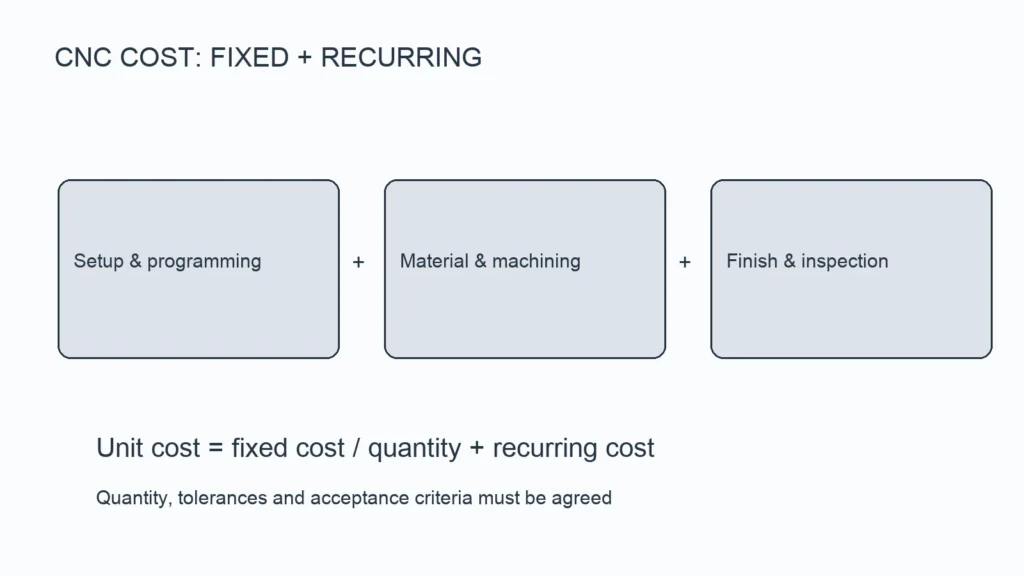
Volume – single-off prototypes carry a higher per-unit cost than 1,000-piece runs because of setup amortization.
A frequent mistake is specifying “brass” without an alloy grade. The shop may default to C360, which is fine for many parts but not for a component that must weld or meet a specific conductivity spec. Always name the grade, the standard (ASTM, BUNS, or DIN), and the finish callout on your drawing.
Another pitfall: requesting a plating step on brass when the bare alloy already meets your corrosion or conductivity target. That extra process adds cost, lead time, and a potential compliance question for plating waste.
Questions Buyers Often Ask About CNC Brass Parts
What tolerance can CNC brass machining realistically hold?
For most external features, ±0.002″ is standard. Tighter tolerances down to ±0.0005″ are achievable but add cost and may require slower feed rates. Internal features and thin walls are harder; confirm the limit with your supplier before committing to a print.
Does brass need plating for corrosion protection?
Not in most cases. C260 and C464 handle indoor and moderate outdoor exposure well. Plating is worth considering for marine or high-chloride environments, or when a specific color or solderable finish is required.
How does brass compare to stainless for a similar part?
Brass machines faster and produces a smoother surface, which lowers tool wear and cycle cost. Stainless is harder and more wear-resistant but costs more in machining time. For electrical or decorative work, brass vs. stainless usually comes down to conductivity and finish.
What documentation should I send with a brass part request?
Provide a 3D model or 2D drawing with all critical dimensions, the alloy grade, applicable standard, surface finish, and any testing or inspection requirements. Sending complete specifications up front avoids clarification loops and keeps the quote accurate.
Making a Better Long-Term Decision
The right brass part decision is about matching alloy, tolerance, finish, and volume to the function the part actually performs. Lock the material grade and finish early, confirm the standard your customer requires, and review the cost structure before committing to a single source.
YPMFG supports brass machining projects from prototype to production. You can send your drawings, 3D models, or a rough parts description for an engineering review, a dimensional feasibility check, or a detailed quote. If you are unsure which alloy grade fits your application, the team can walk through the trade-offs before you place an order.