English
 German
 Russian
 Japanese
 Korean
 Spanish
 French
 Italian
 Portuguese

Most automation fixture material selection starts with 7075-T6 aluminum. It delivers a 503 MPa yield at 2.8 g/cm³, machines roughly 3× faster than steel, and costs less per fixture. Move to 4140 steel only when contact loads exceed 35 MPa or cycle life must pass 10,000 operations.
The wrong material call on an automation fixture surfaces in shift two, not shift one. Locators drift, pins gall, and the line halts for rework. YPMFG engineering reviews incoming fixture packages and frequently finds the material choice, not the geometry, was the root cause. What you pick determines fixture tolerance stability, maintenance intervals, and total cost of ownership more than spindle speed ever does.
Key Takeaways
- Load per contact area: Above 35 MPa, 7075-T6 yields; step up to 4140 steel at HRC 30.
- Corrosion environment: 304 stainless handles chemical washes; Delrin covers dry, low-load slides.
- Build speed: 7075-T6 cuts roughly 3× faster than 4140, compressing fixture lead time.
- Weight limit: At 2.8 g/cm³, an aluminum fixture runs at 1/3 the payload of a steel equivalent.
How Do Four Common Materials Compare?
The table maps yield strength against the failure mode each material prevents.
If your fixture meets both high contact stress and a chemical wash, pair 4140 with a 304 stainless insert rather than forcing one material to do both jobs.
What Makes 7075-T6 the Default Call?
For the majority of fixture material selection tasks, 7075-T6 hits the sweet spot. It carries 503 MPa yield at 2.8 g/cm³, so a fixture body that weighs 9 kg in 4140 steel drops to roughly 3 kg. That weight cut lets a robot or gantry accelerate faster, trimming cycle time on every stroke.
The alloy also machines at high feed rates without work-hardening the way 304 stainless does. A typical 3-axis CNC machining job on 7075-T6 finishes significantly faster than the same geometry in 4140, pulling fixture build lead time from 20-25 days toward 15 days on complex assemblies.
The physical limit: 7075-T6 creeps under sustained loads above 80 percent of yield. If your fixture carries a constant clamp force for more than 30 minutes per cycle, the material slowly deforms. For that scenario, switch to 4140 or add a spring-loaded preload to relieve the static load.
When Does 4140 Steel Win?
4140 quenched and tempered to HRC 28-32 is the answer when a pin, cam, or wear plate sees contact pressure above 35 MPa. The 860 MPa yield resists permanent deformation that aluminum cannot survive at that stress level.
Wear-Life Consideration
On a rotary indexing table cycling 100,000 times a year, an aluminum locator pin will oval out within 6 months. The same pin in 4140 at HRC 30 holds roundness for 3-5× longer. The trade is machining time: 4140 runs 3-4× slower on the same CNC machining path, and you need a grind finish to reach ±0.001 inch on the bore.
One constraint to respect: you cannot quench 4140 above 12 mm section thickness without distortion risk. If your fixture body exceeds that,mill the body in 7075-T6 and press in 4140 inserts only where contact stress demands it.
How Do Corrosion and Lubrication Change the Choice?
Most shops default to bare 7075-T6, which is fine for dry, indoor environments. The moment a chemical wash, coolant mist, or salt-air exposure enters the cycle, bare aluminum corrodes and the surface finish degrades within weeks.
Two Practical Routes
Spec 304 stainless for any face that contacts wash solution directly. Its 215 MPa yield is lower, so you size the cross-section larger to hold the same clamp force. Alternatively, keep 7075-T6 and apply a 5-micron PTFE-based coating to sliding surfaces. The coating drops the friction coefficient from 0.12 to 0.04 and eliminates daily re-lubrication.
Delrin (acetal resin) handles dry, low-load slides at roughly 1/10th the cost of a machined stainless pin. It cannot, however, survive sustained loads above 14 MPa without cold-flow, so reserve it for guide surfaces, not clamp faces.
What Tolerance and Finish Specs Should You Call Out?
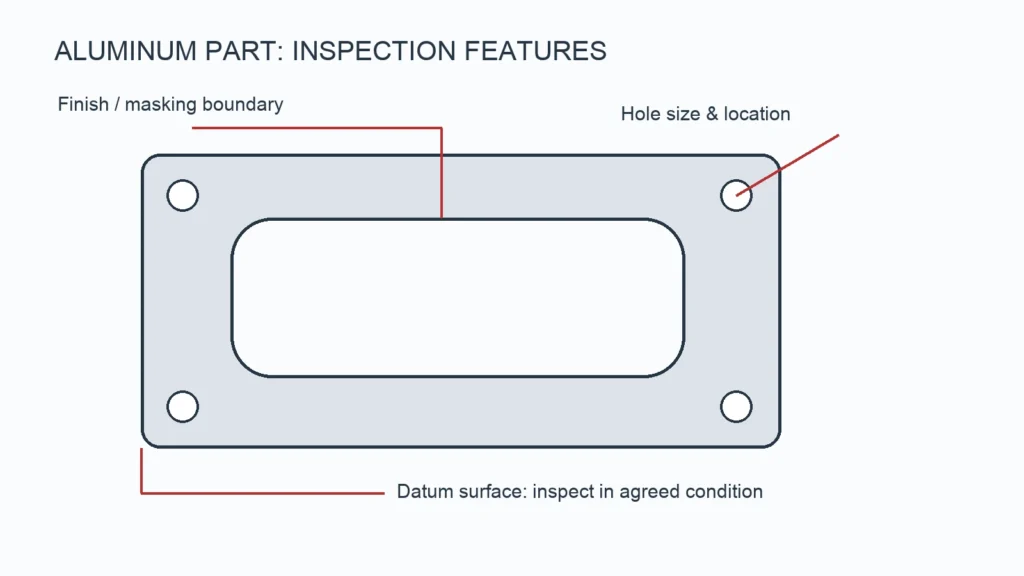
A fixture drawing that omits CNC machining tolerance calls invites ±0.005 inch variation, too loose for a 3-point locating scheme on a thin-wall part. Specify ±0.001 inch on all locating bores and ±0.0005 inch on any surface that contacts a critical datum.
- Locating bores: ±0.001 inch, Ra 16 microinch
- Clamp faces: ±0.002 inch, Ra 32 microinch
- Sliding guide ways: ±0.0005 inch, Ra 8 microinch
- General fixture body: ±0.005 inch, Ra 63 microinch
Send your drawing with these callouts to YPMFG for a DFM review before release. The review flags any feature that will push machining cost above budget without changing the functional outcome.
How YPMFG Routes a Fixture From Drawing to Shop Floor
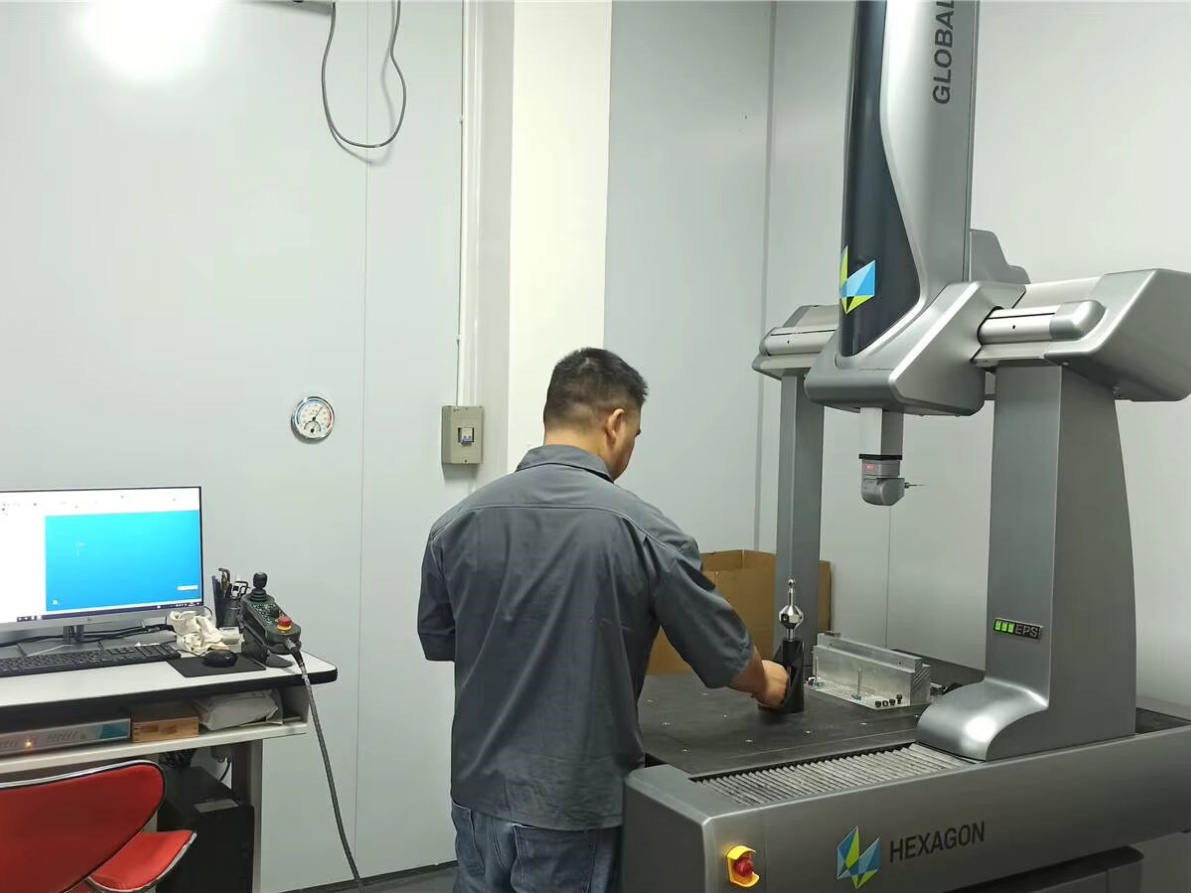
A typical automation fixture follows a 5-step route: material cut, rough mill, heat treat (if 4140), finish mill, and first article inspection. The FAI produces a full dimension report against the drawing before the part leaves the cell.
Step 2 rough milling on a 5-axis CNC removes 90 percent of stock in one setup. Step 4 finish milling holds the ±0.001 inch callouts on locating bores. If the design includes a 4140 insert, step 3 is a quench-and-temper cycle to HRC 30 before the insert is press-fit into the 7075-T6 body.
Process Route Reference: YPMFG process library, reviewed against published tooling data. Client-specific parameters withheld per NDA.
Practical Questions Before You Place the Order
Can Delrin replace a stainless pin to save cost? It cannot. Delrin cold-flows above 14 MPa, and a pin carrying full clamp load will oval within 2,000 cycles. Use it only on dry, low-load guide surfaces.
Does adding a 5-axis machine always speed up fixture build? No. Five-axis helps on complex internal geometries. A flat clamp block with 4 bores is actually faster on a 3-axis machine because tool changes and work-holding are simpler.
How do I verify a 4140 insert reached HRC 30? Require a Rockwell hardness certificate with the heat number. YPMFG includes this document with every heat-treated sub-assembly at no extra charge.
What is the fastest way to get a material second opinion? Send your fixture drawing and load calculation to YPMFG for an engineering review. The team returns a material map with stress callouts and a suggested substitute within 3 business days.
Getting the Material Right Before the Fixture Goes Wrong
A fixture material decision made in the first 30 minutes of design saves 3-5× the cost of a rework at the 5,000-cycle mark. The core trade is always the same: strength, weight, corrosion resistance, and build speed pull in different directions, and the right answer depends on your load, environment, and cycle count.
YPMFG reviews fixture submissions against a material map that flags which faces need 7075-T6, which need 4140 inserts, and which can drop to Delrin to cut part cost. You send your drawing, load data, and environment spec, and the team returns a stamped material plan with tolerance callouts and a build schedule. That keeps the fixture on the production floor by the delivery time you promised your line, without a second revision cycle.