German
 English
 Russian
 Japanese
 Korean
 Spanish
 French
 Italian
 Portuguese


The most common cause of enclosure rework is unclear wall-thickness and mounting-hole callouts. Specify a 2 mm minimum wall for milled aluminum, confirm fastener positions against your PCB footprint, and request a dimensional inspection report before batch release.
Most buyers arrive at a custom enclosure manufacturer with a rendering but no manufacturing-ready drawing. The gap between “looks right” and “fits the assembly” drives up prototype cycles, scrap material, and schedule slippage. YPMFG sees this pattern regularly: the enclosure body is straightforward, but the interface with the internal board or sensor stack is where tolerance stacks up and the fit fails.
What Actually Drives Cost and Lead Time?
Material choice and feature complexity dominate the cost curve. A 6061 aluminum enclosure milled on a 3-axis CNC machine holds to your Toleranzklasse while keeping per-unit cost low. A 304 stainless enclosure resists corrosion in coastal or food-grade environments but demands slower cutting parameters and an extra surface-finish pass.
Lead time splits into three segments: engineering review, machining, and finishing. A single prototype typically moves in 3 to 7 days. A production batch of modest volume lands in the 15-to-25-day window. Compressing any one segment adds tooling or shift premiums that the buyer should price before committing.
Before you commit, confirm whether the manufacturer offers CNC-Bearbeitung as opposed to stamping or casting for your volume. Below a few hundred units, milled enclosures from plate or sheet are usually the most economical route because no dedicated tooling is required.
Material Selection at a Glance
The practical split is this: if your enclosure sees continuous outdoor exposure or a 48-hour salt-spray test, move to 304 or anodized 6061. For indoor industrial cabinets, 6061 with a standard Type II anodize is sufficient and noticeably less expensive per unit.
Which Tolerances Should You Actually Call Out?

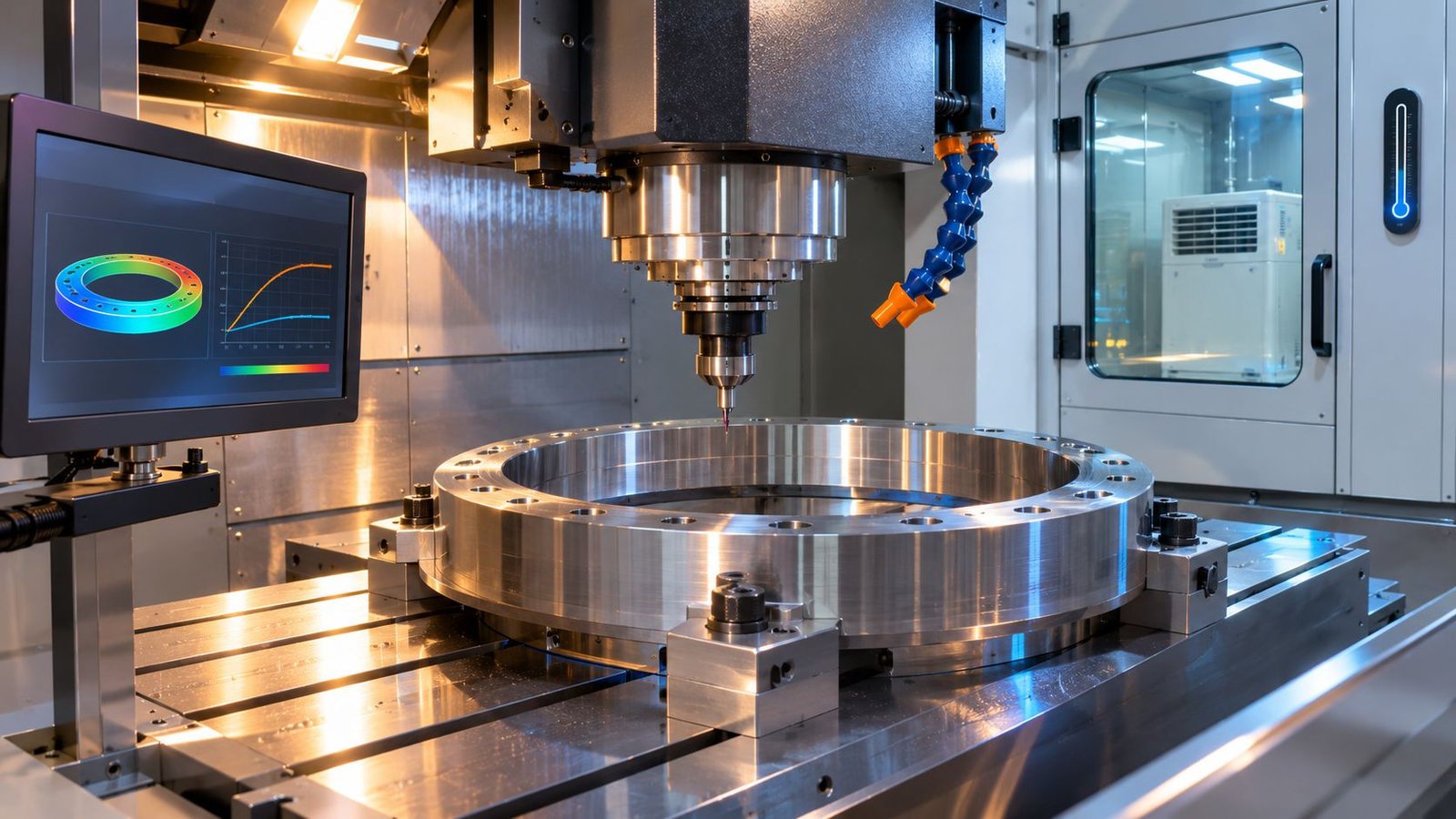
Most enclosure drawings over-specify. A general-machining tolerance of plus-or-minus 0.13 mm per ISO 2768-mK covers the outer housing without penalty. Critical features—mounting holes, mating faces, thermal-contact pads—warrant tighter callouts, typically a position tolerance on the hole pattern at 0.05 mm.
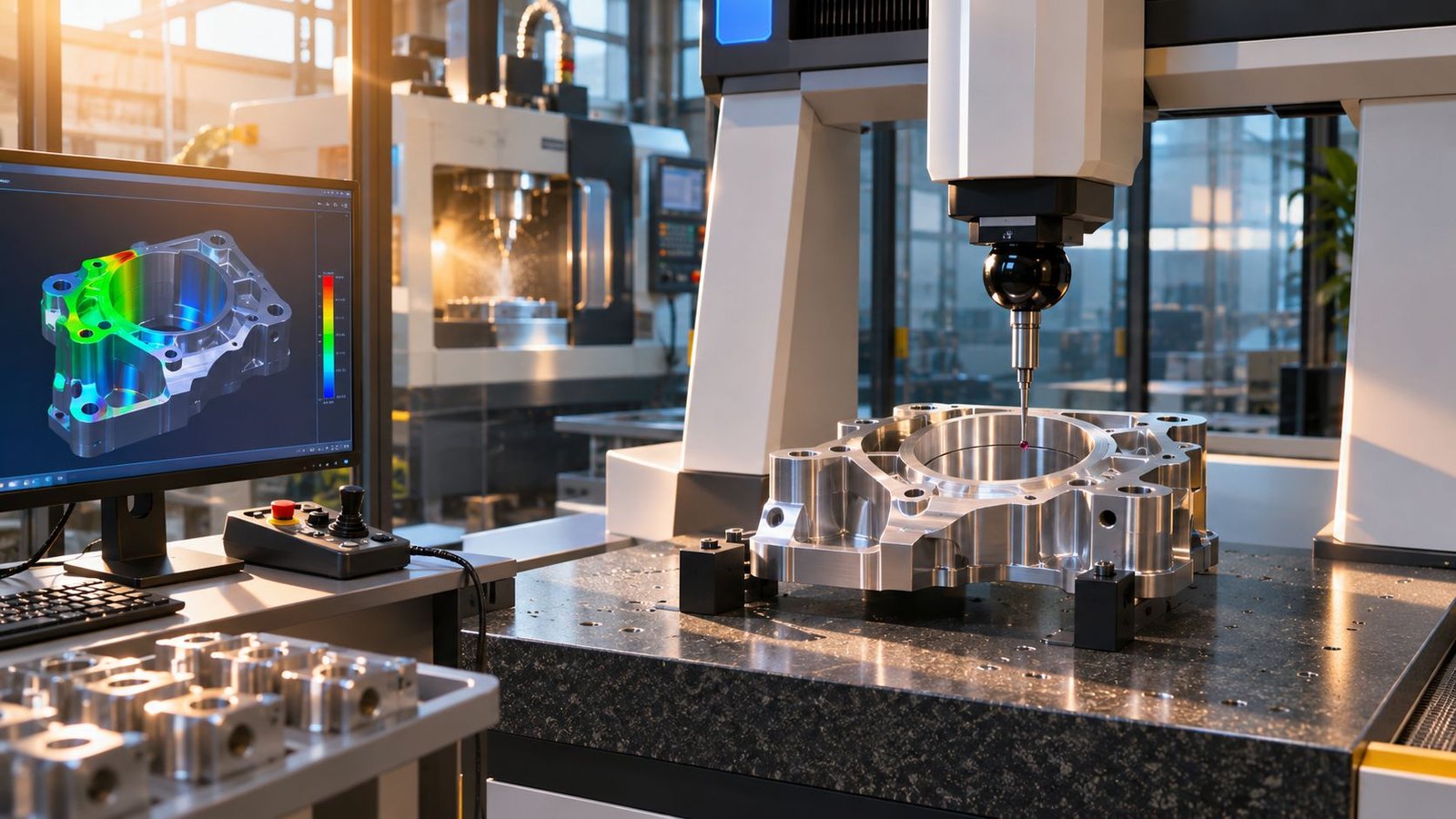
Every tolerance step below 0.1 mm adds a measurable cost because the machine must slow down and inspection shifts from a caliper to CMM or structured-light scanning. Do not call 0.01 mm on a decorative edge that carries no function.
Three common stacking failures: a mounting boss that misses the PCB standoffs, a cable-gland port off by half a millimeter that strains the harness, and a lid-to-base gap that varies across the diagonal because the datum scheme was not shared between the two halves. Specify a single common datum and confirm the shop can hold it across both halves in one setup.
- Oberflächenbeschaffenheit: A 6.3 µm Ra satin covers visible faces; reserve 3.2 µm Ra for sealing or mating surfaces only.
- Prüfung: Request a first-article report with critical dimensions, thread-gauge results, and a photo log before batch release.
- IP rating: A 1 mm gasket lip with a nitrile O-ring typically holds IP65; IP67 needs a compressed gasket and a verified bolt torque sequence.
Tip: If your enclosure must pass a drop test or vibration profile, include that specification in the initial RFQ. The shop will size internal ribs and mounting bosses accordingly instead of adding weight after the fact.
How Do You Validate the Design Before Release?

Send a fully annotated 3D model plus a 2D drawing with a note-to-manufacturer block. Confirm the Oberflächenbeschaffenheit specification, the gasket part number, and the compression ratio. For enclosures that must meet an IP rating, verify the gasket groove depth and clamp-force calculation before the first batch cut.
Keep a spare 3D model in STEP format at the machine shop. If a feature must change mid-production, the edit-and-recut cycle is far shorter than regenerating geometry from a flat PDF. This one habit saves a full rework pass when a connector position shifts or a thermal pad gets resized.
Verweis auf den Prozessablauf: YPMFG-Prozessbibliothek, abgeglichen mit veröffentlichten Werkzeugdaten. Kundenspezifische Daten werden gemäß der Geheimhaltungsvereinbarung zurückgehalten.
Common Questions Before You Place the Order
Can a milled enclosure hold IP67 without welding? No. A milled enclosure relies on a gasket and bolt clamps; IP67 at the lid line is achievable, but through-wall cable penetrations need potted glands or press-fit connectors,not seals alone.
What is the minimum practical wall thickness for 6061? Below 1.5 mm the wall flexes under fastener torque and is harder to hold in the vise. A 2 mm wall is the safe floor for most CNC-milled enclosures.
Do you need a separate finishing quote? Anodizing, powder coating, and passivation are typically quoted as a line item. Send the finish specification with the initial RFQ so price and lead time arrive as one number rather than two.
Getting the Right Enclosure for Your Build
The goal is simple: one prototype that fits, one batch that ships, and zero rework at the assembly station. Start with a clean 3D model, a tolerance callout that matches the function, and a material choice tied to the real operating environment rather than habit.
YPMFG reviews incoming enclosure drawings and flags tolerance, material, and finish conflicts before the first cutting tool engages. You can send your specifications and a short description of the target application, and the engineering team returns a DFM note within one business day. That review covers hole patterns, wall thickness, gasket selection, and any datum conflicts between the lid and base. It is usually enough to prevent the costliest failure mode: a part that machines fine but will not close on the board it was designed to protect.