Spanish
 English
 German
 Russian
 Japanese
 Korean
 French
 Italian
 Portuguese

A Fresadora CNC removes material along programmed X, Y, and Z axes to produce precision machined parts. The right choice depends on three variables: your actual part geometry, the tightest tolerance you must hold, and your five-year volume. Most buyers over-specify on axis count or under-invest in spindle rigidity. Matching the machine to your workload, material mix, and production targets—not a sales brochure—keeps you from paying for capability you will never use or struggling with a machine that cannot meet your customer specs.
The core problem is simple. You need a milling machine with CNC controls that fits your part range, shop floor space, and budget. The market spans 3-axis workhorses to full 5-axis systems, and the gap between “enough” and “overkill” costs real money. Below is how to narrow the decision without guessing.
The Three Specs That Actually Matter
Before comparing brands, lock down these three numbers.
Spindle speed and rigidity: Determines the finest surface finish and the hardest material you can cut. A 10,000 RPM spindle handles aluminum cleanly but may struggle with Inconel. Verify the spindle’s thermal stability rating for long runs.
Table size and travel: Must exceed your largest part with room for clamping. Undersized travel means multiple setups and more fixture work.
Repeatability rating: Typical values range from ±0.001 mm to ±0.005 mm for industrial machines. Your part tolerance stack-up should sit comfortably within this range with margin.
Getting any of these wrong shifts cost downstream. A machine that cannot hold your target tolerance forces rework, scrap, or a second finishing operation.
Common CNC Milling Machine Configurations
The configuration you choose should follow from your part family. If 80% of your work is prismatic, a 3-axis centro de mecanizado with a tool changer covers it. If your portfolio includes impellers or medical implants, the 5-axis investment pays back through fewer setups and tighter tolerances in a single pass.
Mistakes That Cost More Than the Machine
Buying for tomorrow’s workload, not today’s: If your current parts do not need 5-axis capability, the extra axes sit idle. Revisit in two to three years when the part mix shifts.
Ignoring the tooling ecosystem: A machine is only as good as the clamps, collets, and fixturing that hold it. Budget for compatible tooling or you lose setup time every changeover.
Underestimating training and maintenance: A newer platform with unfamiliar controls increases operator error in the first six months. Factor in training hours and spare-parts lead time into your cost model.
Skipping a trial run: Send your most demanding part to the builder or a local integrator before committing. A two-hour test cut reveals more than a spec sheet.
YPMFG can help you evaluate whether your part family justifies a specific configuration before you lock in a purchase.
What Actually Drives the Price
Potencia del husillo y rango de velocidad
Table size and linear-axis quality (ball screws vs. rack-and-pinion)

Tool changer capacity and change cycle time
Control system brand and software licensing
Automation integration (pallet changers, robotic loading)
Geared spindle for heavy cutting vs. high-RPM air spindle
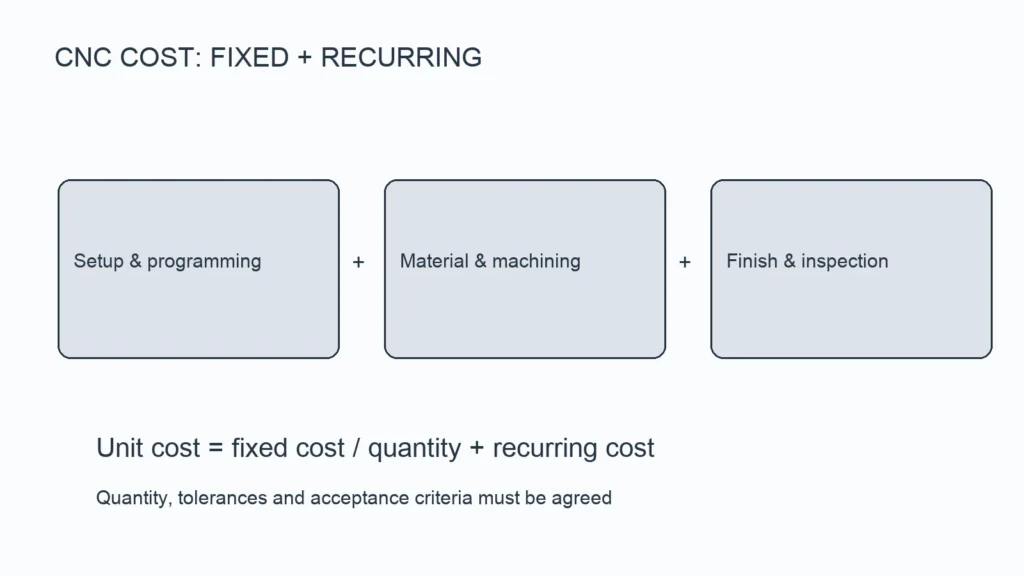
Two machines with identical axis counts can differ by 40% or more in price depending on these variables. The control system alone can represent 10–20% of the total. CNC milling machine cost is not a single number; it scales with every option you add.
Cuestiones prácticas que debes tener en cuenta antes de comprometerte
What is the largest part envelope you will run?
Measure your biggest part, add 50 mm on each side for clamping, and confirm the table and travel cover it. If not, plan for split machining or a different configuration.
Which materials will you cut, and how often?
Aluminum, steel, and titanium each demand different spindle speeds, feeds, and tooling. A high-RPM air spindle excels in aluminum but wears faster in hardened steel. Match the spindle type to your material mix.
Do you need 5-axis or will 3+2 indexing suffice?
True simultaneous 5-axis moves let you hold features at an angle in one setup. 3+2 positional indexing is cheaper and adequate for most tilted-drill applications. The distinction saves significant capital if you do not need full simultaneity.
What is your changeover time target per lot?
For lots of 50–200 pieces, a fast tool changer and pallet system cut non-cutting time dramatically. For lots of 1,000+, automation ROI improves but setup complexity grows.
How will you verify part quality after installation?
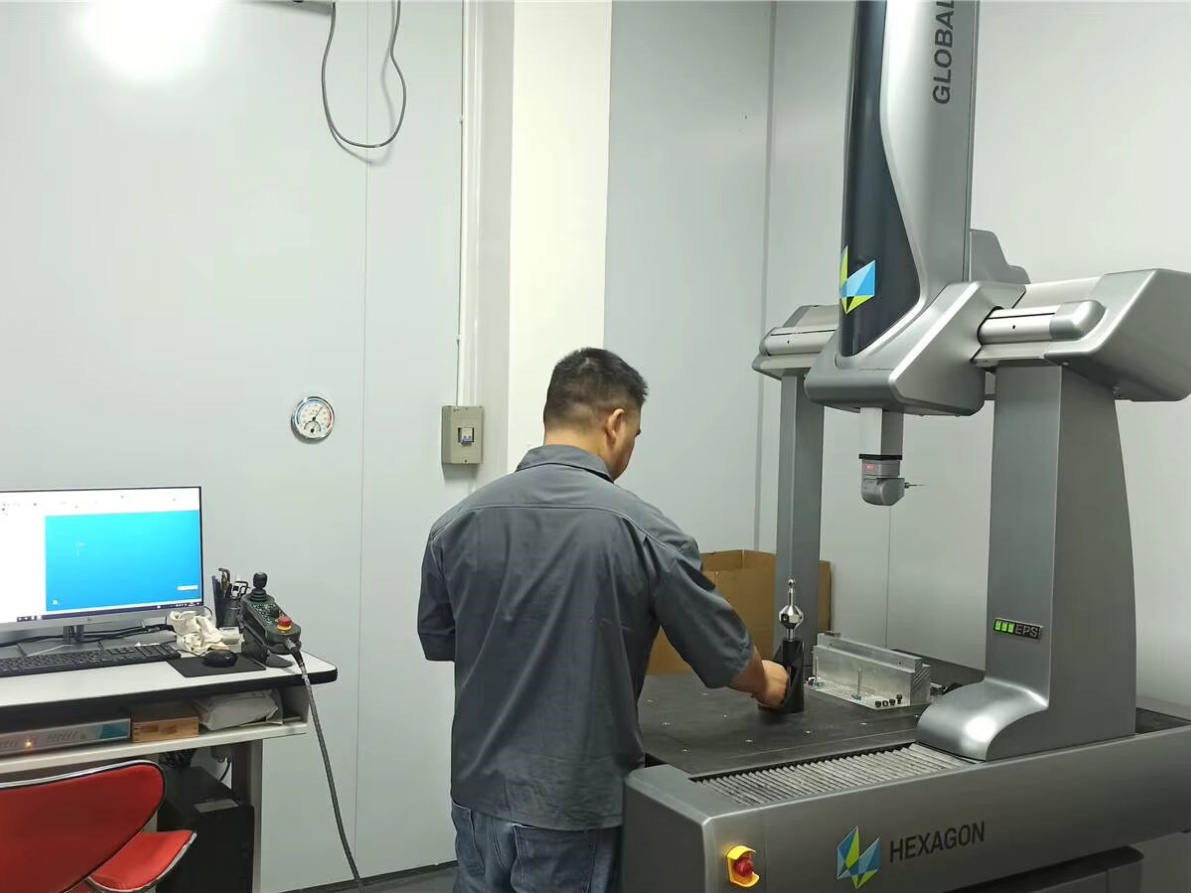
Plan for a CMM or on-machine probing from day one. A machine that cannot be verified in-process pushes quality checking downstream and slows your cycle time.
Getting the Right Machine for Your Parts
The machine that saves you the most money is the one that matches your part family today—not the one that handles every hypothetical future job. Lock your top ten parts, confirm the three critical specs above, and let those numbers drive the configuration.
When you are comparing options, YPMFG can review your part drawings, material list,and volume data to recommend a setup that balances precision, cycle time, and long-term operating cost. Send your specifications or a short part description and the engineering team will flag where a particular machine might fall short before you sign a purchase order.