Spanish
 English
 German
 Russian
 Japanese
 Korean
 French
 Italian
 Portuguese

A Máquina CNC is a computer-controlled manufacturing tool that cuts, shapes, or forms material along precise digital paths. The acronym stands for computer numerical control, meaning the machine follows G-code instructions to execute repetitive motions with minimal human intervention. In practice, this allows manufacturers to hold especificaciones de tolerancia within a few microns across thousands of identical parts. The defining difference from manual equipment is that every cut is programmed, repeatable, and auditable. If you are evaluating Mecanizado CNC servicios for a product, understanding what the machine actually does helps you set realistic expectations on lead time, part complexity, and unit cost.
Most buyers encounter the phrase “CNC machine” in a spec sheet or a quote email without a clear mental picture of what the equipment does under the hood. That gap creates friction when you need to describe your part requirements or judge whether a quoted process truly fits your project. The sections below break the term down into working definitions and practical decisions.
What “CNC” Actually Stands For
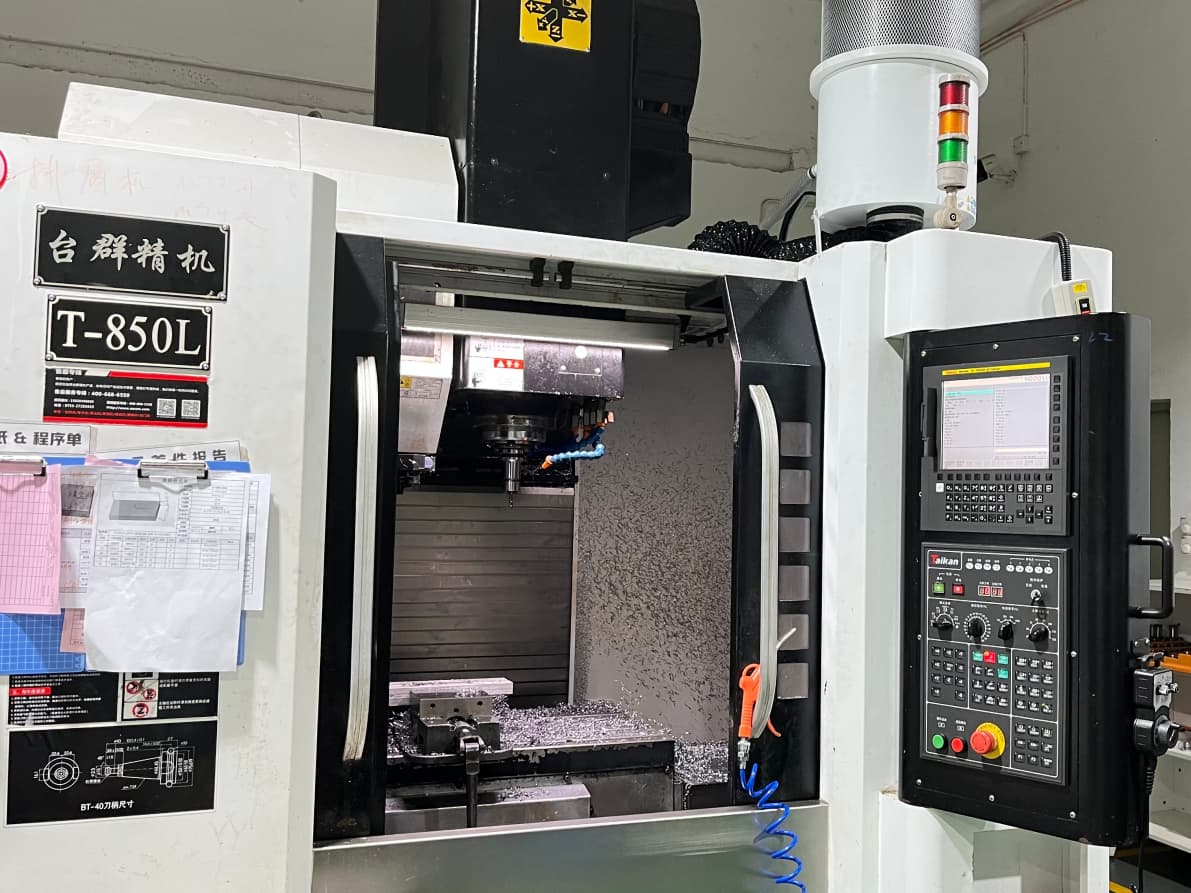
Computer numerical control replaces the manual lever-and-dial operator with a software-driven motion system. A CAD model is converted into tool-path data that tells each axis where to move, at what speed, and with what feed rate. The controller translates those commands into servo-motor pulses driving the spindle, linear rails, or rotary table.
Because the program is stored and re-run, every cycle reproduces the same geometry. This repeatability is why CNC machine selection matters at the engineering stage. A five-axis center handles complex aerospace brackets in a single setup, while a three-axis mill is better suited to large, flat panel work. Choosing the wrong axis count or spindle-speed range can force secondary operations that add handling risk and cost.
How a CNC Machine Works in Practice
Once a part file is loaded, the machine executes a defined sequence: clamp setup,zeroing, rapid traverse, cutting, tool change, and finish pass. Modern controllers monitor load, vibration, and spindle temperature to compensate in real time, keeping dimensional drift within acceptable limits over long runs.

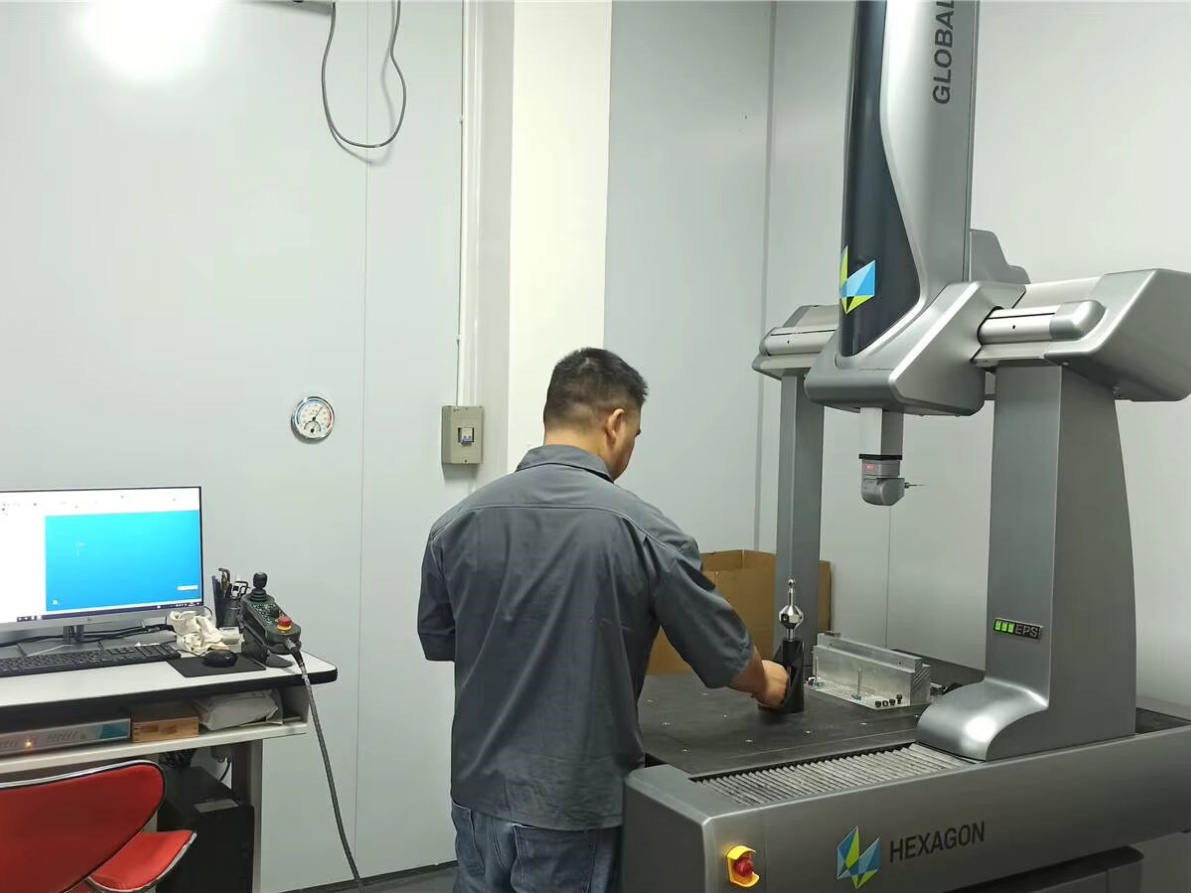
The operator still loads stock, clears chips, and inspects first-article dimensions. Understanding this loop helps buyers set realistic batch sizes and quality-gate checkpoints. For compatibilidad de materiales, not every alloy behaves the same under high spindle speed. Titanium, for instance, demands lower cutting speeds and rigid fixturing to avoid work-hardening. Confirm the toolpath strategy and coolant plan with your machining partner before committing to a production lot.
Types of CNC Machines Buyers Encounter
El CNC machine types you will most often specify in a procurement package fall into four families. The table below maps each family to its typical use case.
Each family trades speed, rigidity, and reach. A buyer choosing between a mill and a lathe for a sleeve-and-bracket assembly should run a quick CNC vs manual machining comparison on total cycle time and fixturing effort before finalizing the process plan.
What to Specify When Ordering CNC Parts
Before sending a drawing to a shop, confirm four items on your engineering sheet: material grade and temper, critical tolerances and surface-finish callouts, quantity and acceptable lot splits, and any post-machining steps such as heat treatment or plating. Omitting any of these forces the supplier to make assumptions that may not match your application. A one-line note like “Ti-6Al-4V, 0.005 in. tolerance on bore, 50 pcs, anodize after machining” saves a round of clarification email.
YPMFG can review your drawing set and flag missing callouts, suggest fixture strategies, and return a structured quote with cycle-time estimates before you commit to a run.
Common Questions About CNC Machine Meaning
Does “CNC” always mean five-axis?
No. The label covers any computer-driven machine, from a two-axis router to a five-axis mill-turn center. Axis count describes the tool’s degrees of freedom, not a quality tier. Confirm the specific axis configuration your part geometry requires.
Can a CNC machine run without a human operator?
It can run unmanned cutting cycles, but someone must load material, clear chips, and inspect first pieces. Fully automated lines add conveyors and probe systems, yet the human checkpoint remains standard in most shops.
What file formats do CNC machines actually read?
Machines execute G-code generated from CAD/CAM software. You typically send STEP or IGES geometry to your machining partner, and they handle tool-path generation. You do not need to write G-code unless you run an in-house shop.
Is a “CNC-machined” part the same as a “machined” part?
Not necessarily. “Machined” can include manual lathes, grinders, or EDM. “CNC-machined” specifies the process is computer-controlled, implying tighter repeatability and auditability. State the process explicitly on your drawing to avoid ambiguity.
How does CNC machining affect lead time for prototypes?
For low-volume componentes CNC a medida, tooling and program setup dominate the first batch. Once the program is proven, run times shrink dramatically. For one-offs, a 3D-printed mockup followed by CNC finishing is often the fastest path to a dimensionally stable part.
Getting the Terminology to Work for You
Getting the terminology right is the first step; getting the process specification right is where cost and quality decisions actually land. If you have a part drawing, a material list, and a target tolerance window, sending those files to YPMFG para un revisión técnica takes less than one email. Their team can flag fixturing constraints, suggest material substitutions, and return a structured quote with cycle-time estimates so you can compare options before committing to a production run.