Spanish
 English
 German
 Russian
 Japanese
 Korean
 French
 Italian
 Portuguese

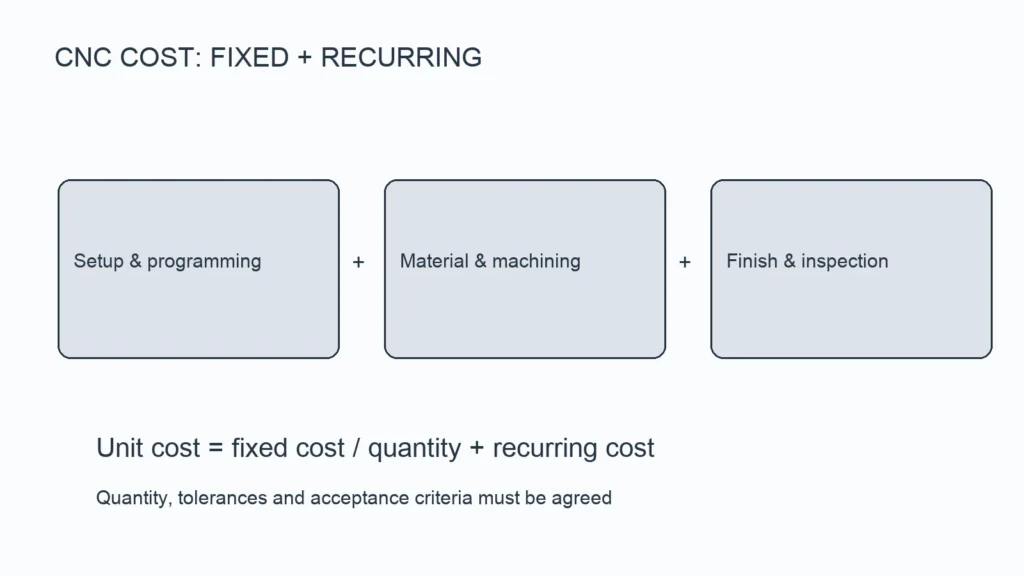
Total landed cost in Mecanizado CNC splits into four buckets: material, machine time, finishing, and logistics. For a standard aluminio 6061 part, material often represents 20 to 30 percent of unit price, while machine time ranges from 15 to 40 percent. The rest sits in setup, inspection, and freight. Knowing which bucket dominates your quote tells you where to act.
Most buyers receive a single line-item price from a Mecanizado CNC supplier and sign it without tracing where the number came from. The gap between that unit price and your true cost of ownership can stretch across material surcharges, secondary operations, tooling amortization, and landed freight. YPMFG sees this pattern in every RFP that lands on our engineering desk: the sticker price looks fine,but the total picture shifts the moment you add cycle counts, yield risk, and lead-time penalties. This article walks through the actual cost structure so you can build a defensible number before you commit volume.
Key takeaways for your cost model:
- Material share: In 6061 or 304 stainless, raw stock typically accounts for 20 to 40 percent of unit cost, depending on part geometry and waste ratio.
- Machine time vs. setup: Low-volume runs (under 500 pcs) let setup and programming drive 50 percent or more of the price; high-volume runs push that share below 15 percent.
- Tolerancia y acabado: Moving from Tolerancia de mecanizado CNC IT7 to IT5 on critical features can add 30 to 60 percent to cycle cost on that axis alone.
- Landed cost floor: Add 8 to 15 percent to your supplier quote for freight, insurance, and import duty before comparing bids.
What Actually Drives Your Total Landed Cost?

The unit price on a machining quote covers material, machine hours, and basic QC. Landed cost adds everything from there to your warehouse shelf: secondary finishing, packaging, freight, duty, and internal receiving labor. The ratio between the two depends on part size, density, and shipping distance.
When freight and duty push your landed number above 20 percent of the supplier quote, it is worth asking whether a near-shore machining option or a design change to reduce part count offsets that premium.
How Do Tolerance and Finish Specs Move the Number?
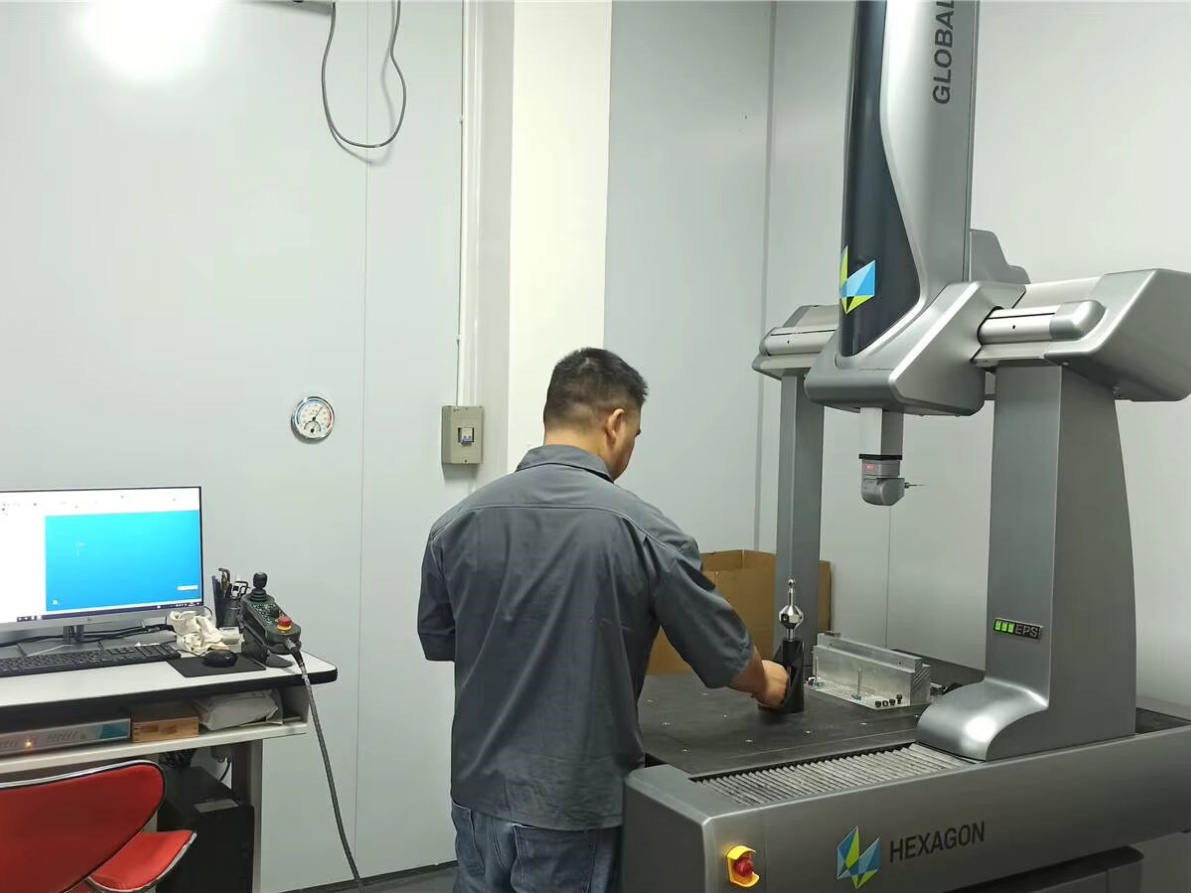
Tightening a Tolerancia de mecanizado CNC from ISO 2768-m to ASME Y14.5 GD&T callouts changes the machine strategy, not just the inspection time. You may move from a 3-axis run to a 5-axis setup, add a CMM gate, or rework at the operator bench. Each step adds cycle time and scrap risk.
Where to tighten, where to relax
Map every tolerance to its functional purpose. A fit class on a shaft journal demands IT5 or IT6; a non-critical flat face can often live at IT8 or IT9. YPMFG engineering reviews your drawings for tolerance stacks that are stricter than the function requires, and flags them before programming. A single relaxed callout can cut cycle time by 20 to 30 percent on that feature.
Finish specs follow the same logic. A Ra 0.8 micron on a mating surface matters; a Ra 1.6 on a non-visible face is rarely worth the extra pass. If your drawing calls uniform fine finish, ask your supplier which faces are truly functional and which can step up one grade.
How Do You Model Landed Cost Before You Commit Volume?
Build a per-unit cost spreadsheet with four columns: material, process (machining + secondary), logistics, and internal. Fill each cell with a range, not a single number. Material prices for stainless 316L o titanium swing with quarterly market quotes; process cost depends on your chosen batch size; logistics shifts with mode and route.
Run the model at three quantities: 100, 1 000, and 10 000 pcs. The curve flattens as volume rises, but only after setup and tooling are amortized. If your application needs 500 pcs per year, you will pay a meaningfully higher unit price than a customer ordering 5 000 pcs per quarter. Factor that into your annual BOM, not just the first PO.
For a quick sanity check, multiply your supplier quote by 1.12 to 1.15 for ocean freight and duty on a typical China-to-North-America route. For air freight or urgent releases, add 40 to 70 percent on the transport leg alone. The exact rate varies by part density and customs classification, so confirm with your broker before locking a quote.
How YPMFG Handles a Typical Aerospace Bracket: A Process Route Walkthrough
Aerospace brackets in titanium or 7075 aluminum combine thin walls, multiple datum features, and strict traceability. The route below reflects a standard YPMFG process library entry, with parameters set against published tooling data.
- Stock selection: Verify mill certificate for the specific heat lot. For IATF 16949 or AS9100 programs, traceability must follow the part through every operation.
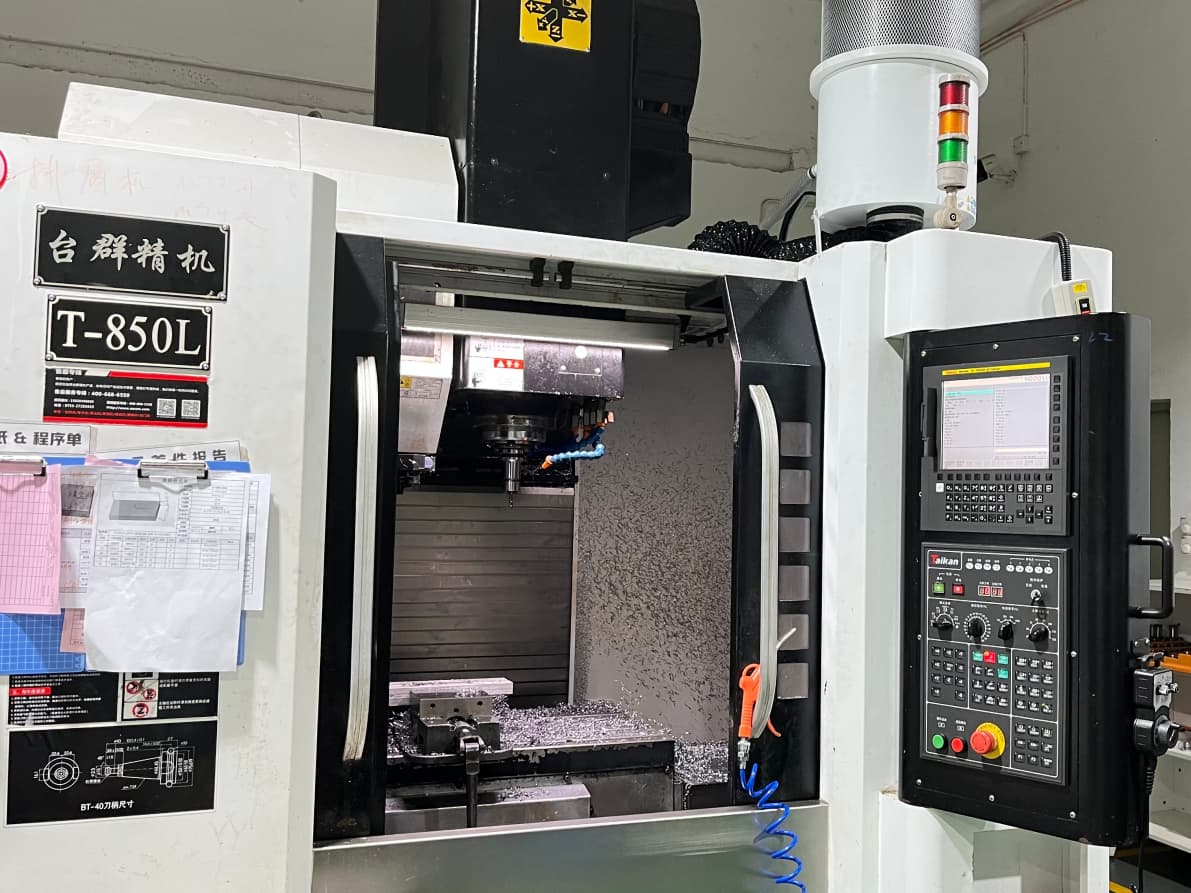
- 3-axis roughing: Leave 0.5 mm stock on all milled faces. Tooling: 10 mm solid carbide, 2-flute, high-feed geometry. This pass removes 80 percent of the volume.
- 5-axis finishing: Machined features at final tolerance, typically IT6 on bore diameters, IT7 on thickness. Spindle speed and feed follow the tool vendor’s published chart for the alloy in question.
- Deburr + visual: Manual or vibratory deburr, then 100 percent visual against the approved drawing. Critical bores get a CMM check against ASME Y14.5 callouts.
- FAI + pack-out: First Article Inspection per AS9102 or IATF 16949 PPAP, as the program requires. Parts ship with material cert, FAI report, and batch traceability tag.
Process Route Reference: YPMFG process library, reviewed against published tooling data. Client-specific data withheld per NDA.
The physical limit here: a 5-axis mill will not produce an internal 90-degree corner below the tool radius. If your bracket has a zero-radius internal corner, that feature requires EDM or a special tool, adding a separate operation and cost line.
Practical Questions Before You Lock a Quote
Does batch size really change per-unit landed cost? Yes. Setup, programming, and tooling amortize across units. Moving from 200 to 2 000 pcs typically cuts the fixed-cost share from 40 percent to under 15 percent of unit price.
Can I cut landed cost by relaxing non-critical tolerances? It cannot be overstated how much a single IT5 callout on a non-functional face inflates the quote. Relaxing that one feature to IT8 can remove a secondary inspection gate and 10 to 15 percent of cycle time on that part.
What should I ask a supplier before comparing two bids? Request the cost breakdown by operation (rough, finish, secondary, QC), the material lot policy, and the freight/duty treatment. Two quotes at the same sticker price can differ by 20 percent on landed cost if one bundles ocean freight and the other does not.
How do I handle material price volatility in a multi-year contract? Agree on a pricing formula tied to a published index for the alloy, with a review trigger at a 10 percent swing. YPMFG can draft that clause into the SOW so both sides avoid renegotiation disputes.
Choosing the Right Cost Structure for Your Program
The goal is not the lowest sticker price. It is the lowest defensible landed cost across your required volume, schedule, and quality gates. When you send your drawings and BOM to YPMFG, our engineering team returns a line-item cost model: material by lot, machine hours by operation, secondary costs by specification, and a freight estimate by mode. You get a number you can take to procurement with confidence, and a DFM review that flags tolerance or geometry changes before any metal is cut. Start by sending your specifications or a blank NDA request; the first engineering call is where most of the savings are found.