 Korean
  English
  German
  Russian
  Japanese
  Spanish
  French
  Italian
  Portuguese
 간단한 답변:
Machining of mechanical parts involves removing material with cutting tools to achieve a specific shape, dimension, and finish. Common processes include CNC 밀링, CNC 선반 가공, drilling, grinding, and broaching. The right process depends on part geometry, material, tolerance needs, and production volume. Buyers should verify tolerances, material certifications, and surface finish requirements before requesting a quote. Incorrect process selection is the most frequent cause of costly rework in mechanical parts manufacturing.
You are likely evaluating a part for a new project or replacing an existing machined component. The decision hinges on cost, lead time, and whether the part meets functional and compliance requirements. YPMFG supports buyers who need engineering guidance at the specification stage, helping match process, material, and tolerance to the actual application.
Core Machining Processes for Mechanical Parts
Each process removes material in a different way and suits different part geometries.
CNC 밀링 handles 3D shapes, slots, pockets, and flat features on prismatic parts.
CNC 선반 가공 is ideal for cylindrical, symmetrical components such as shafts and flanges.
Grinding removes thin layers for tight 표면 마감 그리고 치수 공차 on hardened materials.
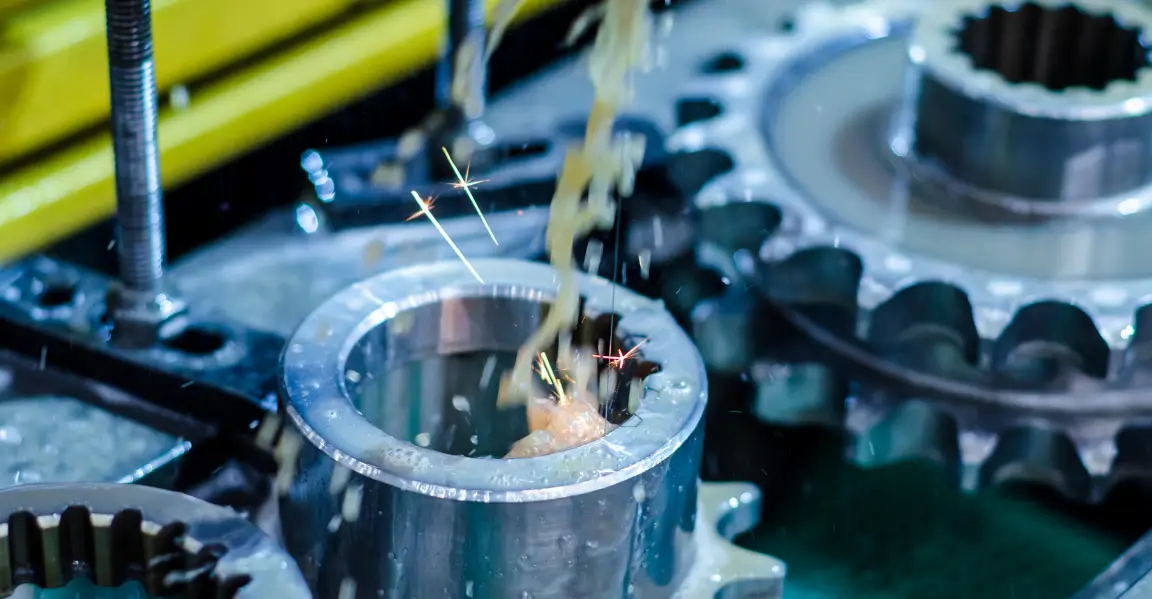
Broaching and slotting create internal keyways and splines efficiently.
대부분의 CNC machining projects,a combination of turning and milling covers 80% of standard mechanical components. More complex assemblies may require EDM or 5-axis machining. The process you choose directly affects cost, cycle time, and achievable tolerance.
## 공차, Materials, and Specification Requirements
Tolerance is the single biggest cost driver in parts machining. A ±0.001″ requirement may triple the cost compared to ±0.005″. Before selecting a material, confirm whether the part needs 자재 인증 (mill certificates, heat numbers) for traceability.
Common material groups:
Material choice also affects finish. Stainless steel often requires polishing or passivation to meet 내식성 standards. Steel parts may need heat treatment before final machining to lock in hardness. YPMFG can review your drawing and flag where a material or tolerance call may conflict with the manufacturing process.
Common Mistakes When Sourcing Machined Parts
Buyers frequently skip three checks that lead to rework or rejected batches:
1. 허용오차 누적 is not calculated across multiple mating parts.
2. 표면 마감 specifications are vague (“Ra 3.2 µm” without specifying the measurement zone).
3. 자재 인증 is requested only after production, not included in the original PO.
Each of these causes a different type of failure. Tolerance stack-up errors show up at assembly. Vague finish specs lead to supplier–buyer misalignment on inspection. Late certification requests delay shipment by 2–4 weeks while documents are generated.
Sending a complete drawing set, including GD&T callouts and a material specification sheet, before requesting a quote reduces revision cycles significantly.
구매자들이 주문하기 전에 자주 묻는 질문
What is the minimum order quantity for CNC-machined parts?
It depends on the process and material. CNC 가공 supports single prototypes, while CNC 선반 가공 of standard bar stock becomes economical at 50+ units. Your part geometry and material availability drive the true minimum.
How do I verify dimensional accuracy before full production?
Request a first-article inspection report (FAI) with a calibrated CMM or micrometer measurement for every critical dimension. Confirm the report references your 치수 공차 callouts by feature number.
Can I use a legacy part as a source for a new machining spec?
Yes. Reverse-engineering or CMM scanning of the legacy part gives you as-built geometry. Add the required design tolerances on top, then have the drawing verified by an engineer before quoting.
What lead time should I expect for machined parts in small batches?
Typical CNC machining lead times for 100–500 units range from 3 to 8 weeks, depending on material availability and whether heat treatment is included. Rush options exist but add 20–40% to unit cost.
## Making a Better Long-Term Decision on Machined Parts
The core value of getting the process, material, and tolerance right on the first pass is simple: fewer revisions, faster delivery, and lower total cost of ownership. You do not need to solve every variable yourself. Send your drawings, material specs, and application notes to YPMFG for an engineering review. The team will identify process conflicts, suggest tolerance adjustments that do not compromise function, and provide a clear quotation with lead-time options. Start with the specification document you already have, and the first step is one email away.