Portuguese
 English
 German
 Russian
 Japanese
 Korean
 Spanish
 French
 Italian

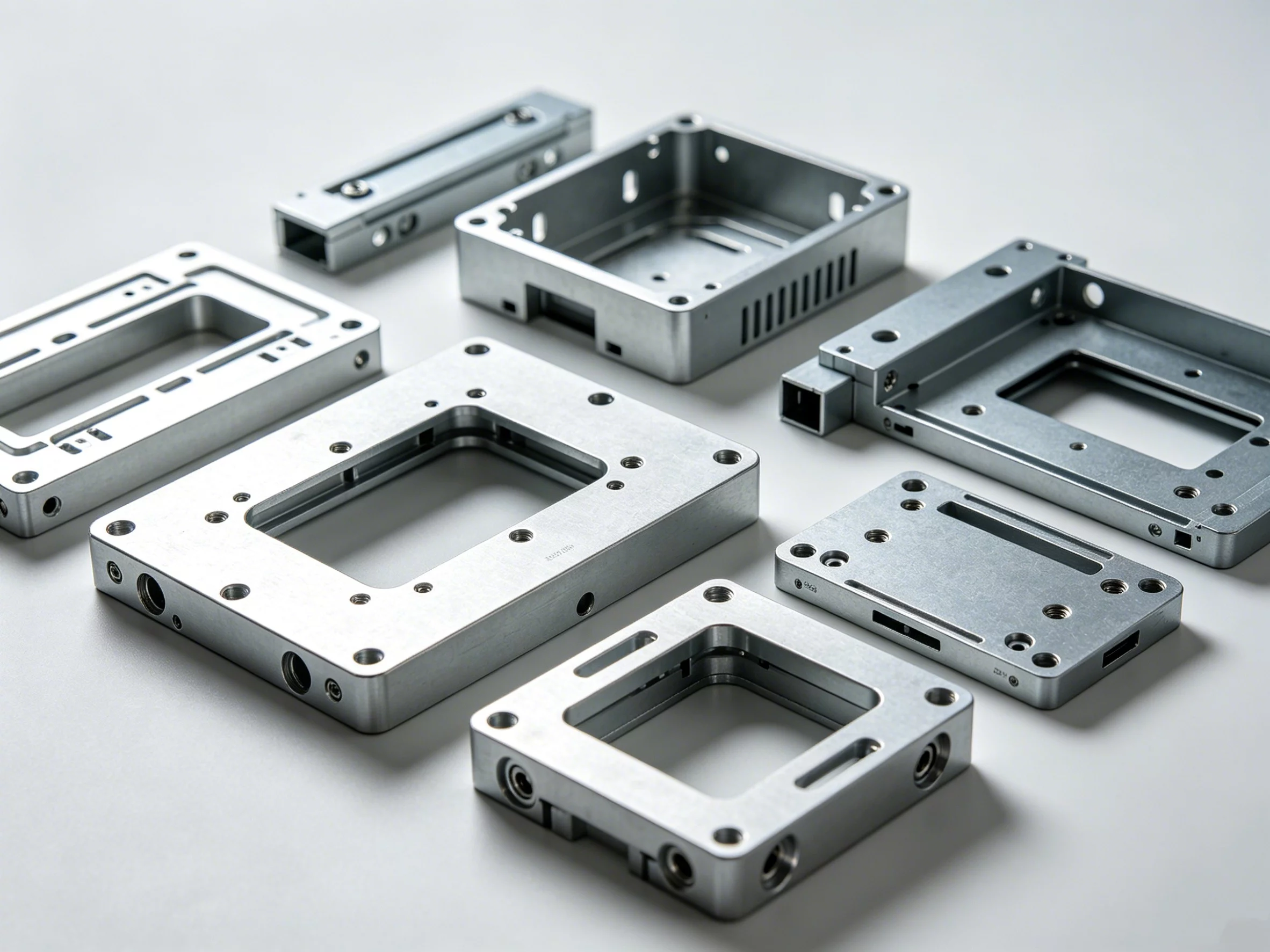
EDM service machining is a manufacturing process that shapes conductive materials using controlled electrical discharges between a tool electrode and the workpiece. Material is removed through repeated spark erosion rather than mechanical cutting. This makes it suitable for hardened steels, tungsten carbide, and other alloys where conventional tooling degrades quickly. In practice, the process handles tight internal features, deep thin-wall pockets, and sharp angular geometries that are difficult to produce with standard Usinagem CNC.
When you search for this process, you are usually evaluating whether a part geometry, material grade, or tolerance spec actually requires EDM. The wrong call adds cost, lead time, or rework. The sections below break down what the process covers, when it is the right choice, and what to verify before sending drawings to a shop.
What EDM Service Machining Actually Involves
The process works by positioning a sacrificial electrode, typically copper or graphite, near the workpiece. A gap filled with dielectric fluid allows controlled sparks to erode material layer by layer. The electrode retraces its path in progressively smaller steps until the final shape is reached.
Three main configurations cover most production needs:
Sinking (die) EDM – through-holes, cavities, and complex 2.5D features
Eletróeroção por fio – programmed cuts through the part; ideal for fine slots, impeller blades, and contoured profiles
Micro-EDM – features under 0.1 mm, common in medical and microfluidic applications
Each variant has different equipment, setup time, and cost structure. If your part mixes through-cut slots with deep internal pockets, a single shop may need to run both wire and sinking operations.
When EDM Beats Standard CNC Machining
Not every hard part requires EDM. The decision usually comes down to dureza do material, geometry complexity, and the cost of tool wear on conventional machines.
If your drawing shows hardened external surfaces with simple geometry, grinding or hard-milling may still be more economical. EDM becomes the clear choice when internal features, extreme hardness, or zero tool-contact requirements dominate the specification.
Specifications to Confirm Before Placing an Order
Before sending drawings for a custom EDM part, verify these parameters with your supplier:
Electrode material and geometry match – determines achievable corner radii and surface finish
Dielectric fluid type – affects debris flushing, electrode wear, and minimum feature size
Tolerance and surface finish targets – well-run EDM setups typically achieve IT6–IT7 tolerances and Ra 0.4–1.6 µm; confirm the shop’s proven capability on your material
Workpiece conductivity – non-conductive materials such as plastics or ceramics cannot be EDM-machined
Electrode stock and lead time – custom electrodes often add 3–7 days on top of machining time
If any of these points are unclear, request an revisão de engenharia from the shop before committing to a quote. A short conversation about electrode strategy frequently prevents weeks of rework.
Practical Questions Before Choosing an EDM Shop
What material range can the shop handle?
Most EDM shops routinely process tool steels (H13, D2), stainless grades,titanium alloys, and tungsten carbide. If your material falls outside that list, ask whether the electrode strategy has been tested on it specifically.
What is the smallest wire slot width?
Typical minimums range from 0.1 mm to 0.25 mm depending on wire diameter and machine. Confirm the specific machine specification rather than accepting a generic range.
How is surface finish controlled?
Finish depends on the final finishing-pass program and dielectric composition. Ask for reference samples or measured data at your target Ra value before approving a batch.
Can the shop handle post-EDM operations?
Parts often need deburring, light grinding, or heat treatment after EDM. A supplier that integrates these steps reduces handling risk and shortens your total lead time.
How do I send drawings for a quote?
You can upload 3D CAD or 2D drawings through a standard online form. YPMFG accepts files digitally and returns a dimensional and process assessment, typically within two business days.
Getting the Right Quote on the First Pass
The fastest path to an accurate EDM quote is sending a complete drawing set with material grade, hardness spec, tolerance callouts, and surface finish notes clearly marked. Incomplete specs force follow-up exchanges that add days to your timeline.
YPMFG supports both Usinagem CNC and EDM service machining under one roof, so internal and external features on the same part can be planned together. If your drawing mixes a milled external profile with a wire-EDM through-slot, a single engineering review covers both operations and keeps tolerances coordinated across processes.
To start, send your specification parameters and material data. The team will flag any feature that would perform better on a different process, confirm achievable tolerances, and return a realistic lead-time estimate. No minimum order commitment is required for a preliminary assessment.