Portuguese
 English
 German
 Russian
 Japanese
 Korean
 Spanish
 French
 Italian

You can cut tube in one pass if you send OD, wall thickness, material grade, and a profile DXF with your request. Four missing specs trigger a 3-to-5 day quote delay. This checklist covers the 6 items that keep your corte a laser de tubos quote accurate on the first round.
Most tube laser cutting quotes arrive 2 to 3 weeks late because the buyer sent a photo instead of a drawing. The vendor reverse-engineers the profile, guesses the alloy, and assumes a default wall thickness. Each assumption triggers a revision cycle. If you are comparing 3 to 5 laser tube cutting suppliers, the spec sheet you send determines how fast you get a firm number. YPMFG built this checklist from the documents that eliminate back-and-forth. Ten minutes to fill in, zero guessing on the vendor side.
O que Specs Actually Move Your Tube Laser Cutting Price?
The three variables that shift laser cutting cost most are alloy grade, wall thickness, and total cut length. 316L stainless runs at a higher power setting than 304. Thinner walls force slower travel speed to avoid burn-through. Total cut length in millimeters is what the machine meter tracks. Miss any of these three and the vendor quotes at the conservative, expensive default.
The risk is silent: your quote looks reasonable until production reveals the vendor assumed 304 when you needed 316L. Re-cutting means scrapping the batch. Check your drawing for a material callout and sum every profile segment before sending the file. State the alloy by grade number, not just “stainless.”
One limitation to accept: even a perfect spec sheet cannot control your local mill’s alloy stock. A 316L tube in a low-supply region adds 1 to 2 weeks of material lead time that no checklist removes.
Which Tube Sizes and Alloys Can a 5-Axis Laser Handle?
Most production 5-axis laser setups cut round tube from 20 mm to 220 mm OD. Below 20 mm the chucker grip force drops and small parts rotate during the cut. Above 220 mm, beam focus and table clearance become hard constraints. Alloy matters too: copper conducts heat and demands a higher power input than steel.
Quoting a 15 mm copper tube on a machine rated for 20 mm minimum will burn the profile and jam the chucker. Confirm your OD range and material against the vendor’s machine spec sheet before you request a number. For 5-axis CNC tube cutting, also verify the head can index to the cut angle without re-clamping.
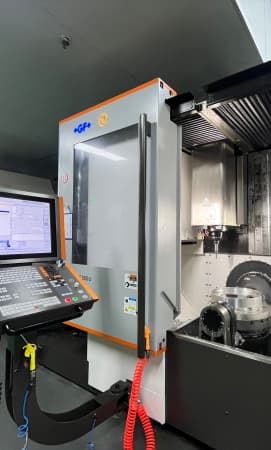
One physical limit: square, oval, and D-shape tube use a different chucking fixture. Not every 5-axis head accommodates every cross-section. If your part is not round, state the profile type early.
How Do Tolerance and Surface Finish Change the Final Number?
A plain corte a laser edge on round tube lands at ±0.3 mm with no secondary operation. Asking for ±0.1 mm on a cut edge adds deburring or a light grind pass. ISO 2768-m is the default for structural tube work. A surface-finish requirement beyond a standard cut shifts the process route entirely.
The standard cut leaves a heat-affected zone of roughly 0.5 mm. If your application needs zero HAZ, you are no longer ordering a laser cut; you are ordering a laser cut plus a post-op. State the specific dimension and tolerance per ASME Y14.5 or ISO 2768 in the drawing. “Tight tolerance” without a number gives the vendor no target to quote against.
One limit to plan around: at walls under 2 mm, thermal distortion from the laser makes ±0.1 mm on a long straight segment impractical without post-heat-treatment. If your wall is 1.5 mm, discuss distortion allowance with the vendor before locking the drawing.
How Do You Avoid a Second Quote Round on Your Next Batch?
The fastest path is sending a DXF profile, a material certificate, and a quantity break-down in one email. Vendors re-quote when they discover mid-order spec changes. A quantity break-down with batch dates prevents split-shipment confusion and setup re-planning.
Sending “500 pcs” without a batch schedule means the vendor plans one setup. A mid-order change to 250 now and 250 in 6 weeks doubles setup cost. Include delivery dates, inspection requirements, and any ISO 13485 or IATF 16949 documentation needs in the same packet. YPMFG can review your file set and flag gaps before you send it to multiple suppliers.
One limit: custom fixtures for non-standard cross-sections such as hex or D-shape may need a 2-week tooling lead that the base quote does not cover. Ask for a fixture-lead-time line item if your profile is not round or square.
How a 5-Axis Laser Handles a 316L Medical Tube Part: A Process Route Walkthrough
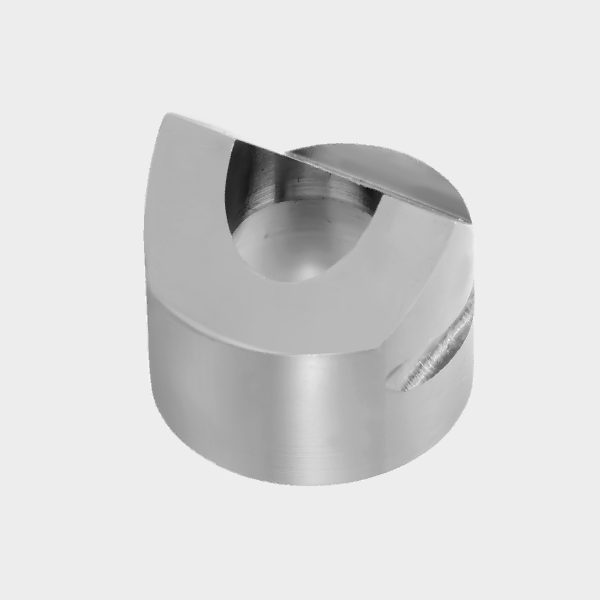
The part is a 316L tube, 12 mm OD × 1.5 mm wall, medical grade, with ±0.1 mm on all cut edges. The route runs on a 5-axis laser with oxygen-assist gas tuned for stainless. Step 1: import the DXF and nest 200 parts per tube length. Step 2: pierce at 316L parameters, 0.3 mm kerf. Step 3: cut, deburr,and visually inspect under 10× magnification. Key control: material lot traceability per ISO 13485 medical device quality requirements.
The most common failure mode here is copper residue on 316L if the assist gas mix drifts. Check the gas specification on the shop sheet before the first cut. If your drawing calls for a passivation step, add it as a separate line so the quote reflects two operations, not one.
Process Route Reference: YPMFG process library, reviewed against published tooling data. Client-specific data withheld per NDA.
Spec Comparison: Basic vs. Detailed Packet
The gap between the Basic and Detailed columns is where 80 percent of quote delays start. Fill the right-hand column before you hit send.
Practical Questions Before You Send a Tube Laser Cutting Spec
Can a vendor quote from just a part photo?
No. A photo does not carry material grade, wall thickness, or profile dimensions. You need at minimum a DXF or DWG file plus a material callout. A photo-based quote will always carry a “subject to drawing confirmation” clause that stalls your schedule.
Does 316L tube cost more than 304 for laser cutting?
Yes. 316L requires a higher power setting and a different assist gas mix, which increases machine-hours per part. The material premium also feeds the labor number. Expect 316L to run noticeably above 304 at the same profile complexity.
What if my tube stock is 6 m and the vendor table is 4 m?
It cannot. A 6 m tube will not fit a 4 m table. You need a vendor whose maximum tube length covers your stock, or you must pre-cut the blank to table length. Always state your stock length in the spec sheet.
How fast can a vendor turn a tube laser cutting sample?
With a complete spec packet, a 3-day sample is typical for standard round tube in 304 or 6061. Complex cross-sections or exotic alloys add 2 to 5 days for fixture setup and parameter dial-in. Send the full packet to compress the window.
Getting a Firm Tube Laser Cutting Quote in One Round
You already know the six specs that separate a 3-day quote from a 3-week back-and-forth. If your current drawing package is missing any of them, YPMFG can review your file set and flag gaps before you send it to multiple vendors. Send your DXF profile, material grade, quantity, batch schedule, and tolerance callout in one packet. The engineering team will confirm cut feasibility, suggest a DFM adjustment if the wall is under 1.5 mm, and return a line-item quote with no “subject to” clauses.
Start with the document, get the number, and hold every competing quote to the same spec baseline. Comparing a detailed quote against a vague one is not an apples-to-apples decision. One clean packet, three to five vendors, and you will have a defensible number by the end of the week.