 Russian
  English
  German
  Japanese
  Korean
  Spanish
  French
  Italian
  Portuguese
 Краткий ответ:
CNC machining plexiglass (PMMA) is practical but unforgiving when parameters drift. The material is thermoplastic: heat above roughly 160 °C softens the cut edge, producing melt beads, stress whitening, and micro-cracks. You need low-rpm carbide end mills, feeds under 0.5 mm per tooth, and rigid vacuum or mechanical clamping to keep vibration out of the chip zone. Miss any of these and the part is ruined before it leaves the fixture. YPMFG handles plexiglass CNC machining jobs where surface finish and tolerance are the make-or-break specs.
If you are sending an acrylic part to be machined, the failure you fear is not a missed dimension—it is a hairline crack or a smeared edge that shows up only after demolding. The problems below are preventable, but only when the operator or service has worked with thermoplastic cutting parameters on a repeated basis.
Содержание
How Plexiglass Behaves Under a Spindle
Оснастка and Speed Settings That Protect the Cut
Clamping and Workholding for Acrylic
Common Failure Modes and Quick Fixes
Questions Buyers Ask Before Ordering
Choosing a Machining Partner for Acrylic Parts
How Plexiglass Behaves Under a Spindle
Acrylic is not a forgiving material. It has a low glass-transition threshold, so even a small amount of heat at the chip zone softens the material before the flute can slice through. Once softened, the tool drags instead of cutting.
The result is a glossy, rounded edge instead of a crisp one. You will also see internal stress lines radiating from the cut path, which can propagate into a full crack during handling or thermal cycling.
For standard 5 mm (3/16-inch) sheet, keeping the spindle below 6,000 RPM and the feed under 0.4 mm/tooth holds chip temperature in a safe range. Thicker stock may tolerate slightly higher feeds, but the rule stays the same: when in doubt, cut slower and let the tool do the work.
Tooling and Speed Settings That Protect the Cut
The values above cover the range most CNC machinists use for PMMA. You will see variation depending on sheet thickness, tool diameter, and machine rigidity, so always dry-run at reduced speed before a full production pass. Depth-of-cut is especially critical: running at 80 % or 100 % of tool diameter in acrylic will generate enough lateral heat to warp the part before the cut is finished.
Clamping and Workholding for Acrylic
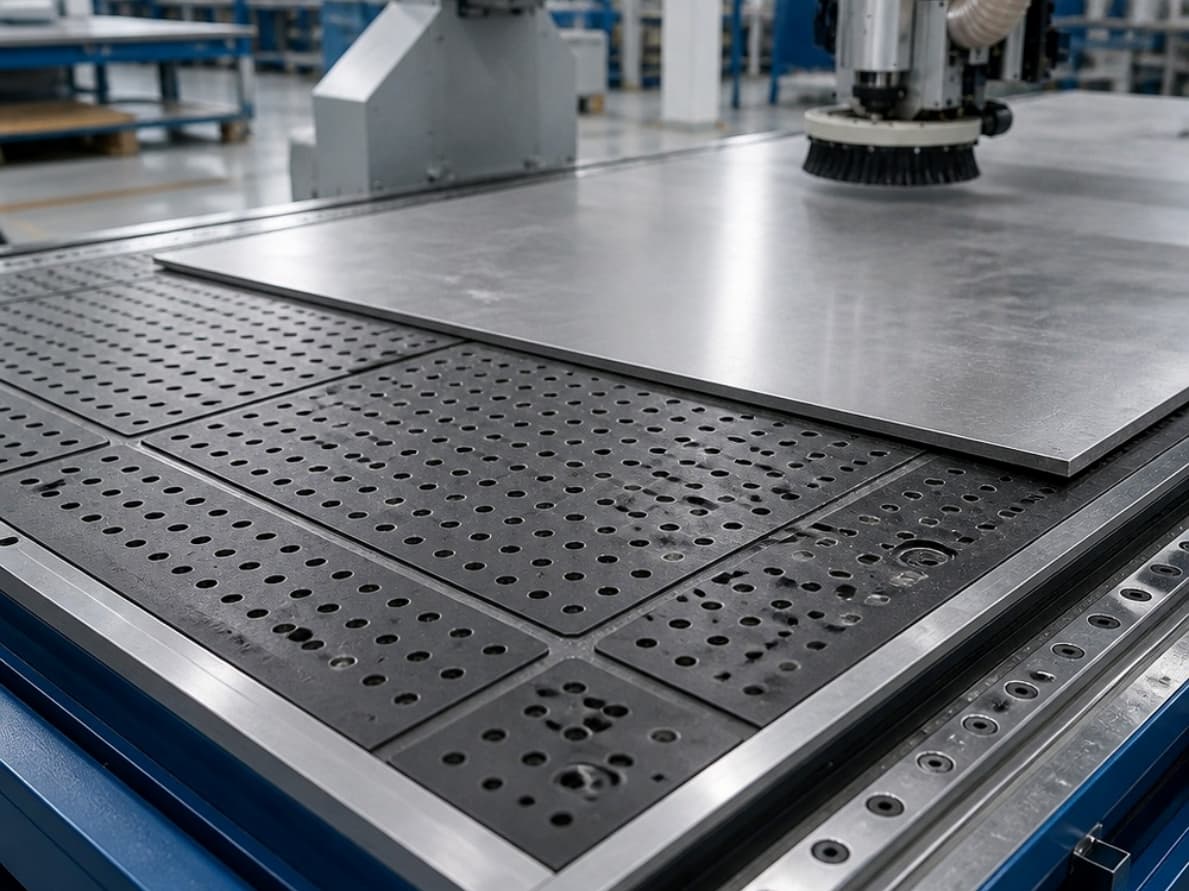
Acrylic is thin and flexible. A loose clamp lets the sheet flex under the tool, and that flex becomes a stress line you cannot machine out later.
Use vacuum tables for sheet work, or soft-jaw fixtures with felt or rubber interface for solid blocks. Never clamp plexiglass against bare steel jaws—the pressure mark will show on the finished face and is nearly impossible to remove without polishing the entire surface.
For parts under 6 mm thick, a two-axis clamped vise with padded faces is usually sufficient. Thicker stock on a 3-axis machine benefits from a sacrificial backing plate so the clamping force never concentrates on the part itself.
Common Failure Modes and Quick Fixes
Melting or smearing at the cut edge: Feed or RPM too high for the tool. Back speed off by 20 % and increase air-blast pressure.
Hairline cracking from clamps: Force concentrated on a small area. Redistribute with pads or switch to vacuum.
White stress lines near the cut: Internal stress from a previous forming or welding step. Anneal the sheet at 100–110 °C before machining.
Chip adhesion to flutes: Wrong polish or too deep a cut. Use a polished 2-flute carbide and stay within 50 % diameter depth.
Vibration chatter marks: Spindle in a resonant RPM band. Shift speed by 10–15 % and verify tool runout is under 0.02 mm.
If two or more of these appear together, the root cause is almost always a parameter mismatch rather than a tool defect. Re-check the whole setup before blaming the machine.
Questions Buyers Ask Before Ordering
Can a standard 3-axis CNC handle plexiglass, or do I need a laser?
For most part geometries with holes, slots, and pockets, a 3-axis CNC with proper tooling is fine. Laser cutting suits flat 2-D outlines but cannot produce through-thickness features or 3-D contours.
What tolerance can I realistically expect on a 10 mm-thick acrylic part?
With a stable setup and correct tooling, ±0.1 mm is typical on non-critical edges. Critical bores may need a secondary ream or a tighter-fit finishing pass.
Will the milled surface look like the raw sheet?
No. The milled face shows fine tool marks. If you need a gloss finish, plan a post step such as wet-sanding to 2000-grit or a controlled flame pass.
What should I send before requesting a quote?
Send your 3D file or 2-D drawing with thickness, material grade (cast vs. extruded), tolerance callouts, and surface-finish requirement. YPMFG will flag any geometry that stresses the material during the cut and suggest parameter changes before you commit.
Does extruded vs. cast acrylic matter for CNC work?
Yes. Cast acrylic has better thermal resistance and lower internal stress. Extruded sheet is cheaper but cracks more easily at tool entry points. For machined parts, cast is the safer default.
Choosing a Machining Partner for Acrylic Parts
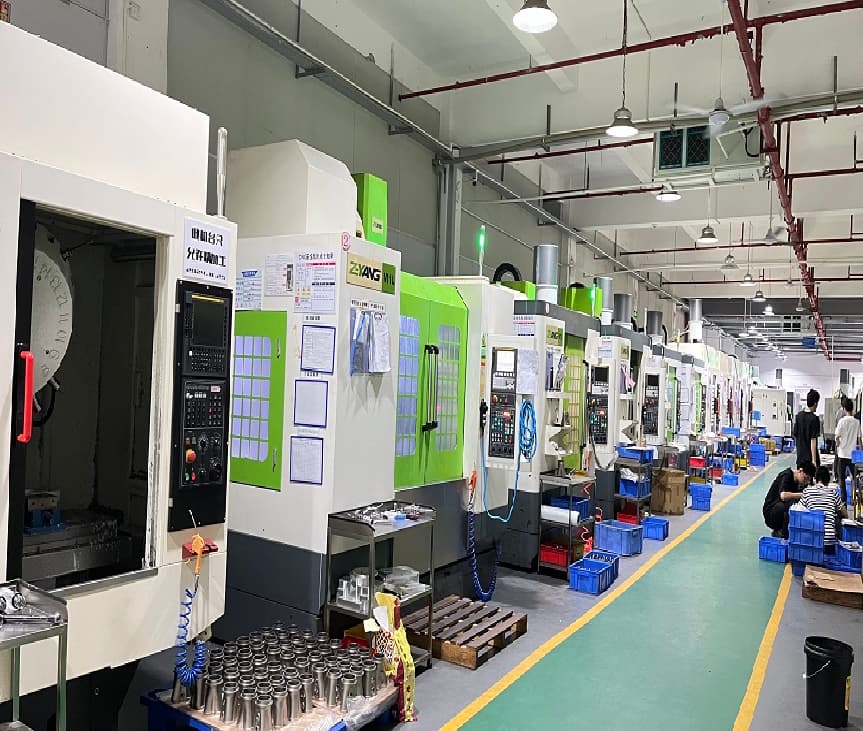
The real cost of plexiglass CNC parts is not the material—it is the scrap and rework that happens when parameters are guessed rather than engineered. A service that treats acrylic the same way it treats aluminum will produce parts that look finished but fail in service under thermal or mechanical load.
When you evaluate a supplier, ask specifically whether they maintain a parameter log per material and thickness, whether they can show a witness cut before a full batch, and what their policy is on stress-relieving cast sheet before cutting.
You can send your drawing or 3D file to YPMFG for a quick engineering review, parameter recommendation, and quote. No minimum order is required for a first-article sample cut.