English
 German
 Russian
 Japanese
 Korean
 Spanish
 French
 Italian
 Portuguese

CNC machining plexiglass (PMMA) is fully feasible, but it demands different tooling, slower feed rates, and careful heat management compared to metal work. PMMA is a thermoplastic that softens around 105 °C. Standard metal-cutting parameters will cause the material to melt, crack, or develop white stress marks. You need dedicated carbide end mills or PCD-coated tools, a reduced depth of cut, and air-blast chip evacuation. Getting these factors right separates a clean, dimensionally stable part from one that fails inspection.
If you are sourcing or producing CNC plexiglass parts,the biggest risks are thermal damage, tool wear, and inconsistent surface finish. These issues affect part geometry, dimensional stability, and whether the component passes final inspection. This guide covers the practical checks buyers and engineers should make before committing to a job.
Material Properties That Drive the Cutting Process
Plexiglass, whether cast or extruded PMMA, behaves very differently from metals and rigid engineering plastics on a CNC. Its low thermal conductivity means chip heat accumulates at the cut instead of dissipating. That single property drives most of the process challenges below.
Key properties to verify for your specific grade:
Glass transition temperature: ~105 °C
Compressive strength: 70–90 MPa (varies by cast vs. extruded)
Tensile strength: 45–75 MPa
Thermal conductivity: ~0.2 W/m·K
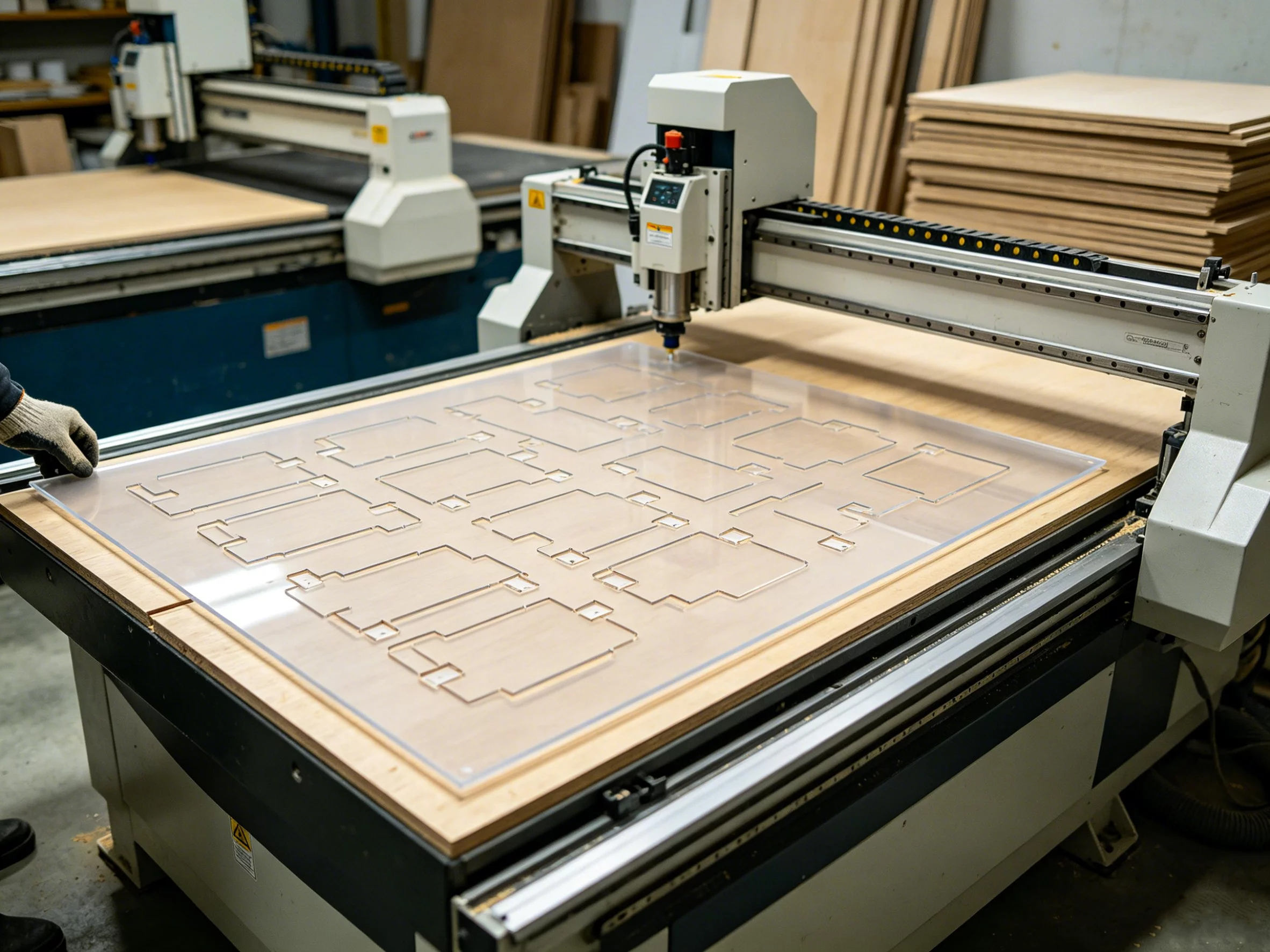
The low thermal conductivity is the main concern. Heat stays in the chip and the surrounding workpiece. Without proper evacuation, the local temperature can exceed the softening point within seconds, causing visible deformation.
Tooling and Parameter Selection
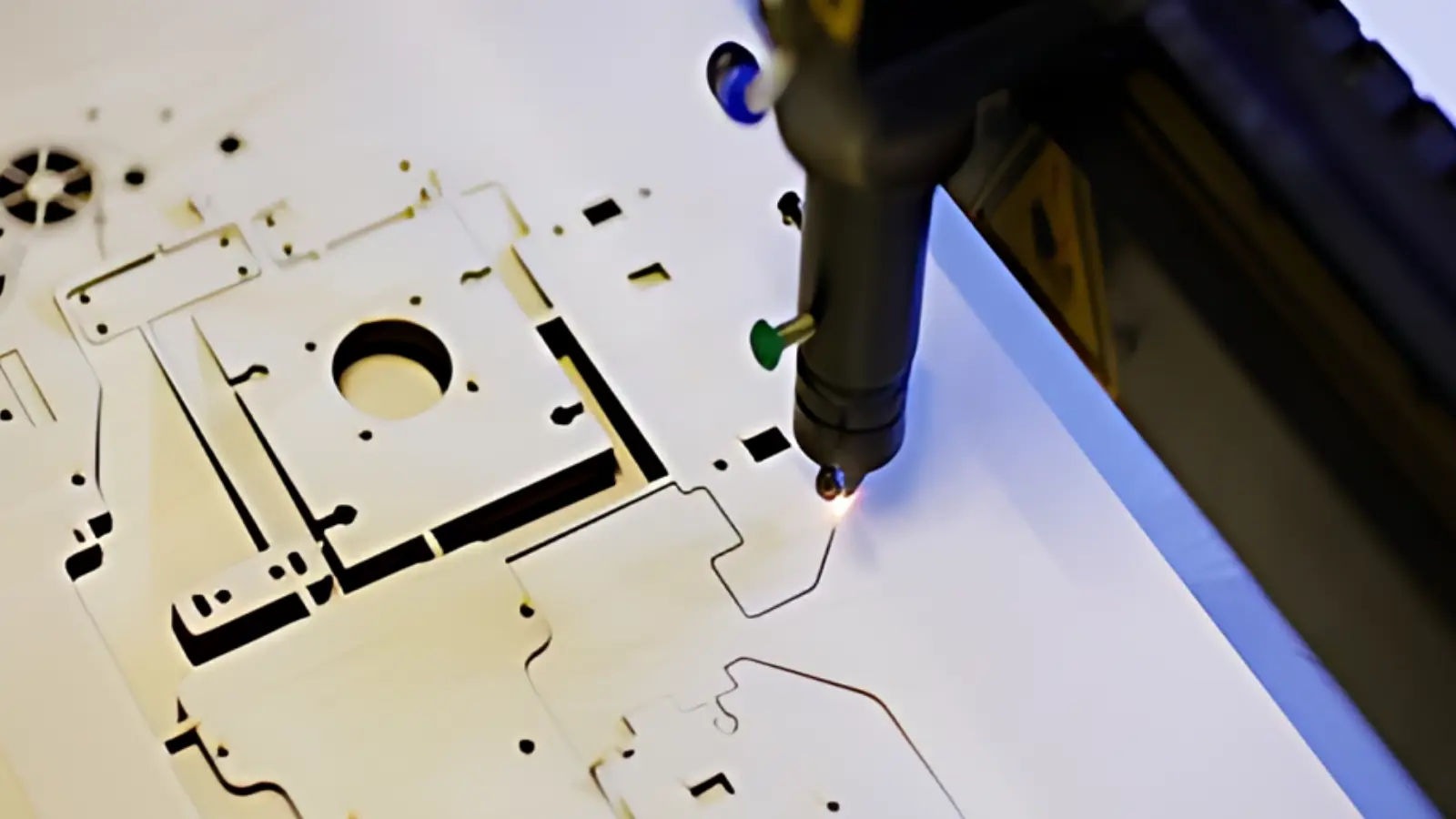
Use single-flute or two-flute carbide end mills with a high helix angle. Diamond-coated or PCD tools extend tool life significantly on plexiglass and reduce chatter marks. Feed rates should be well below typical metal-cutting values to keep chip temperature under control.
A practical starting range (always verify for your machine and material grade):
Spindle speed: 10,000–25,000 RPM
Feed: 0.1–0.3 mm/rev
Depth of cut: 1–2 mm per pass
Chip evacuation: continuous air blast at the tool tip
YPMFG can help you match tooling, CNC cutting parameters, and depth-of-cut strategy to your part geometry, sheet thickness, and tolerance requirements. This is especially useful for thin-walled or complex-profile parts where thermal management is critical.
Common Mistakes and How to Avoid Them
Most plexiglass CNC failures trace back to five recurring mistakes. The table below summarizes each one, its visible effect, and the corrective action.
If your part has tight tolerances on multiple axes, build in a 24-hour rest period after machining. Residual thermal and clamp stress can shift dimensions by 0.02–0.05 mm before the part stabilizes.
Practical Questions Before You Place a Job
Can a standard CNC machine cut plexiglass?
Yes, but the tooling must be changed. Standard HSS or general-purpose metal end mills wear quickly and generate too much heat. Carbide or PCD tools are preferred. Most operators also reduce feed to roughly half the metal-cutting value and add air blast at the tool.
What tolerances are realistic on CNC-machined plexiglass?
With proper tooling and parameter control, ±0.1 mm is achievable on most features. Tighter tolerances near ±0.05 mm are possible but require slower feeds, a dedicated finish pass, and post-machining measurement. Thermal drift during the cut is the main variable to manage.
Does plexiglass warp after CNC machining?
Residual stress from rigid clamping or rapid heat buildup can cause slight warpage, especially on sheets thinner than 3 mm. Allowing a 24-hour rest and using gentle vacuum or soft-jaw clamping reduces this risk significantly.
Is PMMA the right material for my application?
It depends on UV exposure, cyclic load, and operating temperature. PMMA is strong in compression but weak in impact. If your part sees cyclic loading or sustained temperatures above 80 °C, consider polycarbonate or PEEK as alternatives and verify compatibility with the supplier.
How does cast vs. extruded plexiglass affect CNC results?
Cast PMMA has more uniform molecular orientation and holds tighter tolerances. Extruded PMMA is more economical but can show anisotropic cutting behavior. For parts with mixed feature sizes on one sheet, cast stock is typically the safer choice.
## Making a Better Decision on Your Plexiglass CNC Part
Before committing to a CNC plexiglass job, confirm four things: material grade (cast vs. extruded), sheet thickness, clamping method, and tooling type. These variables account for most quality surprises and cost overruns. You can send your drawings, thickness, and tolerance specs to YPMFG for an engineering review. The team will flag potential thermal or stress issues and recommend a practical cutting strategy for your specific geometry.