English
 German
 Russian
 Japanese
 Korean
 Spanish
 French
 Italian
 Portuguese

Precision CNC machining in China means holding tolerances within ISO 2768-mK or tighter on complex geometries, typically across 6061, 304, or H13 stock. The gap between a viable supplier and a risky one comes down to documented process control, not the headline number on a quote.
Most buyers ordering CNC machined parts from China face the same problem: the quote looks competitive, the drawings match, but the first article misses tolerance by a hair or the lead time silently stretches past 25 days. YPMFG works with procurement teams who need to close that gap without shipping samples back and forth across two time zones. The steps below are what our engineers check before committing a part to the floor.
What You Should Know Before Comparing Quotes
- Tolerance class: ISO 2768-mK is the practical floor for functional parts; move to ASME Y14.5 GD&T for critical press or sliding fits.
- Material callout: 6061-T6 covers general structural work; switch to 316L when chloride corrosion or food contact is in scope.
- Lead time benchmark: 3-day prototyping validates design; 20-25 days covers a first production batch of 50-200 units.
- Verification step: Request a first-article inspection against ASME Y14.5 before releasing a production purchase order.
3-Axis vs 5-Axis CNC: Where the Split Falls
The choice between a 3-axis and a 5-axis machine is not about how many axes you can name. It is about whether the part clears a flat-envelope geometry. If it does, a 3-axis job is faster to set up and cheaper per cycle. If the part has an undercut, a contoured surface, or a tilted feature, a 5-axis trunnion saves a secondary operation and holds better CNC machining tolerance on critical faces.
If the part clears a 3-axis envelope, do not pay for 5-axis machine hours. The extra axis time adds cost without improving the finish on a flat-face bracket.
Which Materials and Tolerances Fit Your Part?
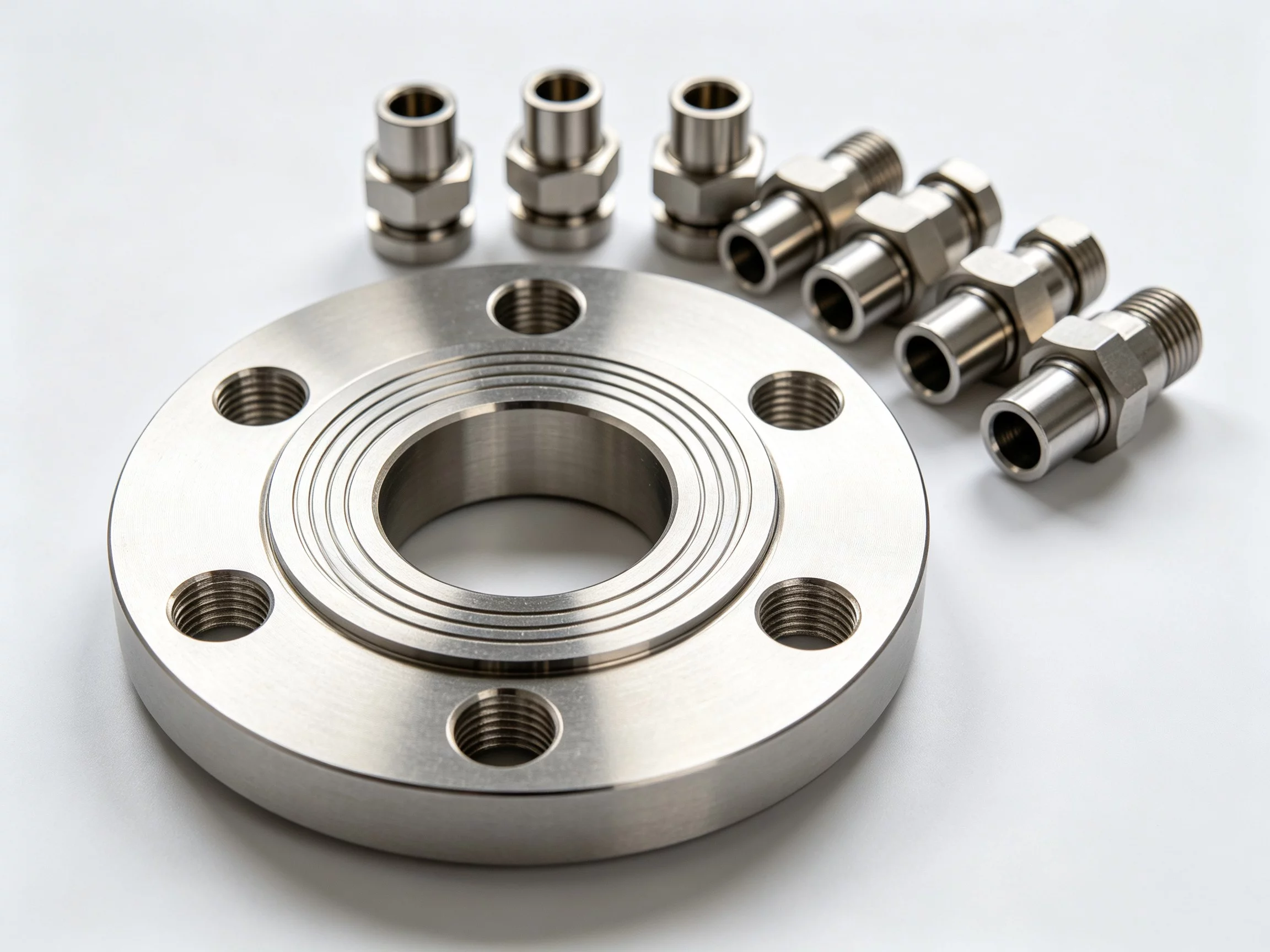
Material selection drives roughly 40 percent of unit cost on a machined part. The wrong alloy forces a slower feed rate, more tooling, and sometimes a different machine class entirely. For most brackets, enclosures, and general-purpose fittings, 6061-T6 is the default. Chemical and food-contact applications call for 304 or 316L. High-temperature mold inserts go to H13.
Matching Alloy to Application
- 6061-T6 / 5052: general structural and thin-gauge panels, cheapest to machine, Ra 3.2 typical.
- 304 / 316 / 316L: chemical, marine, and food processing; 316L adds molybdenum for chloride resistance.
- H13: injection and extrusion mold inserts, holds up to roughly 540 °C in service.
- Brass / Copper: electrical connectors and decorative fittings; soft, machines fast, but work-hardens quickly.
No CNC shop can machine titanium or Inconel at the same feed rate as aluminium. Tool life drops and cycle time doubles or triples depending on geometry. Ask your supplier for a material surcharge line before comparing quotes across different alloys.
How to Verify a Shop’s Capability Before Sending Drawings
Three documents tell you almost everything about a shop’s real capability: the ISO 9001 certificate scope, a sample FAI report, and the tooling change log. A valid ISO 9001 certificate lists the registered processes. If “CNC milling” is not in the scope, the certificate does not cover your part. For automotive, look for IATF 16949. For medical components, ISO 13485.
Documents to Request Up Front
- ISO 9001 / IATF 16949 / ISO 13485 scope statement listing the registered processes.
- A sample FAI report formatted to ASME Y14.5 with datum references.
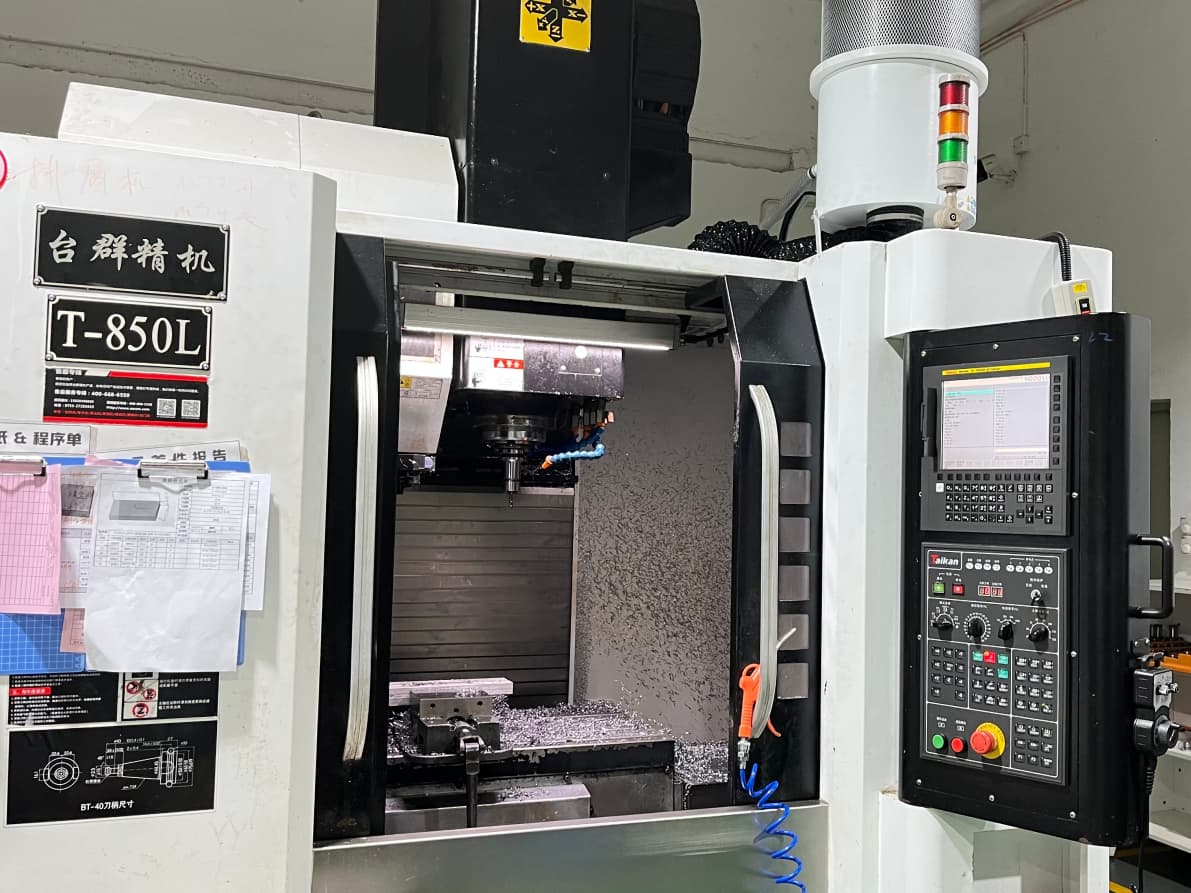
- Machine inventory: axis count, travel, spindle speed, and tooling library.
- RoHS and REACH compliance declarations for material mill certificates.
A certificate proves the quality system existed at audit time. It does not guarantee today’s operator skill. A 3-day prototyping run on your actual drawing is the fastest real test of whether the shop can hold your GD&T scheme.
What Drives Cost and Lead Time on a China CNC Quote?
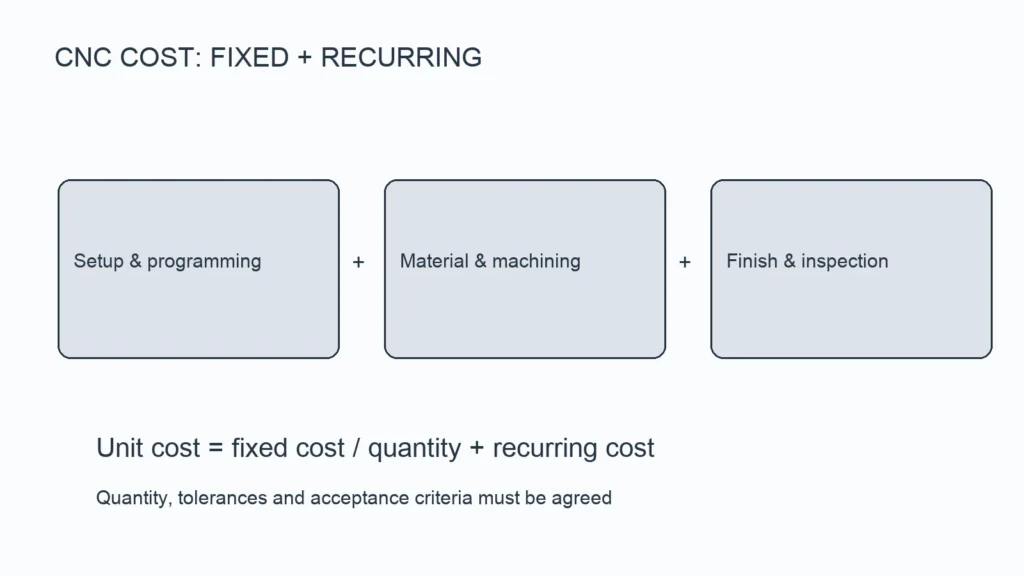
Cycle time, setup, and material cost are the three levers. Finishing, packaging, and shipping are fixed or minor. A 3-axis job on 6061 with a 15-day lead time is the baseline. Move to 5-axis, 316L, or a batch under 10 pieces and each factor compounds. YPMFG typically responds to an RFQ within 24 hours with a line-item breakdown so you can see exactly where the money sits and where a DFM change could trim cost.
Before you accept a quote, check whether the line item separates roughing, finishing, drilling, and surface treatment. A single blended “machining” number hides where waste lives. If the shop cannot break it down,you cannot negotiate intelligently.
How YPMFG Routes a Typical Multi-Feature Aluminum Bracket
Consider a 120 × 80 × 35 mm 6061-T6 bracket with four M5 counterbores, a 2 mm radius fillet series, and a 0.5 mm wall pocket. The process route is fully defined before a chip is cut.
- Bar stock 6061-T6, 40 mm square, cut to 125 mm length.
- 3-axis roughing, 12 mm carbide end mill, 0.3 mm per pass, roughly 8 minutes.
- 3-axis finishing, 6 mm ball mill, 0.1 mm per pass, Ra 3.2 target, roughly 6 minutes.
- Flip, drill and tap M5 × 4, counterbore to 9 mm, roughly 4 minutes.
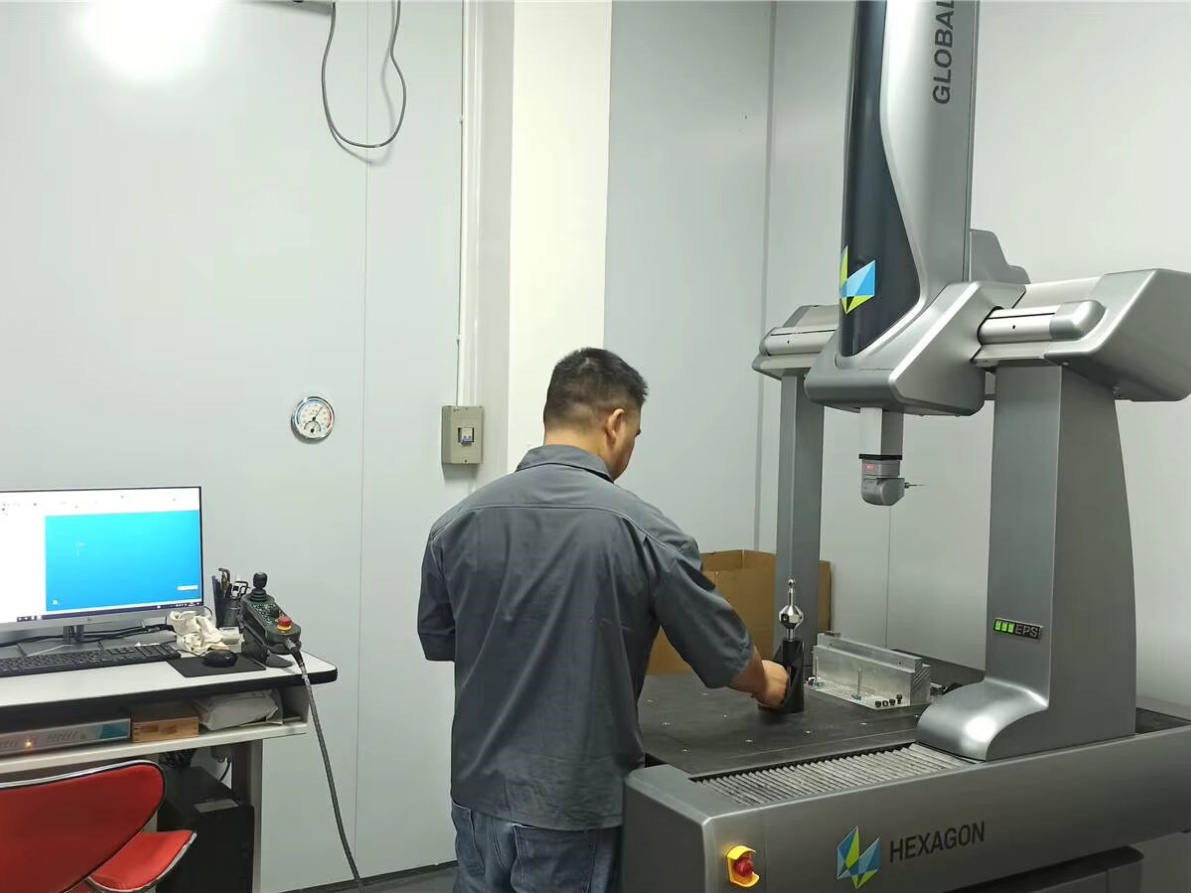
- Deburr, CMM verify at 12 critical points, roughly 10 minutes.
- Anodize or passivate, a 3-day external process.
The tightest feature is the 2 mm fillet radius. The tool nose radius must match the drawing call. YPMFG flags any undercut that a rotary tool cannot reach in the DFM review before cutting starts. Undercuts deeper than the tool radius need wire EDM, which adds a separate cell and a separate cost line.
Process Route Reference: YPMFG process library, reviewed against published tooling data. Client-specific data withheld per NDA.
Practical Questions Before You Source CNC Parts in China
Can a 3-axis machine handle every part I need? No. Undercuts deeper than the tool radius require 5-axis rotary movement or wire EDM. Check your drawing for internal zero-radius corners; those cannot be reached by a spinning end mill.
What is the real difference between ISO 2768-m and mK? The m class allows ±0.1 mm on features between 30 and 120 mm. mK tightens that to ±0.05 mm. For any press fit or sliding interface, mK is the minimum class you should specify.
How fast can I get a single prototype? A 3-day turnaround covers one part in 6061 with standard tooling and no secondary finish. Complex geometries, 316L, or a custom anodize may push the window to 7-10 days.
What documents should I request before placing a purchase order? Request the FAI report, material mill certificate, RoHS/REACH statement, and the ISO 9001 scope page. YPMFG packages all four with every first-article shipment so your incoming inspection has a checklist, not a gamble.
Making a Better Long-Term Sourcing Decision
The cheapest quote that misses tolerance will cost more in rework, scrap, and production downtime than a modest premium paid for documented process control. If you are evaluating suppliers for a recurring part or a new product launch, send your GD&T drawing to YPMFG for an engineering review. You will get a DFM note, a line-item quote, and a FAI template within 24 hours. There is no minimum order and no commitment. The goal is to lock a process that holds spec on batch one and still holds it on batch one hundred.