 English
  German
  Russian
  Japanese
  Korean
  Spanish
  French
  Italian
  Portuguese
 Quick answer: An online CNC machine shop is a manufacturing service where you upload CAD files and receive machined parts through a digital ordering platform. The key differentiator isn’t quote speed—it’s whether the shop can interpret your geometry, select the right CNC machining process, and hold tolerance specifications without endless back-and-forth. Before ordering, verify material traceability, fixture capability, and post-processing options. If your part has tight surface finish requirements or multiple materials in one assembly, confirm the shop’s engineering review process handles those constraints proactively, not reactively.
Most buyers order CNC parts online for convenience. The real risk is sending a file to a shop that can’t hold your critical features. YPMFG works with engineers who need that level of verification built into the workflow from day one.
In this guide
What an Online CNC Machine Shop Actually Delivers
Specs to Verify Before Ordering
How Online CNC Pricing Is Structured
Mistakes That Add Cost Later
Questions to Ask Before You Send a File
What an Online CNC Machine Shop Actually Delivers
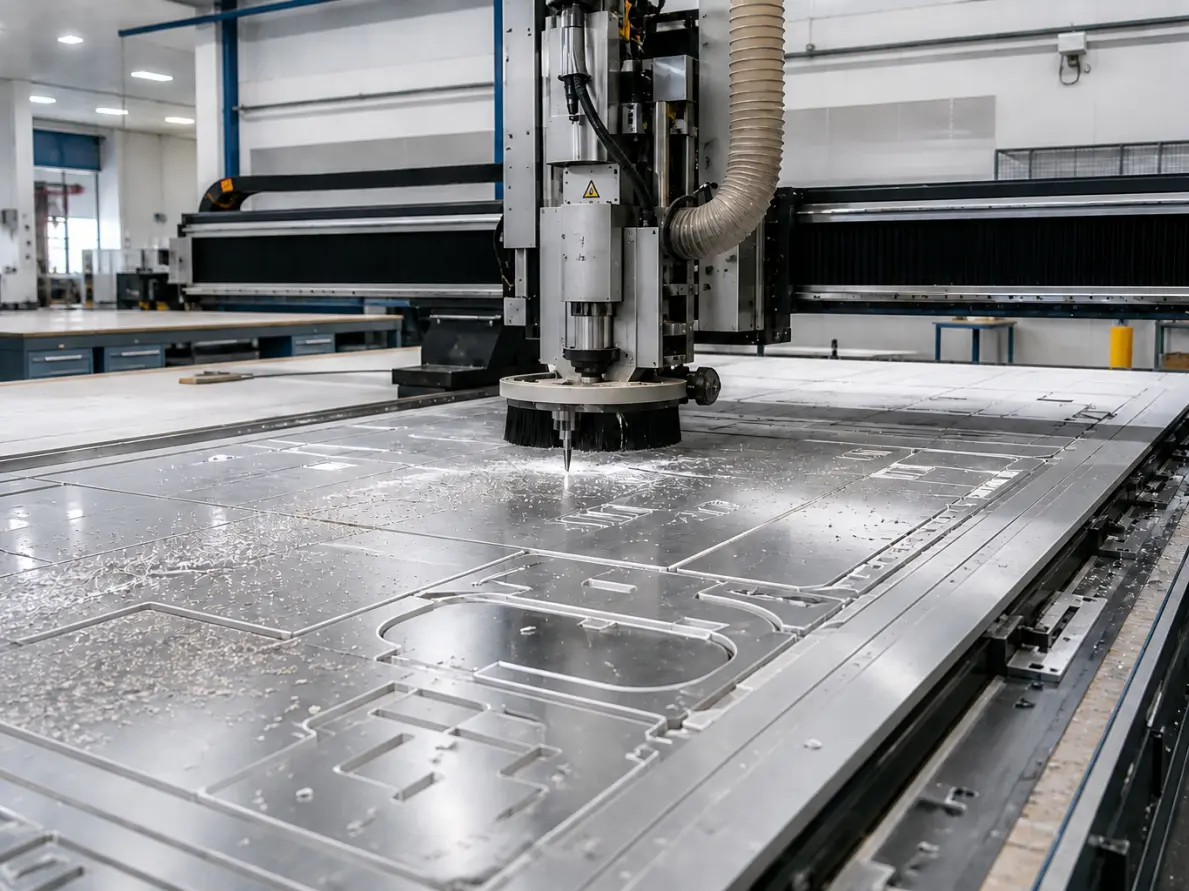
At its core, an online CNC machine shop replaces phone-and-email back-and-forth with a file-upload-to-ship cycle. You submit a STEP or IGES file, the shop’s CAM software runs a DFM check, and you receive a quote with a stated lead time. The depth of that DFM step determines everything downstream.
A capable shop flags thin walls, undersized holes, and tool-access issues before any cutting begins. A weaker one quotes and hopes. The difference shows up in scrap rate, rework, and whether your CNC parts arrive to spec on the first pass.
Specs to Verify Before Ordering
Not every drawing translates cleanly to a CNC program. Confirm the following with the shop before releasing your order:
YPMFG includes a quality inspection report with every production batch, so you can trace dimensions back to the as-built program rather than relying on a single operator check.
How Online CNC Pricing Is Structured
Most online shops build quotes from four variables: material volume, setup time,cycle time, and post-processing. Small-batch CNC machining runs higher per-unit because setup dominates the cost. Volume discounts typically kick in once your part list stabilizes across lots.
Watch for hidden line items: material surcharges on exotic alloys, rush-fee multipliers, and packaging for sharp-edge components. A transparent quote itemizes all four variables. An opaque one buries the extras in a flat “handling” fee.
Mistakes That Add Cost Later
Submitting a 2D print instead of a 3D model. The shop must reverse-engineer geometry, adding error risk at every feature.
Specifying a tolerance without a material grade. T5 steel at IT5 is nearly impossible on standard equipment; the shop will substitute and you’ll lose strength.
Skipping the DFM review. A 0.8 mm wall on a 20 mm part will flag on any decent CAM solver. Catch it now, not after first article fails.
Ordering without a post-processing sequence. Anodizing before threading destroys threads. Sequence and timing must be on your drawing.
If you’re unsure which specs will hold on your geometry, send the file for an engineering evaluation before committing to a production quote. A written DFM summary surfaces issues while they’re still cheap to fix.
Questions to Ask Before You Send a File
Do you run DFM on my specific part, not just a generic template check?
A useful answer names the exact features flagged. Ask for a written DFM summary you can keep in your project file.
What is your first-article inspection process for a new part number?
You want CMM measurement against your critical-to-quality dimensions, not a caliper check on one spot. Ask which axes and features are covered.
Can you source and certify material to my print, or do I ship it?
If you supply material, confirm they accept your mill cert and log lot traceability into the shop floor.
What happens if a part fails incoming inspection at my plant?
A shop that accepts rework or credits the unit protects your downstream schedule. Get the policy in writing.
Do you support design changes mid-production?
For iterative projects, a shop that can pause, re-CAM, and resume without restarting the batch saves a full cycle.
## Choosing the Right Online CNC Machine Shop for Your Part
The right fit depends on your volume window, tolerance class, and how much material flow you want to manage yourself. For low-volume, high-mix custom CNC components, a shop with strong DFM and flexible post-processing wins. For repeat production, unit cost and lot-traceability matter more.
If you’d like a second set of eyes on your drawing or need help mapping specs to the most cost-effective machining process, YPMFG’s engineering team reviews files and returns a written recommendation at no obligation. Send your STEP file with a short note on critical features; you’ll get back a practical assessment within two business days.