English
  German
  Russian
  Japanese
  Korean
  Spanish
  French
  Italian
  Portuguese
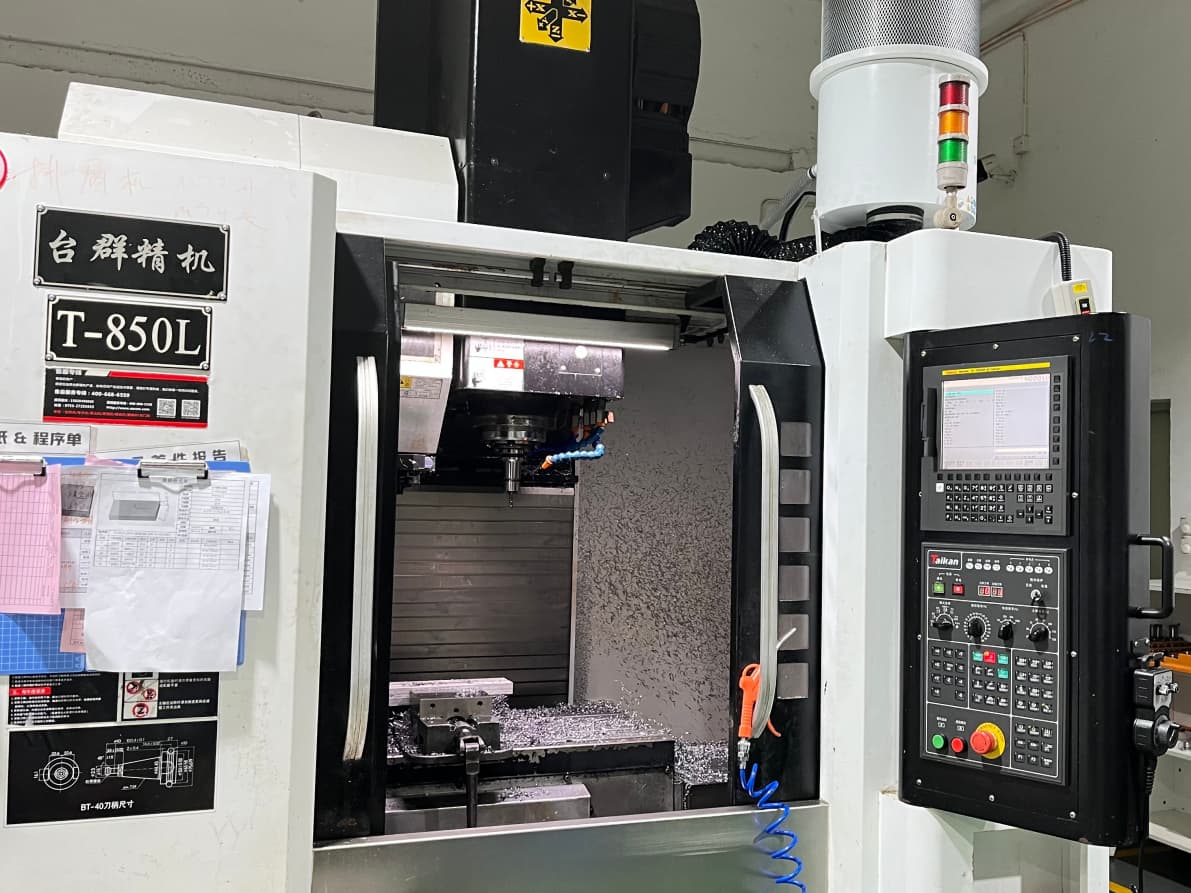
 Small batch CNC machining is the default process when you need 1 to 500 precision metal or polymer parts without committing to expensive tooling. A computer-controlled mill or lathe removes material from a solid block, and you get a finished component in days rather than the 6-to-10 weeks molding would require. Per-part cost typically falls between $5 and $75, driven by material grade, geometry complexity, and tolerance class. YPMFG supports buyers from initial engineering review through final inspection documentation.
You need 200 machined components for a prototype run, a low-volume product, or a design pivot. You’re not sure whether CNC is cheaper than printing, what your specs will actually cost, or what to send a shop to get a real number. The confusion around small batch CNC machining is where most buyers either overpay or get parts that miss critical dimensions.
Why CNC Beats Other Processes Under 500 Units
For quantities between 1 and roughly 500, CNC milling and CNC turning are the most cost-effective solid-parts methods. Injection molding demands a $25,000-to-$80,000 tooling outlay that barely amortizes at that volume. 3D printing struggles with load-bearing metal alloys and tolerances tighter than ±0.05 mm.
CNC’s core advantage is repeatability. Every part exits the machine to the same dimensional spec, batch after batch. You receive a finished component with machined surfaces, not a cast or printed blank that still needs secondary work.
The wrong choice is expensive. Choosing molding for 300 units locks you into tooling costs that never pay back. Choosing 3D print for a structural bracket risks material failure under real service loads.
What Actually Drives Your Per-Part Cost
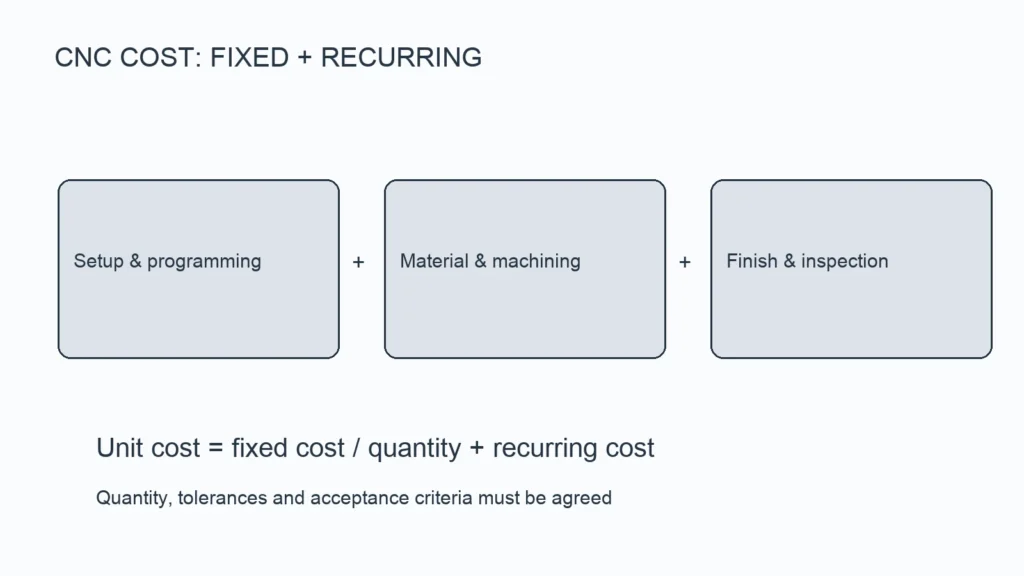
The per-part cost in small batch CNC hinges on four levers: material, part geometry, tolerance class, and batch quantity. Tightening a tolerance from ±0.1 mm to ±0.01 mm slows the cutting cycle and raises scrap risk, which the machine operator bakes into the quote.

In practice, a simple aluminum bracket in a batch of 100 may land near $8 to $15 per piece. A titanium impeller at ±0.005 mm in a batch of 25 can exceed $60 per piece. Always ask for a quote breakdown that separates machine time, material, and surface finishing so you can see where your money goes.
The 5 Specs That Make or Break Your Quote
Sending a bare sketch or a “we need 30 of these” email will get you a wide, unusable range. A proper RFQ package narrows the number dramatically and saves a round of back-and-forth.
3D CAD file in STEP, IGES, or native SolidWorks/Fusion 360 format
2D drawing with critical dimensions and GD&T tolerances called out
Material grade specified (7075-T6, 316L, AlSi10Mg, etc.)
Surface finish requirement (Ra value, plating, anodizing type)
Target quantity and acceptable dimensional class per ASME Y14.5
Without a tolerance callout, a shop has to guess whether ±0.1 mm or ±0.01 mm applies. That single guess can swing your material selection and cycle time by 30 to 80 percent.
YPMFG reviews incoming files for manufacturability before quoting. The team flags features that are tight for the chosen material or geometry, so you get a realistic number on the first pass instead of a re-quote three weeks later.
Common Questions About Small Batch CNC Machining
How fast can I get 50 parts shipped?
For a standard aluminum or steel part, first-article samples typically ship in 5 to 10 business days after file approval. The full batch follows within two to three weeks. Complex multi-axis titanium work may add one to two weeks for fixture design.
Is CNC more expensive than 3D printing at 100 units?
For metal parts,CNC usually undercuts printing above roughly 20 to 50 pieces because print build time and post-processing scale linearly. For plastic prototypes under 20 units, FDM or SLA printing often costs less.
What tolerance can I hold in a batch of 10?
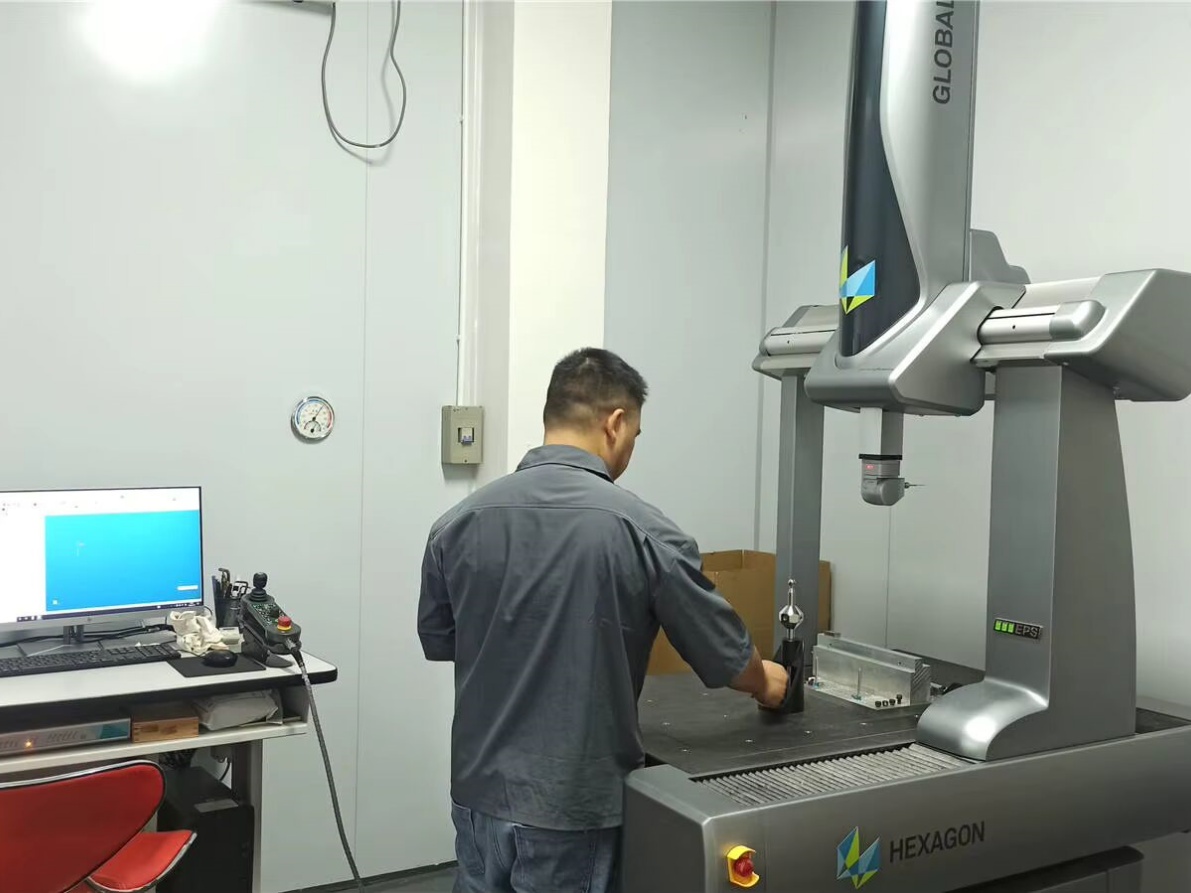
±0.01 mm is standard on modern 3- and 5-axis machines. ±0.005 mm is achievable but adds setup and CMM inspection time. Below ±0.003 mm, expect a premium and confirm the shop’s calibration records.
Do I need a drawing, or is the CAD file enough?
A STEP file defines geometry but not tolerances or finish. A 2D drawing with GD&T callouts removes ambiguity. Shops quoting from CAD alone frequently have to re-quote once they interpret your dimensional intent.
What’s the minimum batch most shops will run?
Many will machine a single part, but pricing jumps steeply below 10 units. A batch of 25 to 100 is where production run size economics start to look favorable without long lead times.
Getting Your Parts Without the Guesswork
If you’re holding a CAD file and a target quantity but no firm number, the fastest path is to send the full spec set for a custom machining solution review. You’ll get a machine-time estimate, material recommendation, and a range-based quote you can compare across vendors without waiting a month.
Send your STEP file, drawing, and quantity to YPMFG. The team runs a manufacturability check and replies with a per-part cost range, cycle-time estimate, and any design-for-manufacturability notes that could save you money before the first cut. No commitment, no minimum order.