German
 English
 Russian
 Japanese
 Korean
 Spanish
 French
 Italian
 Portuguese

Profile aluminum is an extruded alloy shaped into a fixed cross-section and used for frames, enclosures, machine structures, and structural supports. Unlike flat plate or bar stock, the geometry is formed in a single extrusion pass, which keeps dimensional tolerances tight and the surface finish uniform along the full length. The two most common grades are 6061-T6 aluminum for structural and machined parts, and 6063-T5 for architectural and decorative work. Selecting the right aluminum profile comes down to load ratings, finish requirements, and whether you will add CNC-machined features into the extrusion after cutting.
Specifying profile aluminum carries three frequent risks. The alloy grade does not match the actual load. Wall thickness is too thin for the intended span. Or there is no plan for how the profile will be joined, fastened, and finished. A small mismatch at the drawing stage can force a full redesign after parts are already cut and machined.
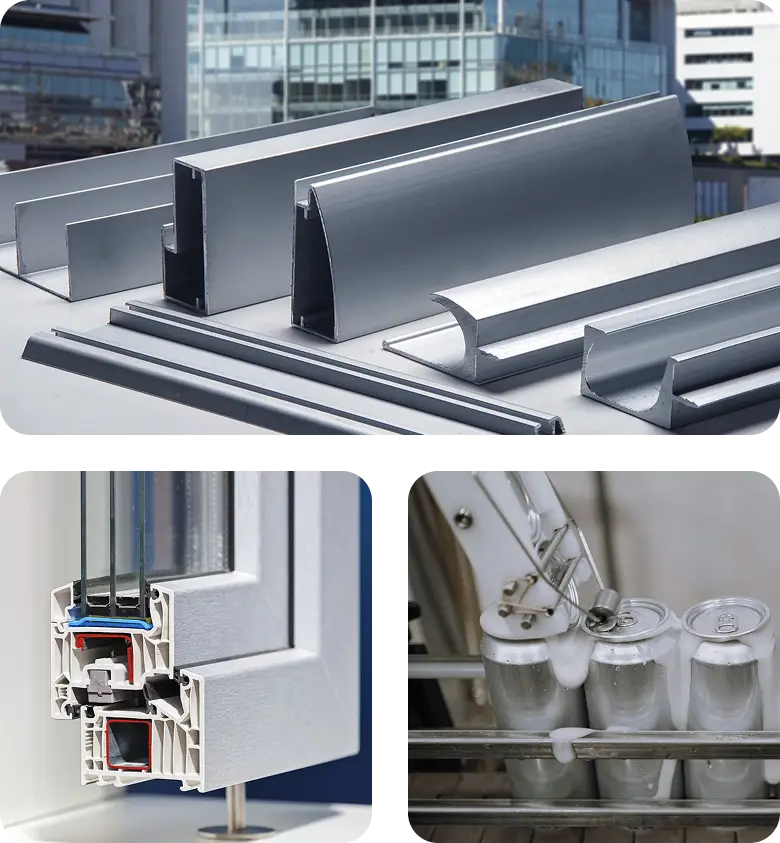
Common Aluminum Profile Types
Extrusions are grouped by cross-section geometry, and each family serves a different structural or aesthetic role.
Before you lock a profile into a bill of materials, confirm that the supplier can provide material test certificates and that the extrusion length matches your cutting plan. Cut waste on a six-meter stick can add 15 to 20 percent to material cost if you do not calculate it.
How to Choose the Right Profile

Start with the load case, not the catalog. Identify whether the profile will carry static weight, dynamic motion, thermal cycling, or a combination of all three. Then verify three items on your drawing:
Legierung und Härtegrad: 6061-T6 handles moderate structural loads and machines cleanly. 6063 is softer and takes finer extrusion detail, but it is not ideal for high-stress joints.
Wall thickness and section modulus: Thinner walls reduce weight and cost but increase deflection. For spans over 300 mm,check the calculated sag against your tolerance before ordering.
Surface finish and corrosion exposure: Mill finish is standard. Anodized or powder-coated profiles cost more but extend service life in humid or chemical environments.
YPMFG can review your assembly drawing and flag whether the chosen profile grade and wall thickness will hold up under your actual loading conditions before you commit to a purchase order.
Zerspanung and Finishing on Profile
Extruded profile is rarely the final part. You will typically cut it to length, then add drilled holes, milled pockets, or chamfered edges with CNC-Bearbeitung. A few practical points to keep in mind:
Copper inclusions occasionally appear in extruded aluminum. They show up as tiny hard spots on the tool face and can break a standard carbide insert. Ask your machine shop whether their tooling plan accounts for this.
Deburr every cut edge. A 0.5 mm burr on a milled slot can prevent a clamp or pin from seating properly.
If the profile is anodized, machining through the anodic layer exposes bare aluminum and creates a visual mismatch. Plan the machining sequence before the finish step.
Sending your part geometry and profile spec to YPMFG for a quick engineering review can surface these sequencing issues before they become rework costs.
Practical Questions Before Specifying
What wall thickness should I use for a 400 mm span carrying 5 kg?
Deflection depends on the alloy, cross-section shape, and whether the load is centered or distributed. A 40×40 mm 6061-T6 tube with 2 mm walls typically keeps sag under 0.3 mm at mid-span for a 5 kg point load, but verify with a section-modulus calculation for your exact fix conditions.
Can I weld aluminum profile, or should I use mechanical fasteners?
Extruded 6061 and 6063 can be welded, but the heat-affected zone loses much of its temper strength. For most frame and enclosure work, T-nuts, set screws, and through-bolts are simpler and avoid post-weld heat treatment.
What is the difference between 6061-T6 and 6063-T5 in practice?
6061-T6 is harder, machines better, and suits structural or load-bearing parts. 6063-T5 extrudes into finer detail and takes a cleaner anodize, making it the default for architectural trim and decorative profiles.
Do I need a material test certificate with my profile order?
For any application involving safety, pressure, or a regulated environment, yes. Ask for a mill certificate listing alloy, temper, heat number, and mechanical properties. It is standard on most extrusion orders and should not add cost.
Eine bessere langfristige Entscheidung treffen
Die richtige Wahl treffen aluminum profile is a trade-off between weight, stiffness, finish, and total parts count. A profile that is 20 percent heavier but eliminates three brackets and one welding fixture usually wins on assembly time and long-term maintainability. Before you finalize your bill of materials, send your assembly drawing, load case, and finish requirements to YPMFG. Their engineering team will check the alloy selection, wall thickness, and machining sequence, then return a feasibility note and a firm quote so you can compare options without guesswork.