Korean
 English
 German
 Russian
 Japanese
 Spanish
 French
 Italian
 Portuguese

CNC 가공 suits short runs, tight tolerances down to ±0.001 in,and complex 3D geometries. 사출 성형 wins at high volumes (typically 5,000+ units) where part geometry fits mold flow constraints. The decision hinges on three variables: total part count, tolerance specification, and material behavior. Choosing incorrectly adds 4–8 weeks of rework or $20,000–$80,000 in tooling you did not need.
Most teams hit this fork during DFM review. The cost of a wrong call is either paying per-unit machining rates at 50,000 parts or building expensive molds for a 200-unit batch. YPMFG engineers see both mistakes regularly in client submissions.
Core Differences at a Glance
The two processes differ in setup cost, unit economics, tolerance ceiling, and material range.
These ranges vary by part complexity, material grade, and supplier capacity. Treat them as planning anchors, not guarantees.
When CNC Machining Is the Right Call
Pick CNC 가공 when your project has any of these characteristics:
Volume under 5,000 units or still in prototype iteration
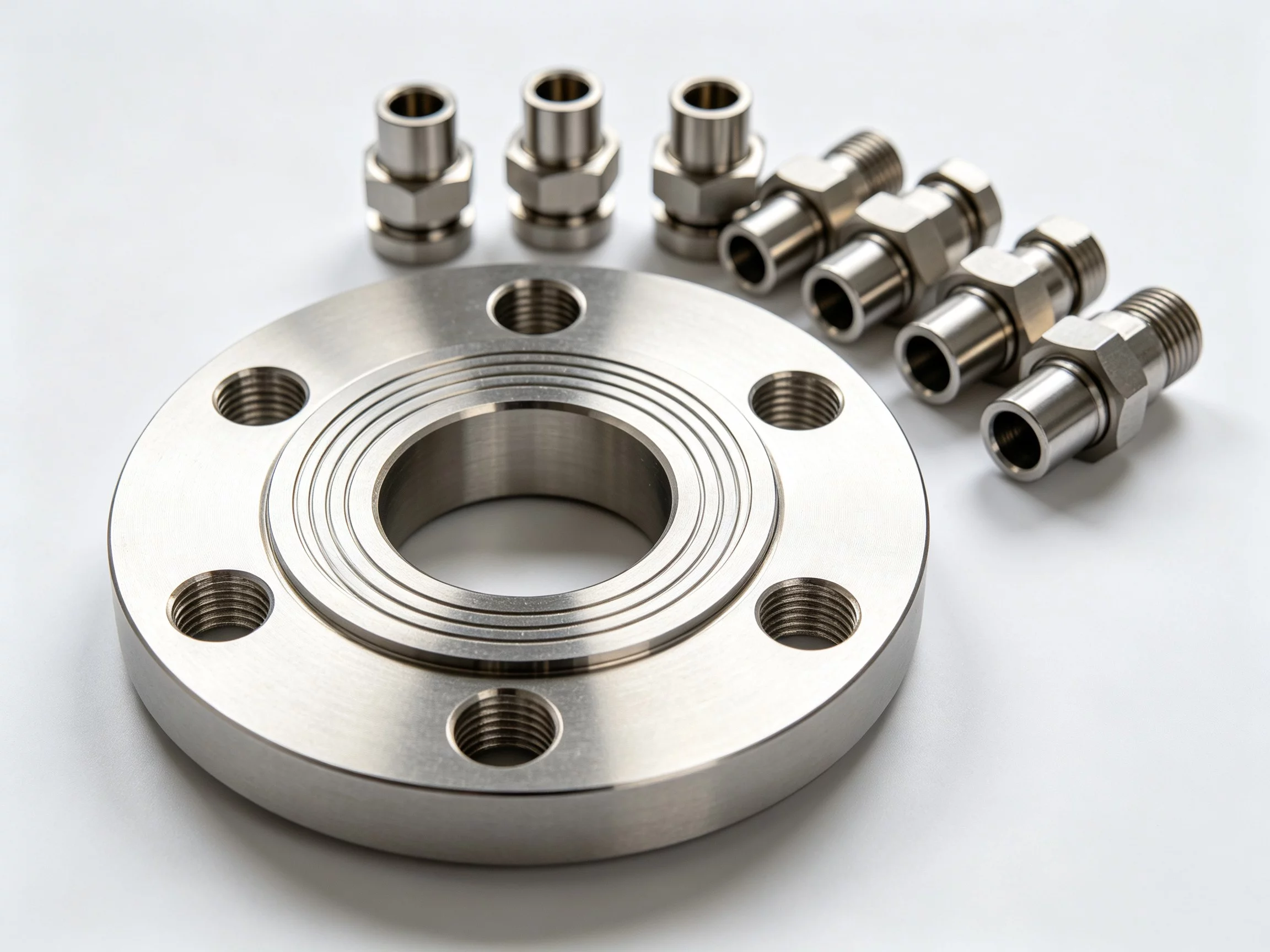
Tolerance tighter than ±0.005 in
Mixed-material or metal parts (aluminum, stainless, titanium, copper)
Complex undercuts, internal threads, or free-form surfaces
Design still evolving between batches
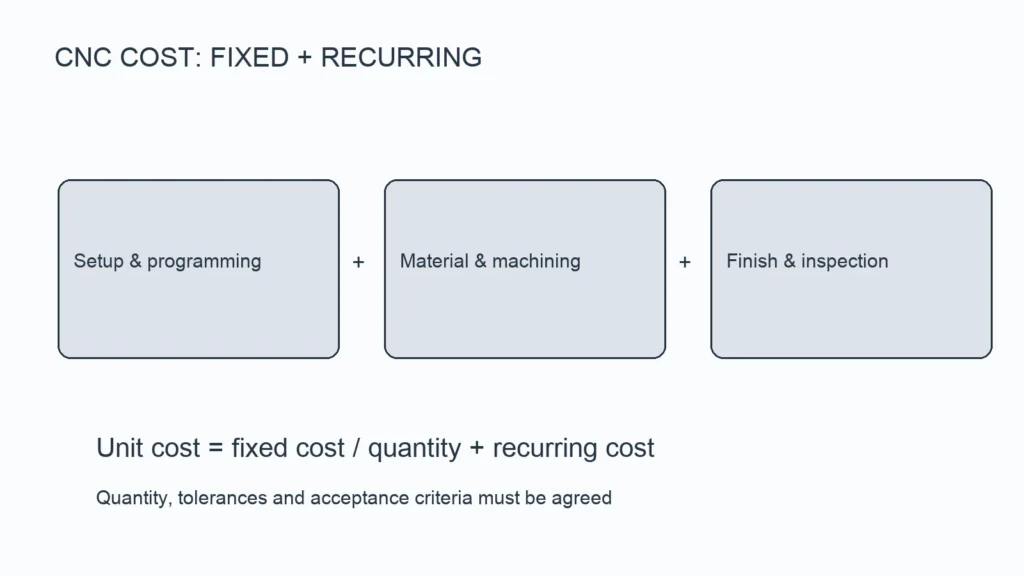
The per-unit cost stays predictable because there is no amortized tooling. You pay for material, machine hours, and finishing. For a 500-part aluminum bracket, total cost is often 3–5× cheaper than building a mold and running shots.
When Injection Molding Is the Better Fit
Choose injection molding when:
Volume exceeds 5,000–10,000 units over the product lifecycle
Part geometry is predominantly prismatic with consistent wall thickness
Material is a thermoplastic (ABS, POM, nylon, PP, PC blends)

Cycle speed matters: 20–60 seconds per part versus 15–45 minutes per milled piece
Tolerance of ±0.005 in is acceptable for the function
At 50,000 units, the per-part cost drops to 1/5 or 1/10 of a machined equivalent. The mold pays for itself inside that volume window.
Cost and Timeline Breakpoints
The crossover is not a single number. It shifts with part size, material, and whether you need 맞춤형 공구 or can reuse an existing mold. A rule of thumb: if (machining unit cost × total units) exceeds (mold cost + molding unit cost × total units), switch to molding. Run that equation before committing. Timeline adds another layer. Molding adds 6–16 weeks for mold design, machining, and trial cycles. Machining compresses that to days. For a product launch with a fixed date, short-run manufacturing often beats waiting for a mold.
결정하기 전에 고려해야 할 실질적인 사항들
Can I prototype on a CNC machine and later move to molding?
Yes. Many teams 3D-print or CNC-prototype, validate the fit, then release the validated CAD to a mold shop. Keep wall thickness and draft angles consistent from day one to avoid redesign.
What tolerance do I actually need?
Run a GD&T study on the mating interfaces. Most consumer housings work at ±0.01 in. If your functional requirement is ±0.003 in, molding may not hold that without secondary machining, which adds cost.
Which material should I specify?
List functional requirements (load, temperature, chemical exposure, wear) before naming a grade. A supplier’s engineering team can map those requirements to 3–5 candidate resins or alloys for 재료 선정.
How many parts per year, not just per batch?
Mold amortization uses total lifecycle volume, not a single order. A 2,000-unit order that repeats five times a year for three years is a 30,000-unit commitment.
Who handles quality inspection and traceability?
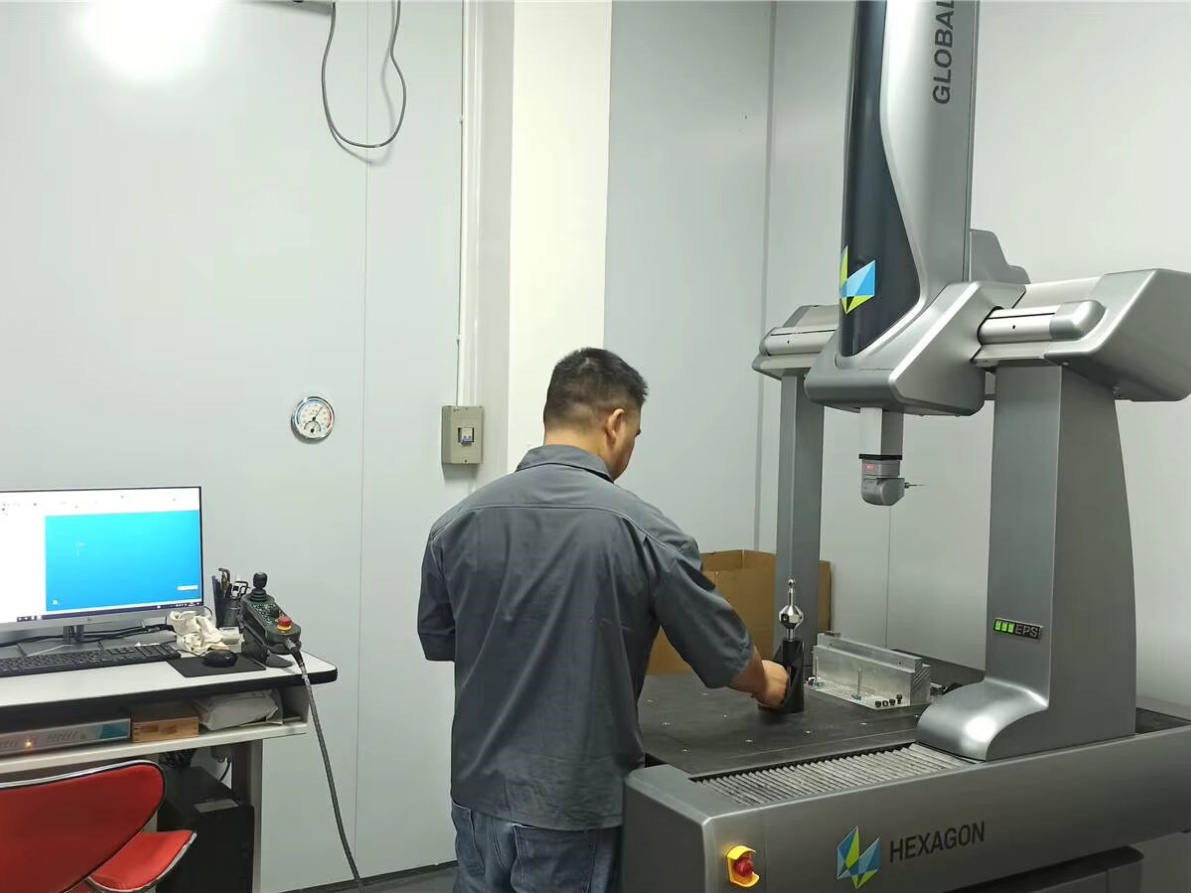
Ask for CMM reports, first-article inspection (FAI), and batch traceability records. These are standard in 양질의 문서 but not every shop provides them by default.
## Choosing the Right Manufacturing Path for Your Part
The right process is the one that matches your volume curve, tolerance ceiling, and schedule. There is no universal answer. YPMFG supports both CNC machined components and CNC mechanical parts programs, and the engineering team can run a quick DFM review on your CAD files before you lock in a tooling budget. Send your specifications, material callouts, and target volume to YPMFG for an evaluation. You will get a side-by-side cost and lead-time comparison, plus flagging of any geometry that will cause problems in whichever process you pick. That single review usually saves a quarter of rework downstream.