Korean
 English
 German
 Russian
 Japanese
 Spanish
 French
 Italian
 Portuguese

CNC 가공 for auto parts covers precision manufacturing of engine components, transmission elements, brake hardware, suspension parts, and structural brackets. The process typically uses 3-axis to 5-axis milling, turning, and grinding to hold tolerances between 0.01 mm and 0.05 mm. Material selection—aluminum alloys,steels, or titanium—drives both part performance and cost. Before committing to a production run, buyers should verify that the supplier provides 초도품 검사 data, material traceability documentation, and capability reports.
Procurement teams in the automotive sector face a familiar problem: finding a machining partner that delivers repeatable precision at volume without gaps in quality paperwork. A missed tolerance on a caliper body or a transmission shaft can trigger assembly-line downtime. YPMFG supports automotive component programs on CNC 선반 및 밀링 가공 operations, helping buyers match part geometry, material specs, and batch size to the right process path.
## Core CNC Processes Used in Automotive Part Manufacturing
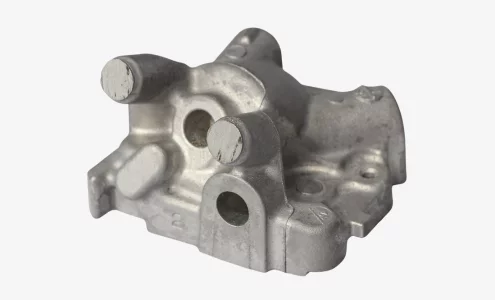
Milling dominates for complex geometries such as engine mounts, sensor housings, and manifold runners. CNC 선반 가공 handles rotational parts—shafts, spindles, piston pins—where concentricity and runout matter most. Grinding follows when surface finish or final dimension control is critical, often to 0.005 mm or tighter.
Most automotive programs run on 3-axis or 4-axis machines for cost efficiency. Five-axis capability becomes necessary for impellers, turbine housings, or parts with undercuts that a single setup cannot reach.
## Specifications That Separate a Good Part from a Defective One
The drawing is the contract. Before releasing a part to production, confirm that the supplier’s GD&T 표기 match your assembly interface requirements. Key parameters to verify include:
관용 수업 (typically IT6–IT8 for most auto components)
Surface finish (Ra 0.8 µm to Ra 6.3 µm, depending on function)
Heat-treatment specification (HRC range, tempering cycle)
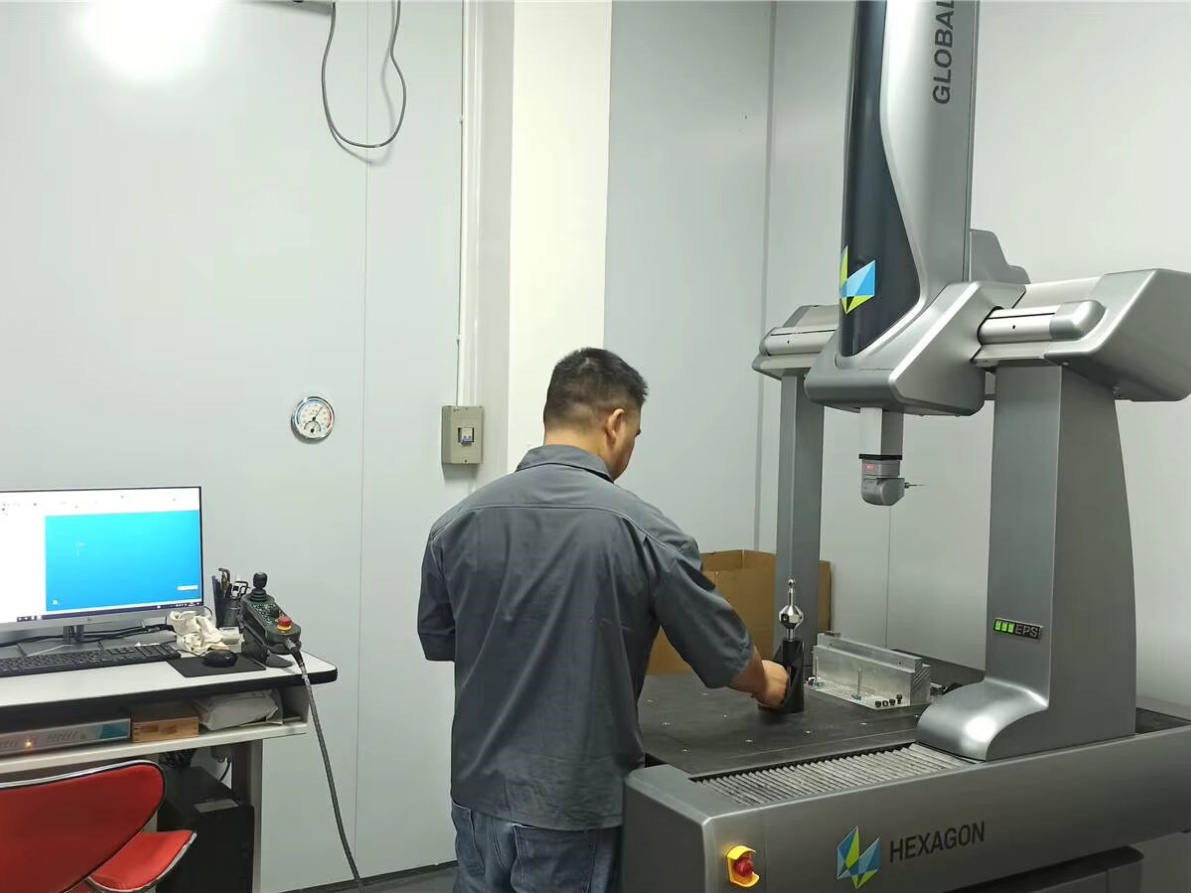
First-article inspection with full dimensional report
Matching these four items in writing protects both the buyer and the machinist from late-stage disputes.
What Drives Cost on a CNC Auto Part
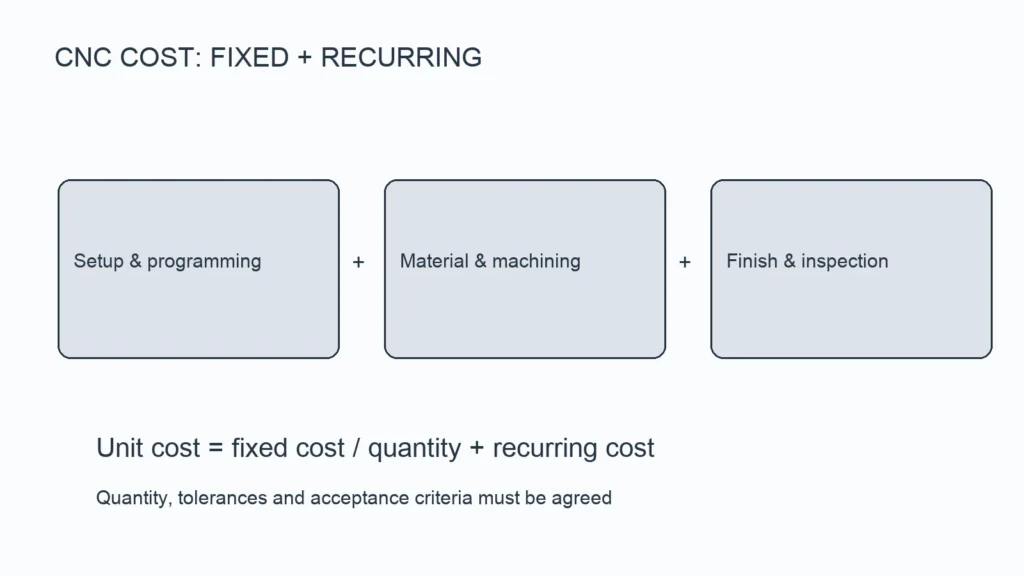
Unit price depends on volume, material, and geometry complexity more than on machine type alone. A high-volume aluminum sensor housing costs less per piece than a low-run titanium engine bracket, even though the bracket requires longer setup and dedicated 고정구 설계 time. Tooling amortization, inspection sampling rate, and post-machining operations all add up across the program life.
YPMFG can provide a 비용 내역 by operation so buyers can see where savings exist—whether through material substitution, process consolidation, or batch-size optimization—before locking in a quote.
Mistakes That Cost Automotive Buyers the Most
Three errors recur on the shop floor. First, releasing a part to production without a signed first-article inspection and full dimensional report. Second, specifying a material grade without confirming the supplier’s stock availability and 자재 추적성 documentation. Third, ignoring deburr, wash, or passivation requirements on parts that will sit in inventory for weeks.
Each of these can trigger a quality hold at the receiving dock and delay the entire assembly schedule.
## Questions Buyers Often Ask About CNC Machined Auto Parts
Will I need custom fixtures for my part geometry?
In most cases, yes. Custom fixture design ensures repeatable clamping and probe access. Ask the supplier to provide a fixture drawing and confirm the cycle-time impact before finalizing a lead-time commitment.
What tolerances can a standard 3-axis mill hold stably?
A well-rigined 3-axis machine typically holds ±0.01 mm. Tighter or multi-directional features usually require 4-axis or 5-axis capacity. Confirm the capability report matches your drawing callouts.
Do I need a material certificate for every production lot?
For automotive programs, yes. A mill test certificate plus lot-specific PMI (positive material identification) is the minimum standard. Keep the certificate number traceable to each batch for audit purposes.
At what volume does dedicated tooling make financial sense?
Above roughly 500 to 1,000 units, dedicated inserts or custom cutting tools usually lower per-part cost enough to justify the upfront investment. Below that range, standard tooling keeps unit economics simpler.
올바른 장기 결정 내리기
The right partner for automotive component manufacturing is not the one offering the lowest first quote. It is the one that documents process capability, communicates openly when a tolerance is trending, and can scale from prototype to production without a quality break.
You can send your part drawings, material specifications, and batch quantities to YPMFG for an 엔지니어링 검토 and capability assessment. The team returns a process plan, estimated lead time, and a transparent cost structure so you can compare options before committing to a production schedule.