Korean
 English
 German
 Russian
 Japanese
 Spanish
 French
 Italian
 Portuguese

A buyer once asked me to cut a 40 mm thick aluminum plate into a set of odd-shaped brackets. He’d already tried two shops. One said their laser couldn’t handle the thickness. The other said they’d have to saw it by hand. I told him to try Waterjet Cutting. The parts came back clean, flat and without a trace of heat damage. He ordered the same plate again the next month. So here’s what I tell people about this process, including the parts it’s not so good at.
How It Works
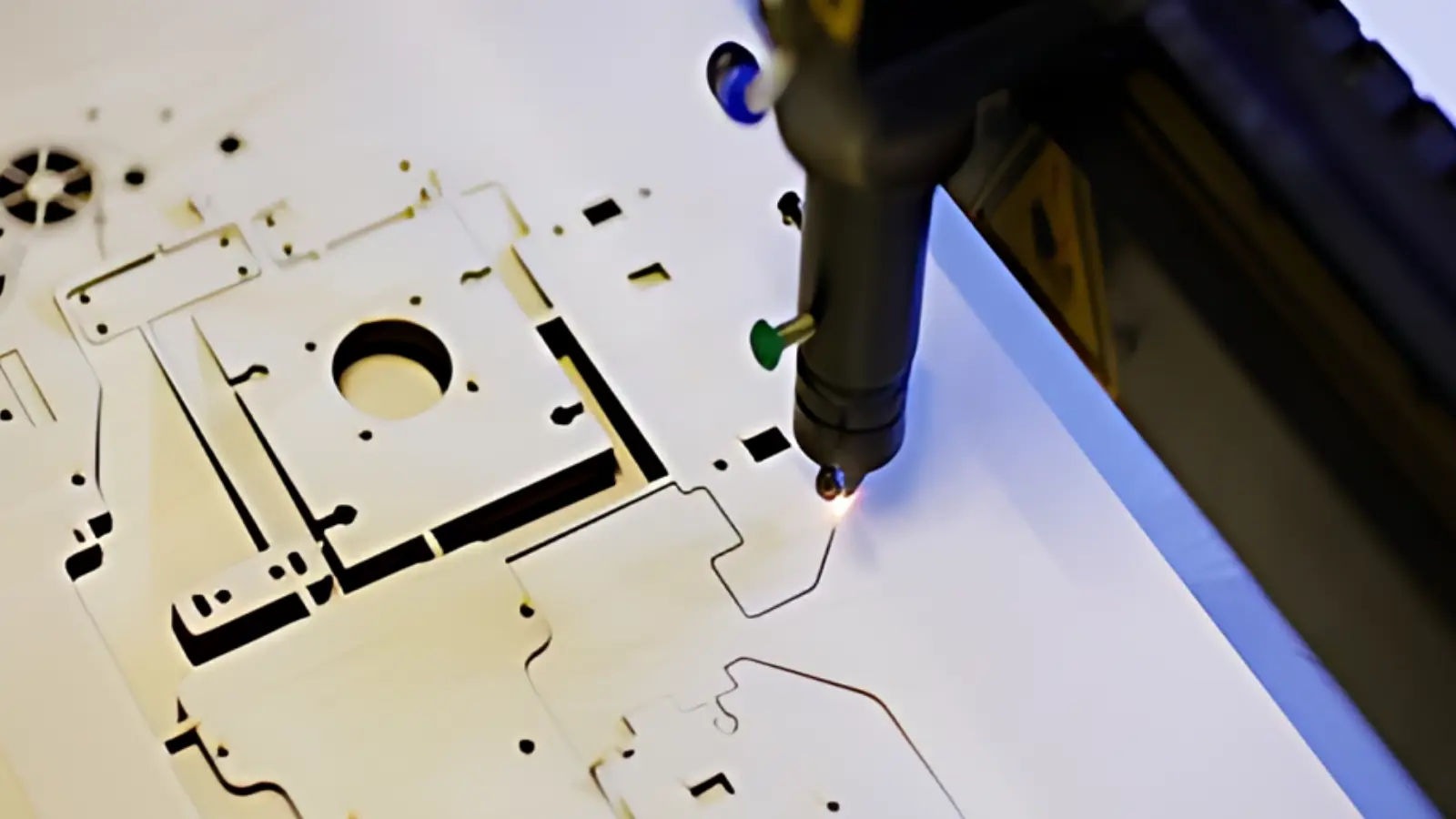
Strip it down and a waterjet is a very powerful hose. A pump pushes water to around 60,000 psi, far more than any pressure washer, and forces it through a nozzle about as wide as a pencil lead. On its own, that’s enough for rubber and foam. For metal, the shop feeds in garnet sand, and the sand is what really does the cutting. The jet follows the path from your drawing and the part drops out.
What It Cuts
The short answer is nearly everything. Steel and stainless, sure. Aluminum, titanium, copper and brass too. I’ve also watched it cut glass, granite, ceramic tile and carbon fibre sheet. Where it really stands out is thickness. Plates up to 50 mm are routine, and I’ve seen cuts past 100 mm, just slowly. Copper and brass give lasers trouble because they bounce the beam back. A waterjet doesn’t care.
No Heat, No Problem
This is the part people love. The cut is cold, so nothing gets hot enough to harden, warp or change colour. Tool steel keeps the hardness it came with. Stainless stays bright. Thick plate stays flat. There’s no heat-affected zone either, so no nasty surprises when you bend or machine the part later. If you’ve ever had a laser-cut edge crack on you, you’ll know why that matters.
Tolerance and Edge Quality
Plan on ±0.1 to ±0.2 mm for most work. The jet isn’t perfectly straight, though. As it goes down through thick material it leaves a little taper, so the bottom of the cut ends up narrower than the top. Newer machines tilt the head to fix that, and a good operator can tune the speed too. Slow cuts leave a smooth edge. Fast cuts leave a rougher one with faint lines called striations. Tell the shop if the edge will be seen, since that changes how fast they run.
The cut itself, the kerf, is about 1 mm wide. Inside corners get a small radius of roughly half that, so don’t draw razor-sharp pockets.
Speed and Cost
Here’s the honest part. Waterjet Cutting is slower than a laser on thin sheet, and the machine time costs more per hour. Garnet isn’t free either. For thin material, a laser usually wins on price. For thick, heat-sensitive or odd material, the waterjet wins, because nothing else can do it as cleanly. One trick helps: stack thin sheets and cut them together, and the price per part drops.
Where It Shows Up in Industrial Automation
Walk around any robot cell and you’ll see waterjet parts everywhere. Industrial Automation shops order them all the time. Thick base plates. Gripper plates. Brackets that hold sensors. Spacers, shims, and tooling plates for fixtures. These are flat, fairly thick parts in aluminum or steel, often in small numbers, and they change whenever the line changes. That’s a perfect fit. There’s no tooling, the drawing goes straight to the machine, and the parts arrive flat and ready to bolt on.
Machine builders also like it for gaskets and seals cut from rubber or foam, since the same machine handles those too.
Waterjet Plus Machining
Don’t expect a waterjet to hold a bearing bore. It’s a roughing process for tight fits. A common approach is to cut the part a little undersized, then machine the holes and faces that matter on a mill. You get the speed of the waterjet and the accuracy of machining. Leave about 0.5 to 1 mm of extra material on any edge that will be machined.
A Few Material Notes
Stainless is easy and stays bright. Aluminum cuts fast, but soft metals can pick up a few garnet grains in the edge, so wipe or blast the part if it’s going to be anodized or used in a clean area. Titanium cuts well and without the burning risk. Carbon fibre can delaminate at the pierce point, so ask the shop to pierce outside the part. Rubber and foam need very low pressure, and they should be held down so they don’t float.
Design Habits That Help
Leave space between parts so the shop can nest them tightly. Keep holes at least as wide as the material is thick, because small deep holes taper. Avoid long, thin fingers on a part, since the jet can push them out of line. Add small tabs if a part might tip into the water tank, and ask where they’ll go. Glass and some ceramics are fragile. The first hit of the jet can crack them, so the shop may start at an edge or drop the pressure for the pierce.
Also, rolled plate carries stress. Once you cut it, it can bow a little. If flatness is critical, say so up front.
What to Send for a Quote
A DXF or STEP file. The material and thickness. Quantity, and which edges are visible or have tight tolerances. If you plan to machine the part afterwards, say that too, so the shop leaves extra stock. And ask for a sample if the edge quality matters.
Wrapping Up
Waterjet Cutting doesn’t beat every process, but it does what others can’t. Thick plate, soft material, hard alloys, anything that hates heat. Pair it with a little machining and you get both speed and accuracy. Just tell the shop what matters before the first cut.