Servicios de extrusión de aluminio a medida
Extrusiones de aluminio de alto rendimiento a medida. Precisión de ±0,1 mm. Entrega en 7 días.

Servicios de extrusión de aluminio de YP-MFG

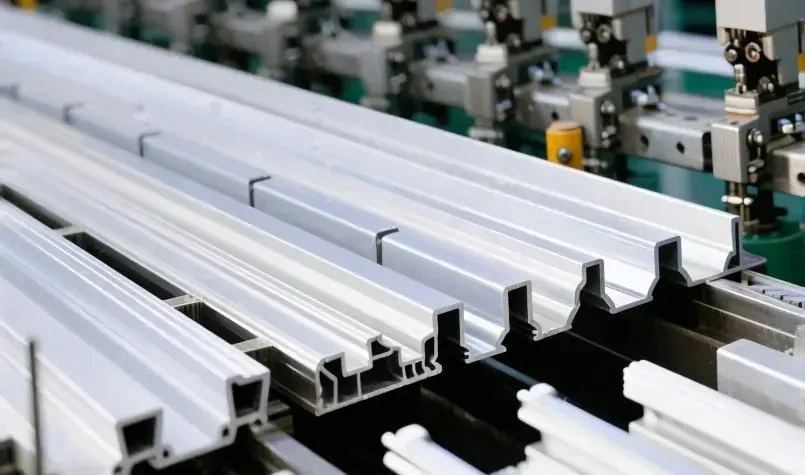
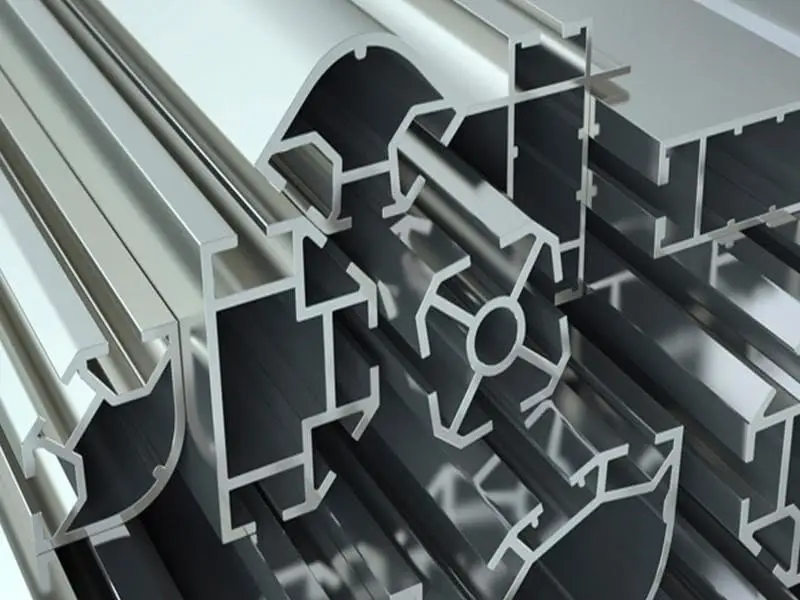
YP-MFG offers custom aluminum extrusions services for prototypes and low-volume production. can extrude many types of custom Aluminum extrusion profiles with different cross-sections.
manufacturing center, totally 70 sets extrusion press Lines from 600Ton from 3800Ton, can handle extrusions with different complexity and quantities. all ISO 9001:2015 certified factories
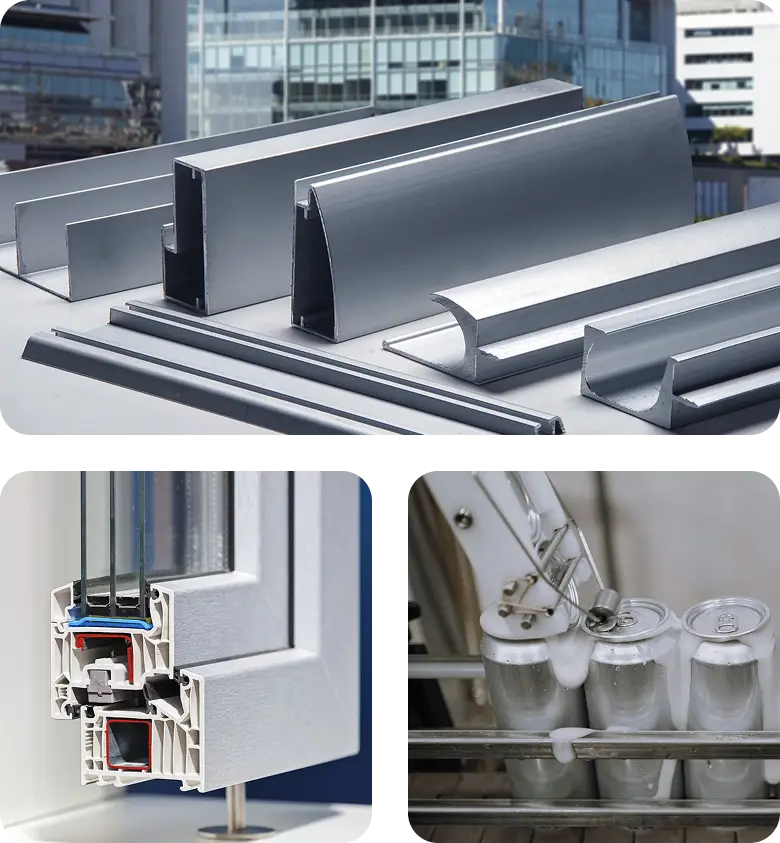
are made for your specific shapes, designations & applications. use in Construction and architecture · Automotive and transportation · Electrical and electronics · Consumer products. To be specific. used in windows, door frames, canopies, curtain walls, light fixtures, sun shades, and handrail systems.
Order Your Aluminum Extrusion Profiles
YP-MFG offers custom and standard aluminum profiles with high quality at low cost for your projects.
When standard profiles fall short in function, cost, or design, custom is the answer. YP-MFG’s fully customzied aluminum extrusion services allows you to specify shape, color, surface finishing, and material.
Our team reviews your drawings, confirms feasibility and selects the right process to deliver high-quality results with short lead times.
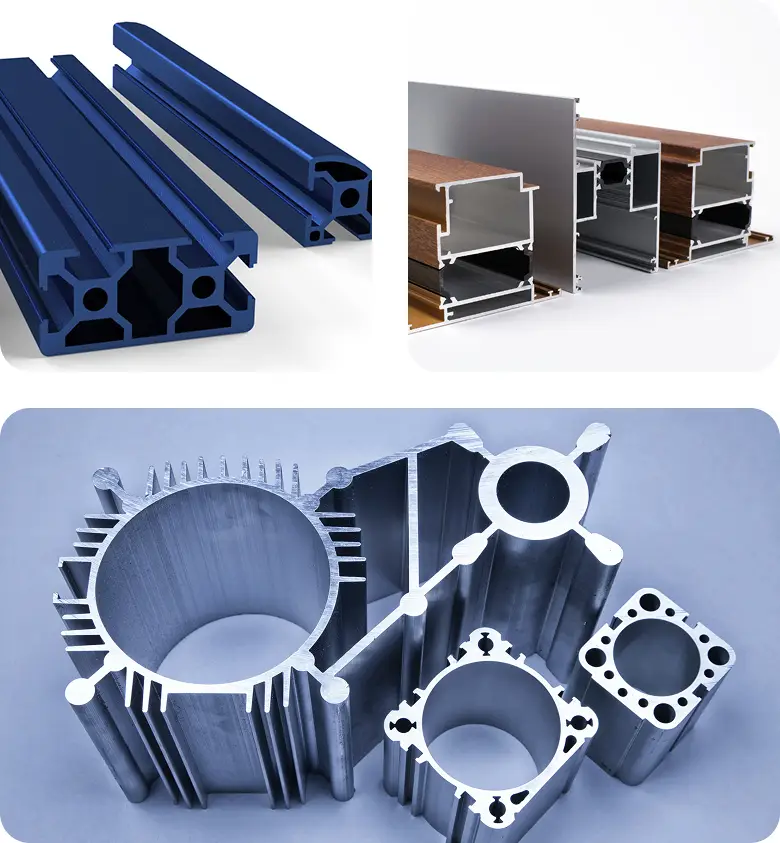
Admitimos varios tipos personalizados, entre ellos:
- Perfiles de aluminio con ranura en T
- Accesorios para perfiles de aluminio
- Perfiles de aluminio en U
- Perfiles de aluminio para construcción
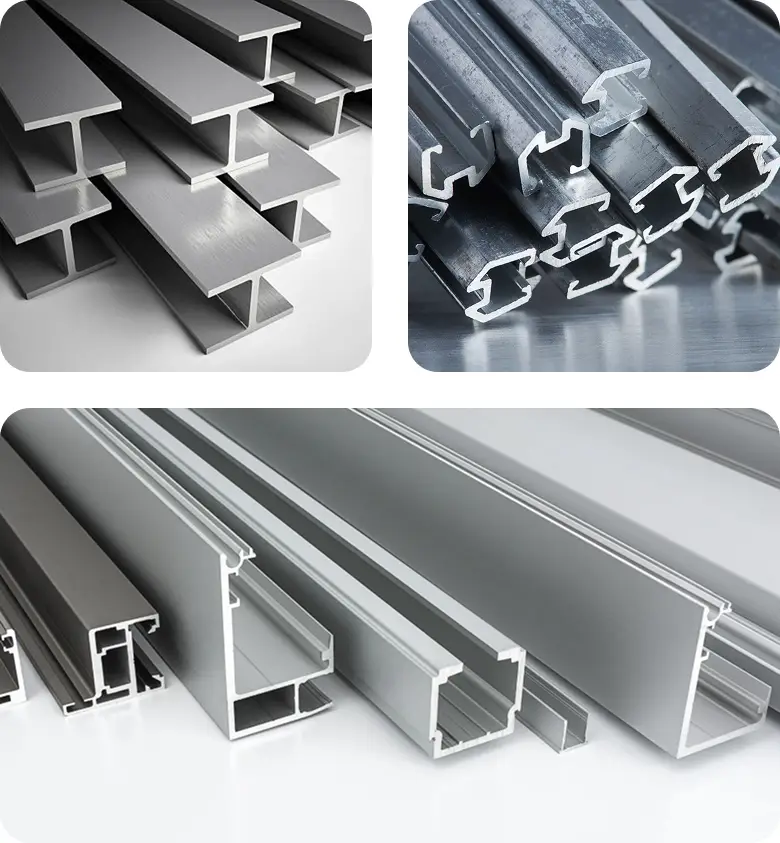
For projects that just require basic strength, shapes, and function you need, common extruded aluminum profile is a fast and economical solution. YP-MFG supplies a wide range of commonly used extrusions for general applications.
- Ángulo de aluminio
- Barra de aluminio en T
- Viga de aluminio en I
- Perfil de aluminio extruido en U
- Perfil de aluminio en G
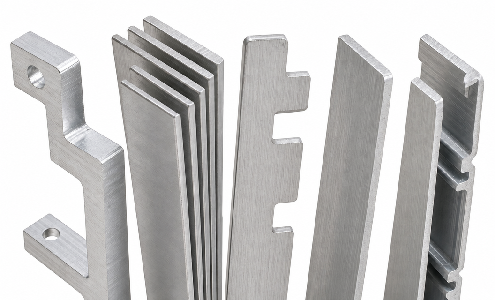
- Pletina de aluminio
- Extrusión de aluminio cuadrada
- Extrusión de aluminio ovalada
- Extrusión de aluminio con sección en Y
- Extrusión de aluminio en Z
- Extrusión de aluminio en F
- Extrusión de aluminio con sección en J

Materiales para extrusión de aluminio a medida
Aluminio
Aleación 6061
Strong aluminum alloy with good corrosion resistance and easy machining. Used for structural parts, machine components, and automotive applications where strength is important. Welds and fastens easily.

Aleación 6061
Medium-strength alloy with smooth surface finish and easy extrusion. Common in building applications like window frames, door profiles, and trim pieces. Takes anodizing and powder coating well.

Aleación 1100
Pure aluminum with strong corrosion resistance and high electrical conductivity. Used for chemical equipment, electrical parts, and food processing gear. Soft and easy to shape but not as strong as other alloys.
Acabados para extrusión de aluminio
Creates a protective oxide layer that stops corrosion and provides electrical insulation. Available in natural, black, and colored finishes for architectural and electronic applications.
Dry powder coating baked onto aluminum for tough, colorful finish. Resists scratches, UV rays, and chemicals. Wide color range for outdoor and decorative uses.
Uniform coating process using electric current to deposit paint evenly on complex shapes. Provides smooth finish and good corrosion protection for automotive parts.
Mechanical brushing creates directional grain texture that hides scratches and fingerprints. Popular for consumer electronics, appliances, and architectural trim with metal look.
High-pressure glass beads create uniform matte surface texture. Removes machining marks and provides consistent appearance for precision parts and decorative applications.
Liquid paint application offers unlimited color choices at low cost. Good for prototypes, small batches, and applications where color matching is important.
Prints logos, text, and graphics directly onto aluminum surfaces. Durable ink bonds well for control panels, nameplates, and branded products.
Precise laser removes material to create permanent markings, serial numbers, and detailed patterns. Clean process with sharp edges for identification and decorative work.
Calidad en la que puedes confiar
Dimensional and Tolerance Checks
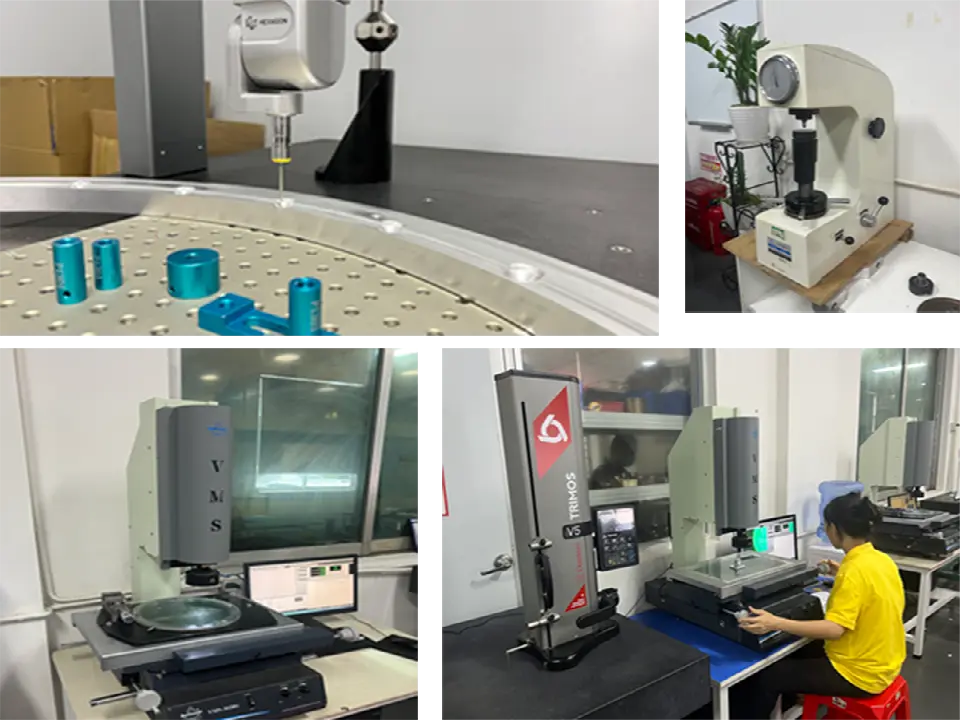
We measure key dimensions like cross-section width, height, wall thickness, total length, straightness, flatness, perpendicularity, and fit of holes or slots. Inspection tools include calipers, micrometers, height gauges, and coordinate measuring machines (CMM).
Inspección superficial
All profiles are checked for scratches, dents, cracks, air bubbles, burrs, extrusion lines, and deformation. Lighting and magnification are used to spot fine surface issues.
Material and Performance Testing
On request, we provide test results for strength and hardness, as well as RoHS reports and material certificates, depending on project needs.
Why Choose YP-MFG Aluminum Extrusion Services
Personalización versátil
Complete control over surface finish, profile shapes, material grades, and color options. Match exact specifications for your application requirements across industries.
Precisión garantizada
Critical dimensions held to ±0.1mm tolerance. Standard dimensions maintained at ±0.15mm. Consistent accuracy for fit and function requirements.
Entrega fiable
Fast tooling and material matching. Standard profiles delivered in 7 days. Complex geometries completed within 10-15 days without die modifications.
Sube tus planos o contacta con nuestros especialistas para recibir
consultation. Fast response
within 24 hours.
What's the Aluminum Extrusion Process?
Aluminum extrusion is the process of pushing a heated aluminum billet through a custom die to form profiles with a specific corss-sectional shape. At YP-MFG, we follow a standard, proven production flow:
It begins with die machining, solid , hollow, or semi-hollow, and billet preheating, typically 400–500°C. Aluminum is then extruded—either direct or indirect, hot or cold — depending on the aluminum alloys and end use.
Once extrusion, the profile is cooled, stretched, and cut to size. Additional steps such as aging for strength and hardness, surface finishing for appearance and functionality, or assembly can be applied as needed. Each custom aluminum extrusion go through inspection and packaging before delivery.
Applications of Aluminum Extrusion
Industries rely on custom aluminum extrusions for their strength-to-weight ratio and design flexibility. Below are some of the most common applications.
Bastidores de máquinas, puestos de trabajo y sistemas de automatización.
Bastidores de vehículos, remolques y componentes de carrocerías ferroviarias.
Puertas, ventanas, muros cortina, pasamanos y fachadas.
Marcos solares, piezas de aerogeneradores y estructuras marinas.
Carcasas, alojamientos para LED y disipadores de calor.
Ventajas y desventajas de la extrusión de aluminio
Ventajas
Ligero y resistente.
High strength-to-weight ratio reduces
structural load
Resistencia a la corrosión
La capa natural de óxido evita la corrosión y la degradación
Flexibilidad de diseño
Complex cross-sections achievable in single
process
Rentabilidad
Lower machining costs compared to solid aluminum
blocks
Montaje sencillo
Compatibilidad con ranuras en T y métodos de unión sencillos
Reciclable
Material 100 % reciclable que contribuye a los objetivos de sostenibilidad
Contras
Coste inicial del utillaje
La fabricación de la matriz requiere una inversión inicial
Limitaciones para modificar la forma
Las modificaciones del perfil requieren una nueva matriz
Desperdicio de material
El recorte y la preparación generan material de desecho
Limitaciones de tamaño
Maximum profile dimensions restricted by press
capacity
Variaciones superficiales
Las líneas de extrusión pueden requerir tratamientos posteriores
Sensibilidad a la temperatura
Pérdida de resistencia a temperaturas elevadas
Cómo se fabrican los perfiles de aluminio extruido
From raw billet to finished shape, aluminum extrusion is a precise, multi-step process. Watch the video to see how each stage brings custom profiles to life.
Preguntas frecuentes
Tighter tolerances cost more to manufacture. Precision tooling and extra inspection steps increase production expenses.
Pick tolerances that match your project needs. Standard tolerances work for most applications and keep costs down. Use tighter tolerances only when parts must fit precisely together.
YP-MFG follows ISO 9001-C standards. Critical dimensions are controlled within ±0.1 mm, while other dimensions are held to ±0.15 mm. YP-MFG helps you pick the right tolerance specification that works for your custom aluminum extrusion project without paying for precision you don’t need.
Tubos de acero con uniones mecánicas
Steel tubing can be fastened together without welding using corner bracecs with metal farming scrrews or mechanical connectors and clamps.
Métodos alternativos
Mechanical fasteners and adhesives work as welding alternatives. Steel profiles offer higher strength than aluminum, but need more complex assembly. For CNC grantries, steel tubing with brackets works, thouth aluminum extrusions remain easier to assemble.
The wall thickness of an aluminum extrusion depends on several practical considerations:
- Grado de aluminio– Softer alloys may need thicker walls for strength, while stronger alloys can support thinner sections.
- Diseño del perfil– Shapes with deep channels, curves, or unsupported spans may require more thickness for stability.
- Capacidad de la prensa – The size and tonnage of the press influence how thin or thick a section can be reliably formed.
- Acabado de superficies– Coatings or anodizing may affect minimum wall thickness to avoid distortion or uneven treatment.
- Tolerancia dimensional – Stricter tolerance limits often lead to thicker walls to ensure consistent output during cutting or machining.
Wall thickness is typically set during the design stage, balancing strength, weight, and cost based on how the part will be used.
El espesor de pared recomendado suele situarse entre 1,0 mm y 2,5 mm.
- For structural or load-bearing parts, thicker walls (2.0 mm or more) offer better strength and rigidity.
- For lightweight or decorative components, thinner walls (around 1.0 mm) are often sufficient.
- Minimum feasible thickness also depends on the alloy, shape complexity, and press capacity.
The final choice should balance mechanical needs, weight, and cost, based on the extruded aluminum part’s application.
Yes, YP-MFG provides prototyping and small-batch aluminum extrusion services. We can produce sample parts for testing and validation before full production runs.
Nuestro servicio de prototipado te ayuda a:
- Probar el ajuste y el funcionamiento antes de pedir grandes cantidades
- Verificar que las dimensiones y tolerancias cumplen tus especificaciones
- Evaluar los acabados superficiales y las propiedades del material
- Realizar los cambios de diseño al principio del desarrollo
Los costes dependen de varios factores principales:
Tipo de material Different aluminum alloys cost different amounts. Common ones like 6061 and 6063 are cheaper than specialty metals.
Tamaño de la pieza Bigger profiles use more material and might need larger presses, which costs more.
Complejidad del diseño
- Las formas sencillas cuestan menos
- Las secciones complejas requieren utillajes costosos
- Las tolerancias estrechas requieren más tiempo e inspección
Otros factores que afectan al precio
- Cantidad del pedido: los pedidos mayores reducen el coste por pieza
- Acabados superficiales deseados
- Costes de utillaje y matrices para nuevos perfiles
Want to know what your project will cost? Send YP-MFG your drawings and specs. We’ll give you a real quote based on what you actually need.
Start with smart design choices to cut costs. Keep wall thickness uniform since varying thickness makes tooling harder and more expensive. Use simple radius corners instead of sharp angles, and make designs symmetrical when possible. Try to minimize channels and screw slots, and avoid deep, narrow channels that are hard to form during extrusion.
Choose standard aluminum alloys like 6061 or 6063 rather than specialty metals. Order larger quantities to spread tooling costs across more parts. Use standard tolerances unless tight ones are really needed for your application. Pick simpler surface finishes and consider using existing die profiles if they work for your project.
Plan your design carefully and stick with it. Changes after tooling is made get expensive fast. Work with your aluminum extrusion supplier early in the design phase so they can spot potential cost issues before you commit to expensive tooling.
Yes, aluminum extrusions are 100% recyclable without losing strength or quality. Recycling cuts manufacturing costs and reduces carbon footprint compared to making new aluminum. You can reuse aluminum extrusions many times, making them good for eco-friendly projects while keeping the same performance.
Tres tipos principales de matrices:
Matrices para perfiles macizos. Used for simple, solid profiles without any hollow sections or internal cavities. These are the most basic and cost-effective dies.
Matrices para perfiles huecos. Create profiles with enclosed hollow sections or tubes. These dies are more complex because they need mandrels to form the internal cavities.
Matrices para perfiles semihuecos. Make profiles with partially enclosed sections, like C-channels or angles with slots. These fall between solid and hollow dies in terms of complexity and cost.
10mm x 10mm, 20mm x 20mm, 30mm x 30mm, 40mm x 40mm, 45mm x 45mm, 50mm x 50mm, 60mm x 60mm, 80mm x 80mm, 100mm x 100mm, 160mm x 160mm.
These are typical profiles for T-slot aluminum extrusions used in framing and assembly applications. Different industries like windows, doors, or structural construction may use different standard sizes based on their specific requirements.