French
 English
 German
 Russian
 Japanese
 Korean
 Spanish
 Italian
 Portuguese

A CNC drill machine differs from a manual drilling setup in one critical way: it holds hole position, depth, and feed rate to a programmed tolerance. For production runs of 50 to 50,000 parts, that repeatability directly cuts rework and scrap. The right machine depends on three variables: part diameter range, required hole depth, and material hardness. If you are still running manual or semi-automatic drills, the ROI calculation often pays for a CNC drilling head within two to three production cycles. The risk of a wrong specification is not just a capital miss—it is downtime, quality escapes, and schedule delays that compound quickly.
Most procurement teams evaluate a drilling machine on price alone. That is the fastest way to end up with a unit that cannot handle your next batch of stainless steel or titanium parts. YPMFG works with buyers who need to match drilling capability to actual part drawings, not catalog pages. Below is what to check before you commit.
What a CNC Drill Machine Actually Does
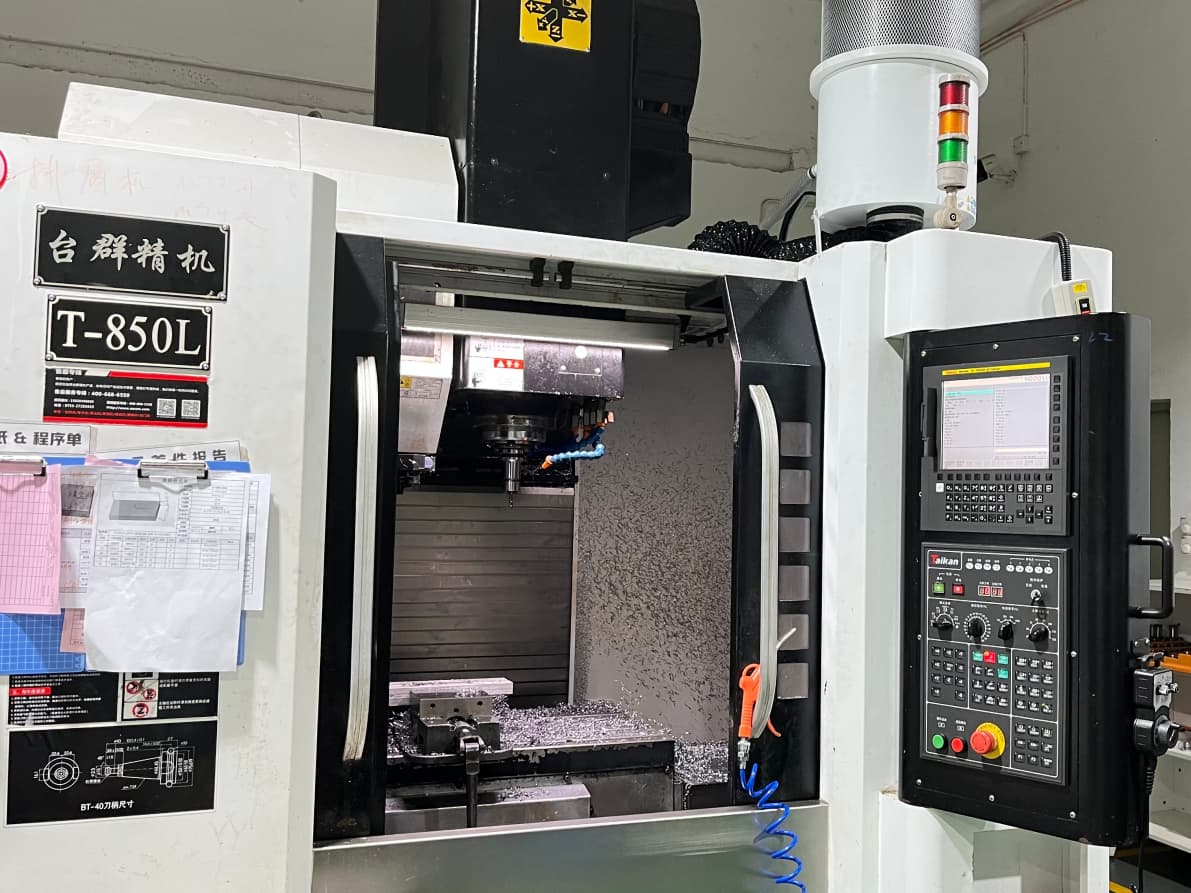
A CNC drill machine automates the full drilling cycle: tool selection, rapid positioning, feed, dwell, and retraction. The controller reads a G-code program and drives the spindle to hold hole position accuracy typically within 0.05 mm to 0.1 mm, depending on the machine class. Unlike a simple drilling press, the CNC version handles variable hole patterns, angled holes, and multi-axis drilling without operator intervention.
Why this matters: if your parts carry tolerance-critical holes such as bearing seats or alignment bores, manual drilling introduces operator variability that no amount of careful work fully eliminates. The CNC machine removes that human factor from the critical path.
What to verify first: ask for the machine’s repeatability specification, not just nominal accuracy. Repeatability tells you the worst-case scatter over 100 identical holes. For high-volume runs, that number drives your scrap rate more than the spec-sheet accuracy does.
Key Specifications to Compare
Before you request a quote, pull these numbers from your part drawing and cross-check them against candidate machines:
Maximum workpiece diameter or envelope
Spindle power (kW) and maximum RPM
Axis travel (X, Y, Z)
Spindle nose type (BT30, BT40, or equivalent)
Tool change cycle time
Controller brand and software ecosystem
YPMFG can help you map these specs to a specific part set. Send your drawing dimensions and material grades, and the engineering team will flag any axis or spindle mismatch before you lock in a purchase.
Material and Application Considerations
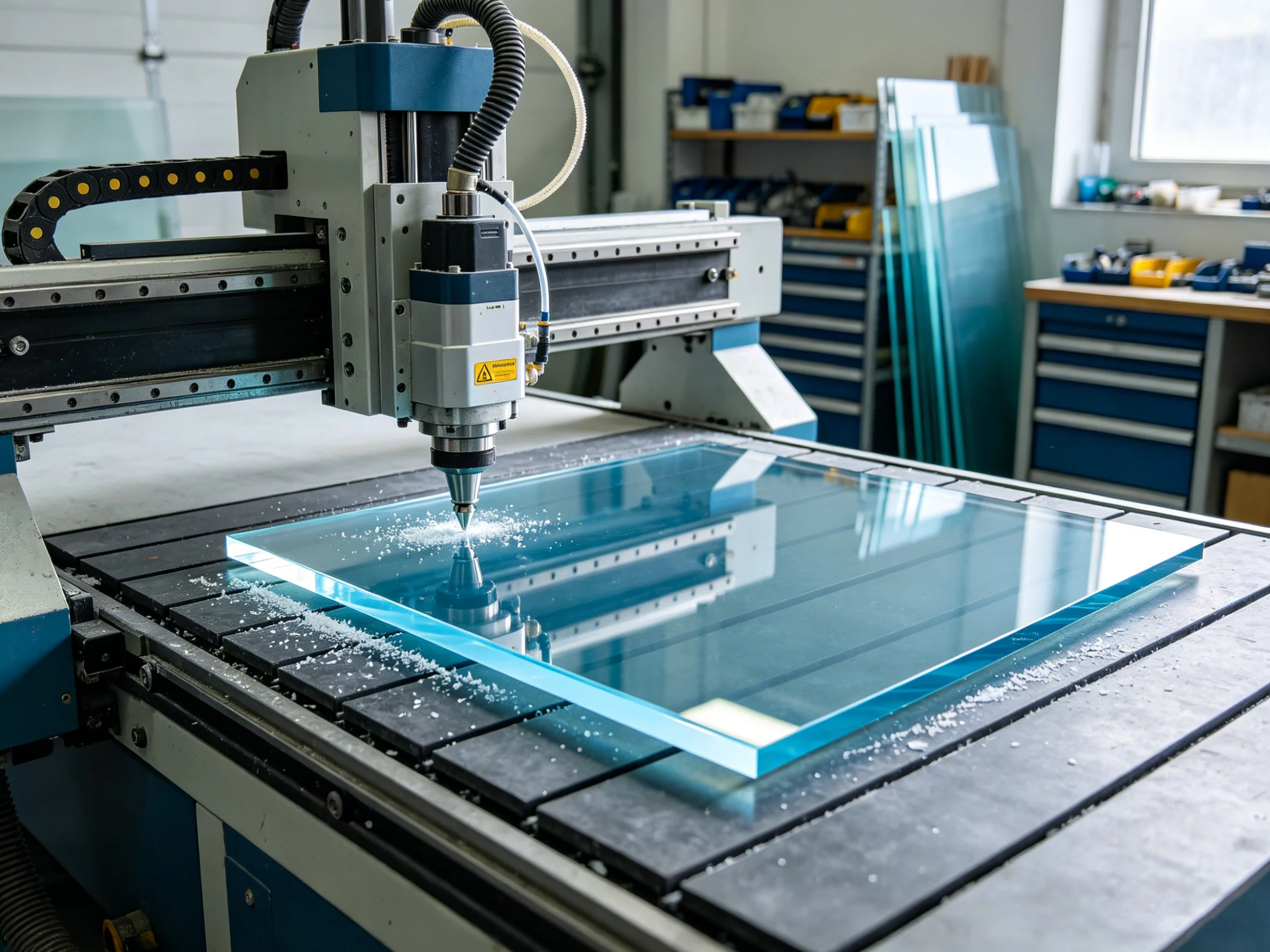
Drilling aluminium and mild steel is straightforward on any industrial CNC drilling head. The challenge begins with harder materials: Inconel, titanium, and free-machining brass. These materials demand higher spindle power, lower feed rates, and often a flood-cooling setup to keep the drill edge alive.
If your production mix shifts frequently, a machine with quick tool-change and flexible axis configuration saves setup time. For single-material, high-volume lines, a dedicated deep-hole drilling head outperforms a general-purpose spindle on cost per part.
Check this before ordering: confirm the machine’s coolant system capacity matches your material. Titanium and Inconel generate significantly more heat than steel. An undersized coolant loop will shorten drill edge life within hours,inflating your tooling cost per hole.
Practical Questions Before You Select
How deep can a standard CNC drill machine cut?
Most 3-axis setups handle holes up to 8–10 times the drill diameter in standard materials. Beyond that, you need a dedicated deep-hole drilling system with peck-drilling cycles and chip-removal coolant. Verify the Z stroke covers depth plus 10–15 mm of retract clearance.
Can a CNC drill machine replace my manual drilling press for mixed lots?
For lots under 20 parts, a manual press may be faster to set up. For anything repeatable or over 50 units, the CNC machine wins on consistency and labor. The break-even point depends on your hourly labor cost versus per-hole time savings.
What controller should I look for?
FANUC, Siemens, and Haas are the most common in industrial Usinage CNC environments. Choose the ecosystem your programmers already know. Training cost on a new platform is often understated in total ownership calculations.
Do I need a 4th axis for drilling?
Only if your parts require angled or compound-angle holes in a single setup. For straight-through and vertical holes, a 3-axis machine is sufficient. Adding a 4th axis increases cost and complexity without benefit for simple drilling.
Finding the Right Fit for Your Production Line
The goal is not to buy the most expensive CNC drill machine. It is to match the machine’s envelope, power, and repeatability to your actual part portfolio and material mix. A specification 30% oversized wastes capital. One that is too tight forces a re-buy within two years.
YPMFG supports buyers through the full Usinage CNC decision: from reviewing your part drawings, to recommending spindle class and coolant specs, to providing custom drilling solutions for irregular geometries. Send your part files and production volume estimate to the YPMFG engineering team. They will return a configuration recommendation and a transparent quote within five working days.