French
 English
 German
 Russian
 Japanese
 Korean
 Spanish
 Italian
 Portuguese

fraisage CNC 5 axes for metal blocks lets a machine cut complex geometries along five simultaneous axes in a single clamping setup. It handles undercuts, angled pockets, and multi-face contouring that a 3-axis spindle cannot reach without re-fixturing. The result is shorter cycle time, reduced cumulative error, and better surface continuity on structural brackets, turbine housings, and precision fixture blocks. Machine-hour cost is typically higher than 3-axis work, but total job cost often drops once you factor in fewer setups and lower scrap risk. Before requesting a quote, lock down material grade, tolerance bands, and finish requirements.
Most buyers still specify 5-axis jobs the same way they specify 3-axis work. That misses the real value. YPMFG works with procurement teams and engineers to close that gap, from initial concept through final inspection documentation.
What 5-Axis Milling Changes for a Metal Block
The core advantage is tool access. A 5-axis head or trunnion lets the cutter approach the workpiece from angles a 3-axis spindle simply cannot reach.
This means you can machine a deep blind pocket with an angled entry, or hold five critical faces within one positional tolerance without unbolting the part. For metal blocks with multiple machined surfaces, that single-setup capability eliminates the registration error you accumulate when transferring between vices.
If your part only needs flat, orthogonal faces, a 3-axis milling job with a manual flip may meet spec at lower cost. Forcing a 5-axis machine onto a simple block wastes machine time and raises your unit price unnecessarily.
Materials, Tolérances, and Specs to Define Upfront
The three variables that most affect your quote and lead time are classe de matériau, tolerance, and surface finish.
Material: 7075-T6 aluminum, 316L stainless, 17-4PH, Inconel 718, and tool steel each carry different cutting speeds, tool wear rates, and post-machining considerations.
Tolerance band: ±0.05 mm is standard for general structural blocks; ±0.01 mm or tighter enters precision territory and may require a thermally stable machine bed.
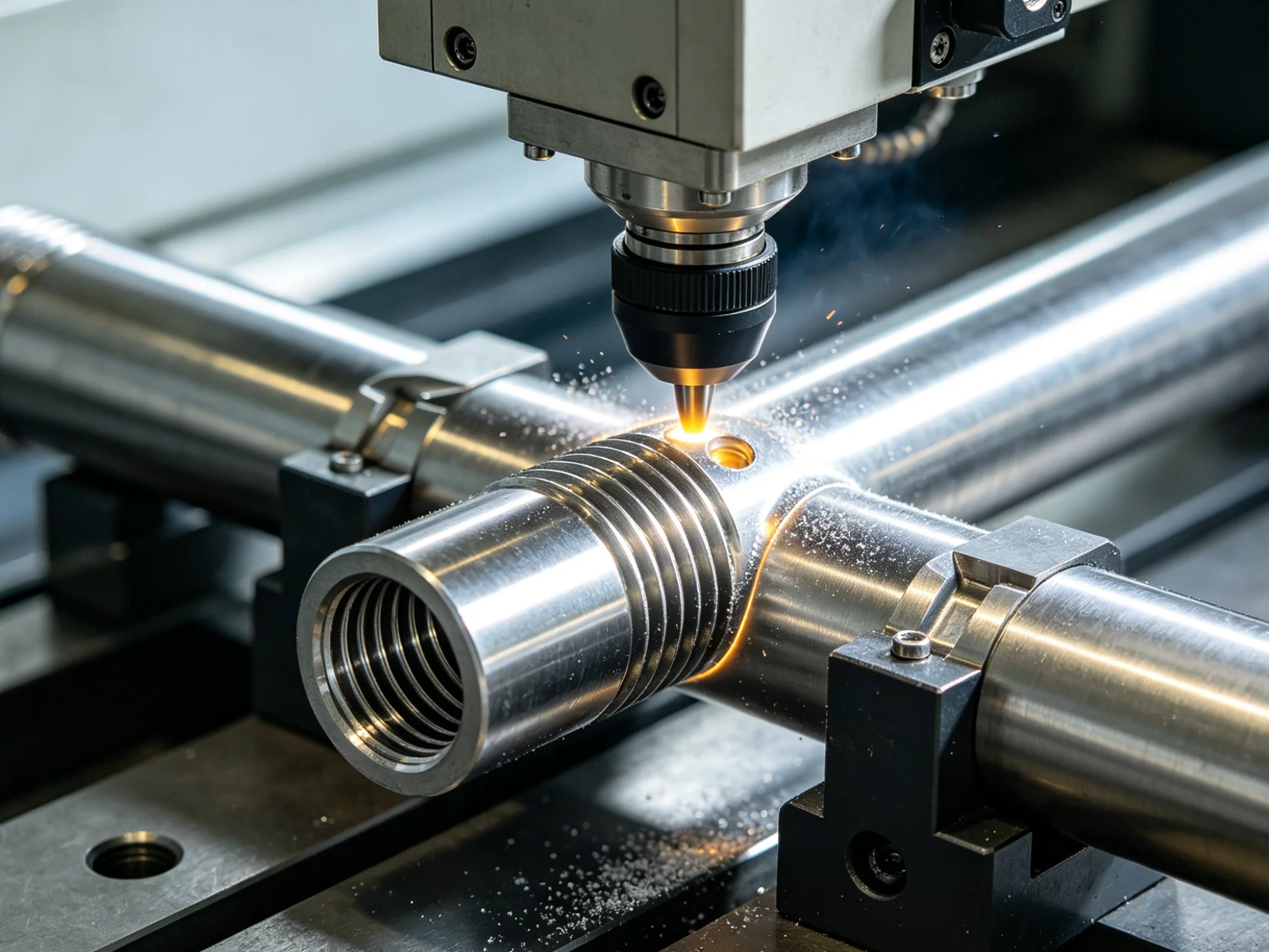
Finition de surface: Ra 1.6 µm is achievable in one pass on most alloys; Ra 0.4 µm or better often needs a secondary grinding or polishing step.
Send your drawing with material callout, critical tolerance dimensions highlighted, and finish spec per face.
Cost Drivers Beyond Machine Hour
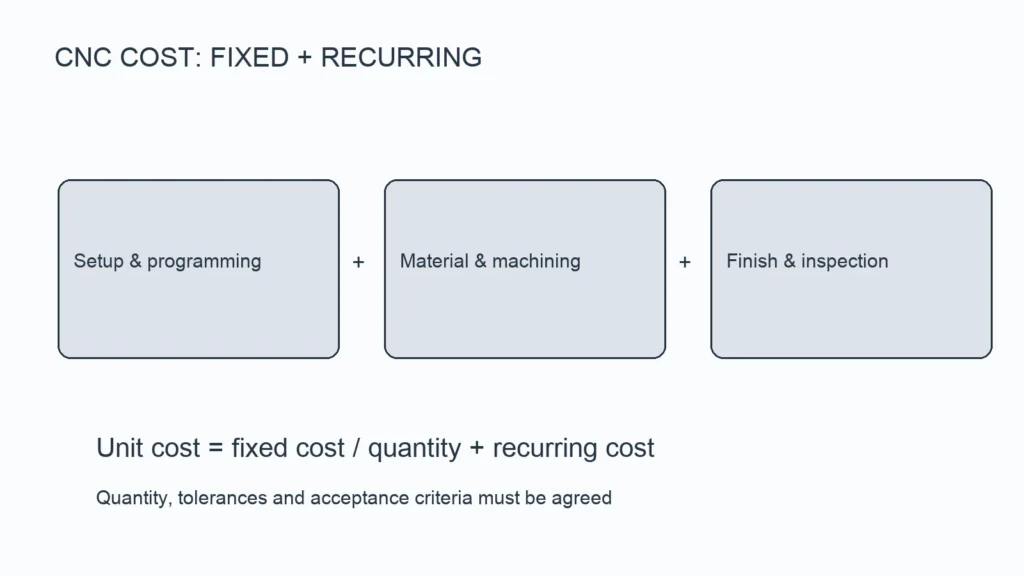
Machine time is visible; the rest is not.
Setup and fixturing: Custom soft jaws or vacuum chucks add several hours before the first cut.
Program development: 5-axis post-processed G-code is more complex to write and verify than 3-axis.
Tooling: Short-reach, small-diameter end mills for tight internal features wear faster and may need a full tool-change set.
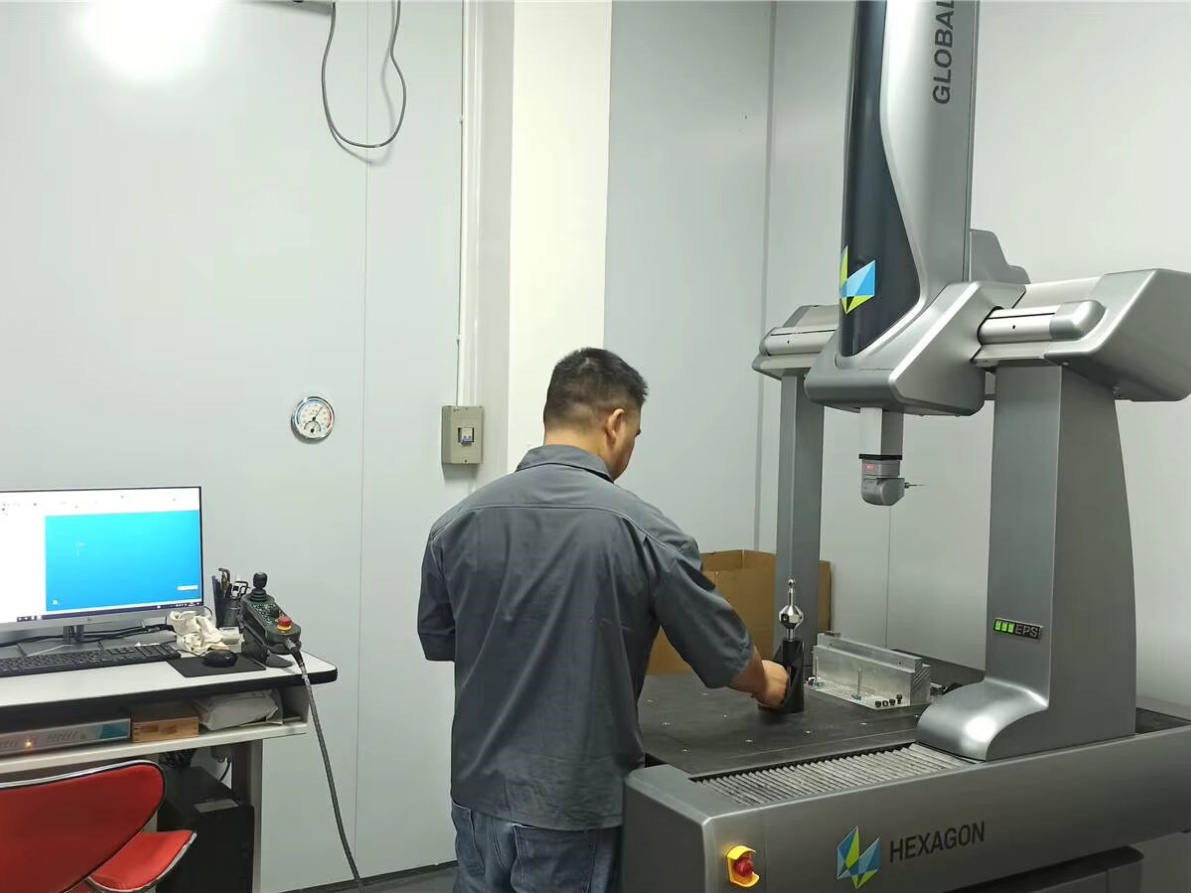
Inspection: CMM or structured-light scanning of a 5-axis part takes longer because of inaccessible reference geometry.
Ask your supplier to break the quote into these line items so you can compare across vendors meaningfully.
3-Axis vs. 5-Axis for a Metal Block
The table is a starting point, not a rule. A part with two opposing angled features may still be cheaper on a 3-axis machine with a rotary table. Have your supplier evaluate both options against your specific geometry before you commit.
Mistakes to Avoid Before You Order
Most rejected or reworked 5-axis blocks trace back to specification gaps, not machine capability.
Not marking which faces are machined versus as-cast or as-forged.
Départ geometric tolerances (flatness, perpendicularity,position) unspecified on critical surfaces.
Requesting 5-axis when the drawing only needs a 3-axis job with one manual flip.
Not stating whether the block must pass magnetic particle or dye-penetrant inspection after machining.
Before sending your drawing for a quote, run it past your quality or design engineer. YPMFG’s engineering team will flag ambiguity in your GD&T and suggest process alternatives that protect your tolerance budget.
Questions fréquemment posées par les acheteurs
Can 5-axis milling handle large metal blocks over 100 kg?
Yes, provided the machine’s table load rating and clamping system accommodate the part. Confirm your block’s mass and center of gravity with the supplier; some trunnion setups have capacity limits.
Do I need to specify the CAM software or post-processor?
Usually no. Most contract manufacturers use industry-standard packages. You specify material, tolerance, and finish; the supplier selects tool paths and post-processing.
Quelle documentation d'inspection dois-je attendre ?
Ask for CMM or structured-light scan reports with as-built deviations mapped to your drawing. For aerospace or medical blocks, dimensional traceability to national standards is standard practice.
Is 5-axis always better than 3-axis for my block?
Not necessarily. If all features are accessible from top and three sides, a 3-axis job with two setups may meet spec at lower cost. The decision is geometry-driven, not prestige-driven.
Can the supplier prototype one block before full production?
Most will, typically at a higher per-unit cost for the first piece. A single prototype validates tool paths, fixturing, and tolerance achievability before you commit to a production run.
Getting a 5-Axis Metal Block Right the First Time
The parts that hold up in service are the ones specified precisely and machined on a machine matched to the geometry. If you have a drawing, a material callout, and tolerance targets, send them over for a process review. YPMFG will walk you through setup options, tooling strategy, and an inspection plan before you commit to a production schedule. You can email your specifications or request a no-obligation évaluation technique to confirm the part is producible within your target window.