French
 English
 German
 Russian
 Japanese
 Korean
 Spanish
 Italian
 Portuguese

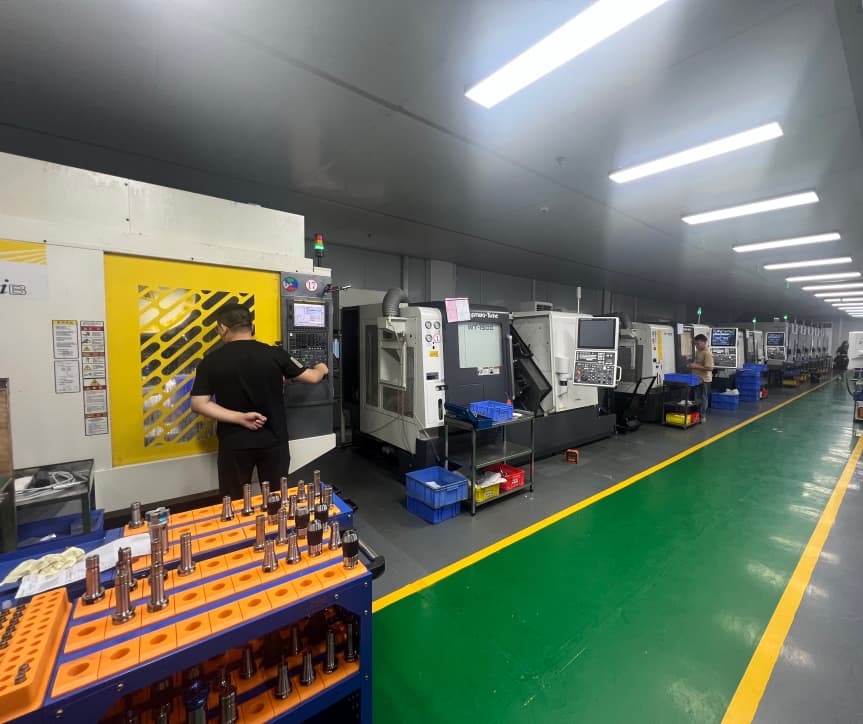
A Service de tournage CNC removes material from a rotating workpiece using a single-point cutting tool. It produces cylindrical parts such as bushings, shafts, and flanges with tight concentricity. Modern Tour à commande numérique systems hold tolerances as tight as ±0.01 mm across full production runs. Buyers rely on this process when rotational symmetry, diametral tolerances,or high-volume repeatability demand precision that manual tooling cannot sustain.
Most procurement teams do not struggle with the process itself. The gap appears in specification clarity. A vague material callout or missing tolerance stack can trigger weeks of rework and rejected batches. YPMFG works directly with engineering and purchasing staff to close those specification gaps before any production commitment.
What a CNC Turning Service Actually Covers
CNC turning is a family of subtractive operations, not a single job. The main variants differ in axis count, tooling layout, and the part geometries they handle.
2-axis lathe: straight turning, facing, threading, grooving.
3+2 or 4-axis with live tooling: adds milling and rotation for complex profiles.
Swiss-type or multi-turret: built for small, high-precision components at high volume.
Choisir le bon lathe configuration influences cycle time, achievable tolerance, and per-unit cost more than any other single factor in the quote.
Specs to Lock Down Before Placing an Order
Before sending drawings to a supplier, these parameters must be unambiguous on the document:
Material grade and metallurgical condition (e.g., 304 annealed versus cold-worked).
Critical dimensions with annotations GD&T, not only ± linear tolerances.
Surface finish in Ra units and whether deburring is included.
Heat-treatment, plating, or coating requirements, if applicable.
Acceptance criteria: first-article inspection report and dimensional traceability.
A drawing that omits any of these fields invites interpretation. In many cases, a one-hour révision technique between your design team and the machining supplier prevents a costly batch rejection. YPMFG offers a no-cost spec audit before issuing a formal quote.
Considérations relatives aux matériaux et aux tolérances
Material choice drives tool wear, cutting speed, and ultimately part cost. Harder alloys such as stainless steel 17-4PH or titanium Ti-6Al-4V cut significantly slower and raise cycle time by roughly 40–70% compared with 6061 aluminum. Tolerances below ±0.02 mm typically require a finish-pass allowance of at least 0.15 mm to protect against tool deflection.
If your application involves cyclic loading or elevated-temperature service, confirm that the selected grade meets the relevant ISO or ASME material specification. Mismatched material can invalidate the entire part design regardless of how accurately it is machined.
Common Pitfalls That Extend Lead Time
Three mistakes recur frequently in procurement:
Specifying “any suitable material” and waiting for the supplier to guess the grade.
Leaving thread engagement length undefined on functional threads.
Ordering without a first-article or short prototype checkpoint, then discovering a dimensional issue at full batch.
Adding a 5-to-10-piece prototype run catches these errors while the cost is still negligible. It also gives your inspection team a physical reference before the production batch launches.
## Practical Questions Before Finalizing a CNC Turning Order
Can a standard CNC lathe hold ±0.005 mm repeatability?
It can, but sustained performance at that level depends on machine condition, tool rigidity, and shop temperature stability. Ask the supplier for a capability report (Cpk) tied to your specific feature rather than a generic spec sheet.
How does quantity affect the unit price?
Per-unit cost drops sharply between 1 and 50 pieces because setup time is amortized. Beyond 500 pieces the curve flattens. Share your annual volume range so the quote reflects the correct production batch size.
What should I verify on a first-article report?
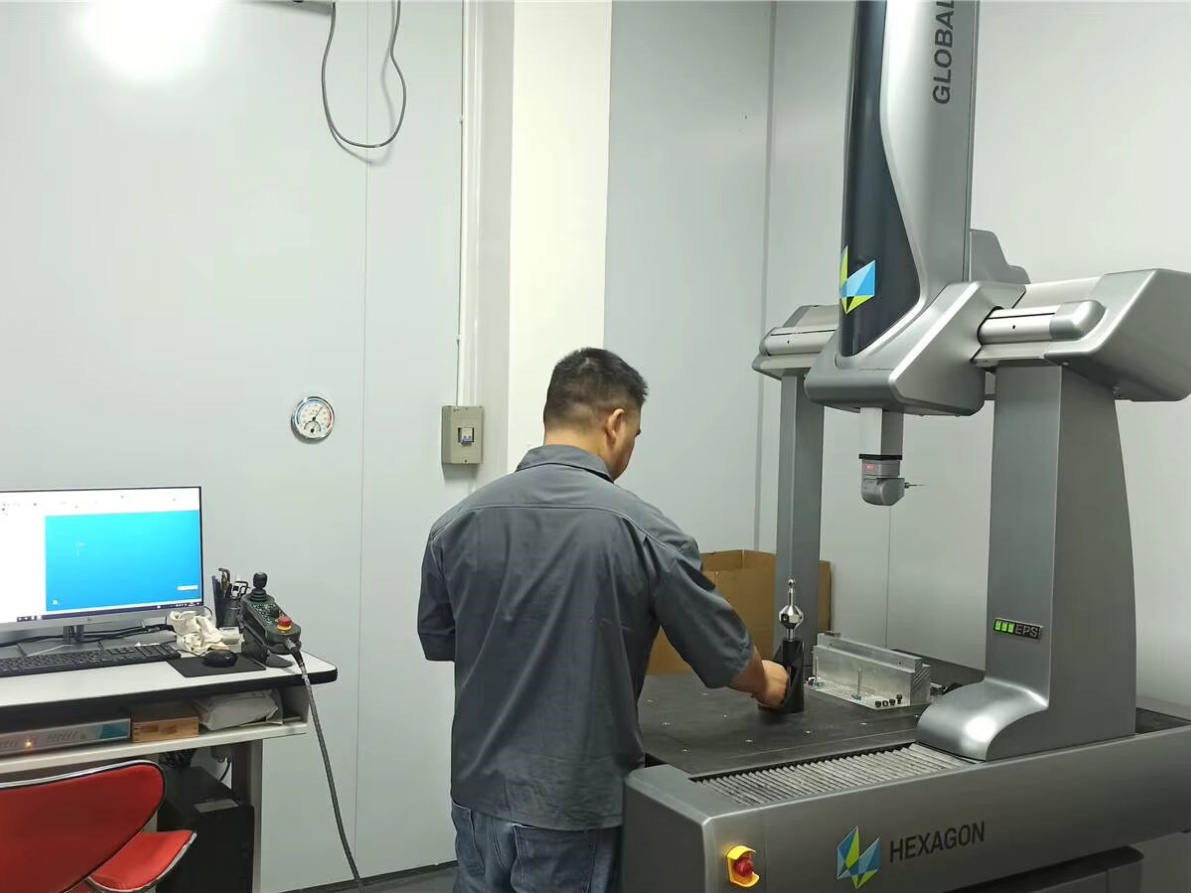
Confirm all critical dimensions, material heat number, and surface-treatment lot traceability are documented. A signed dimensional report with photos is the minimum; CMM data is stronger evidence.
Are secondary operations like drilling or milling included?
It depends on the machine type. A 3+2 or multi-turret cell handles most secondary features in one setup. A pure 2-axis lathe will need a separate Service de fraisage CNC for through-holes or off-axis geometry.
Getting the Right Fit for Your Part
The goal is not simply the lowest quote. It is a part that passes inspection the first time and stays in tolerance across its production life. Send your drawing, material callout, and target tolerance stack to YPMFG. The engineering team will flag specification gaps, recommend achievable surface finishes, and return a transparent quote with a lead-time breakdown.